Each of the novels in Madeleine L'Engle's Time Quintet contains allusions to religion, often including angelic and demonic beings that battle in a struggle of good versus evil; but, Many Waters" - her fourth book in this series (third chronologically) - takes it a step farther. Here, L'Engle explicitly introduces angels and fallen angels and even the Old Testament prophet Noah and his family.

Throughout the series, Dennys and Sandy have been the forgotten siblings of the remarkable Murry family. These twins mostly stood in the background while older sister Meg and Charles Wallace went on adventures to save the universe.

But, in Many Waters, the twins take the stage. After playing with one of their father's laboratory experiments, they find themselves thrust backward in time to encounter Noah and his family prior to the Great Flood. The boys find themselves in the middle of a struggle between Noah's family and others. Angels, fallen angels, and magical creatures play a part in the battle. The story is complicated when Noah receives instructions from God to begin building his ark in preparation for the coming flood.

It was fun to see some minor characters emphasized; and it was fun to read an adventure story with familiar characters. Madeleine L'Engle has made me care about the Murry family.


Using the MinIO Java SDK

Comments [0]

Intro

In previous articles, I showed how to configure a MinIO Server and a MinIO Gateway for Azure.

In those articles, I demonstrated how to manage objects using the MinIO user interface.

In this article, I will show how to use the MinIO Java API to manage MinIO objects.

In order to use the MinIO API, you will need to set a dependency in your project. In a Maven project, this is done by adding the following to the section of the project's POM.XML:


  io.minio
  minio
  7.1.2


The code below assumes that the following values are declared and initialized appropriately:

private String endPoint;        // The MinIO endpoint (e.g., "http://127.0.0.1:9000")
private String accessKey;       // The MinIO Access Key
private String secretKey;       // The MinIO Secret Key
private String bucketName;    // A MinIO bucket in which to store objects (e.g., "mybucket")
private String localFileFolder; // A local folder on your file system to upload/download files to/from MinIO (e.g., "c:\files\")

You will also need to import namespaces from the subnamespaces of min.io. Your IDE will help you identify variables that require these namespaces.   

The MinIOClient object

In your code, you will need a MinioClient object to work with MinIO. A builder helps with this.

MinioClient minioClient = MinioClient.builder().endpoint(endPoint).credentials(accessKey, secretKey).build();
  

Buckets

Below is the code to check if a bucket already exists and create it if it does not

boolean bucketExists = minioClient.bucketExists(BucketExistsArgs.builder().bucket(bucketName).build()); 
if (!bucketExists) { 
    minioClient.makeBucket(MakeBucketArgs.builder().bucket(bucketName).build()); 
}
  

Notice the arguments passed to bucketExists. These arguments are creased with a builder (BucketExistsArgs.builder().bucket(bucketName).build()). The arguments for makeBucket use a similar pattern. We will see this pattern in a lot of MinioClient methods.

Uploading a File

Here is the code to upload a file into a MinIO bucket.

String fileName = "file1.txt"; // This file must exist in the local file folder 
String fileToUpload = localFileFolder + fileName; 
UploadObjectArgs args = UploadObjectArgs.builder().bucket(bucketName).object(fileName).filename(fileToUpload).build(); 
minioClient.uploadObject(args);
  

Downloading a File

Here is the code to download an object to a file on your local drive:

String fileName = "file1.txt"; // This file must exist in the MinIO bucket 
String downloadedFile = localFileFolder + "D_" + fileName; 
DownloadObjectArgs args = DownloadObjectArgs.builder().bucket(bucketName).object(fileName) 
        .filename(downloadedFile).build(); 
minioClient.downloadObject(args);
  

Conclusion

The full listing of a class to read and write to MinIO is shown in Listing 1

Listing 1:

package com.gcast.gcastminio.services;

import java.io.IOException;
import java.security.InvalidKeyException;
import java.security.NoSuchAlgorithmException;

import org.springframework.beans.factory.annotation.Value;
import org.springframework.stereotype.Service;

import io.minio.BucketExistsArgs;
import io.minio.DownloadObjectArgs;
import io.minio.MakeBucketArgs;
import io.minio.MinioClient;
import io.minio.UploadObjectArgs;
import io.minio.errors.MinioException;

@Service
public class MinIOService {

    // The following are set in application.properties
    @Value("${minio.endPoint}")
    private String endPoint;
    @Value("${minio.accessKey}")
    private String accessKey;
    @Value("${minio.secretKey}")
    private String secretKey;
    @Value("${minio.bucketName}")
    private String bucketName;
    @Value("${localFileFolder}")
    private String localFileFolder;

    public void WriteToMinIO(String fileName)
            throws InvalidKeyException, IllegalArgumentException, NoSuchAlgorithmException, IOException {
        try {
            MinioClient minioClient = MinioClient.builder().endpoint(endPoint)
                    .credentials(accessKey, secretKey).build();

            boolean bucketExists = minioClient.bucketExists(BucketExistsArgs.builder().bucket(bucketName).build());
            if (!bucketExists) {
                minioClient.makeBucket(MakeBucketArgs.builder().bucket(bucketName).build());
            }

            String fileToUpload = localFileFolder + fileName;
            UploadObjectArgs args = UploadObjectArgs.builder().bucket(bucketName).object(fileName)
                    .filename(fileToUpload).build();
            minioClient.uploadObject(args);

            System.out.println(fileToUpload + " successfully uploaded to:");
            System.out.println("   container: " + bucketName);
            System.out.println("   blob: " + fileName);
            System.out.println();
        } catch (MinioException e) {
            System.out.println("Error occurred: " + e);
        }
    }

    public void ReadFromMinIO(String fileName)
            throws InvalidKeyException, IllegalArgumentException, NoSuchAlgorithmException, IOException {
        try {
            MinioClient minioClient = MinioClient.builder().endpoint(endPoint)
                    .credentials(accessKey, secretKey).build();
            String downloadedFile = localFileFolder + "D_" + fileName;
            DownloadObjectArgs args = DownloadObjectArgs.builder().bucket(bucketName).object(fileName)
                    .filename(downloadedFile).build();
            minioClient.downloadObject(args);

            System.out.println("Downloaded file to ");
            System.out.println(" " + downloadedFile);
            System.out.println();
        } catch (MinioException e) {
            System.out.println("Error occurred: " + e);
        }
    }
    
}
  

You can download and run  this code from https://github.com/DavidGiard/MinIO_Java_Demo

The code is the same whether you are running a MinIO Server or MinIO Gateway.

In this article, you learned how to use the MinIO Java SDK to read and write objects stored in MinIO.


What is MinIO?


MinIO is an object storage system, similar to Amazon S3 or Azure Blob storage. It is built on top of Docker containers, which makes it easy to scale.

In a previous article, I showed you how to create and use a MinIO Server.

In this article, I will show how to create and use a MinIO Gateway for Azure Blob Storage.

MinIO Gateway

A MinIO Server stores files and objects. By contrast, a MinIO points to some other storage repository where the files are stored. However, it allows you to interact with those files as if they were stored in MinIO.

Prerequisites

Before you begin, you will need to install Docker Desktop, which you can download for either Windows or Mac.

You will also need an Azure Storage Account. This article explains how to create an Azure Storage Account.

Azure Blob Storage

You will need two pieces of information from your Azure Storage Account: the name of the storage account and the access key.

In the Azure Portal (https://portal.azure.com), you can find the storage account name at the top of the Resource page, as shown in Fig. 1.

mga01-StorageAccountName
Fig. 1

You can find the key on the "Access Keys" blade, as shown in Fig. 2.

mga02-StorageAccountKeys
Fig. 2

Note that there are two keys. Either one will work. Click the [Show Keys] button to view the keys and allow copying to your clipboard.

Creating a MinIO Gateway

A MinIO Gateway for Azure is created with the following command:

docker run -p 9000:9000 --name azure-s3 -e "MINIO_ACCESS_KEY=azurestorageaccountname" -e "MINIO_SECRET_KEY=azurestorageaccountkey" minio/minio gateway azure

where

azurestorageaccountname is the name of the Azure storage account and azurestorageaccountkey is an account key from that same storage account.

You can now log into the MinIO Gateway by opening a browser and navigating to http://127.0.0.1:9000/.

When prompted for your login credentials (Fig. 3), enter the storage account name in the "Access key" field and enter the storage account key in the "Secret Key" field.

mga03-Login
Fig. 3

After a successful login, the MinIO Gateway user interface will display, as shown in Fig. 4.

mga04-MinIO

Fig. 4

Note that this looks exactly like the MinIO Server user interface, described in this article.

In fact, you can create buckets and manage files in a MinIO Gateway exactly as you would in a MinIO server. The only difference is that the objects you manipulate are stored in the corresponding Azure Blob storage, rather than in MinIO. Each bucket is mapped to a Blob Storage container and each file is mapped to a blob.

Conclusion

In this article, you learned how to create a MinIO Gateway for Azure.


Episode 636

Omkar Naik on Microsoft Cloud for Health Care

Microsoft Cloud Solution Architect Omkar Naik describes what Microsoft is doing for health care solutions with Azure, Dynamics, Office 365, and other tools and services.

Links:
http://aka.ms/smarterhealth
http://aka.ms/microsoftcloudforhealthcare
http://aka.ms/azure


In "Wayne's World 2", Mike Meyers as the title character says of Peter Frampton's "Frampton Comes Alive" album: "If you lived in the suburbs you were issued it. It came in the mail with samples of Tide".

He is not far from the truth. I was 14 years old in 1976 when my sister won this album by calling into a radio station and we played the heck out of it. Peter Frampton was only 26 years old at the time and that record went on to become the biggest selling album of all time!

To say that Peter Frampton peaked at a young age is to understate the obvious. At 12, he was performing publicly; At 14, he was in a band managed by Bill Wyman of the Rolling Stones; at 16, he was in a band that was getting radio airplay in his native England; at 18, he joined the seminal band Humble Pay; at 21, he began his solo career; and at 26 he recorded his iconic "Comes Alive" album. Along the way, he was invited to play guitar with many of the best rock artists of the day. And as a teenager, he befriended major stars like Wyman, David Bowie, and Pete Townsend.

Through this period, Peter managed to keep his focus and avoid the common pitfalls of sex, drugs, and alcohol that tempt so many rock stars. Until, that is, the extreme fame that came with "Frampton Comes Alive" and the pressure to maintain that pinnacle. It was during this time, that he developed a drug addiction and his career waned - both commercially and artistically.

Yet, Frampton recovered and - although he never matched the commercial success of his mid-20s - he was able to write and perform some excellent music in later years - including winning a Grammy for his 2006 "Fingerprints" album.

Later in his career, Frampton siezed the opportunity to focus on his guitar work and was able to work with many of the best musicians of his time. This continued until a degenerative muscle disorder forced him to announce his final tour and retirement.

Peter Frampton's memoir Do You Feel Like I Do? recounts this meteoric rise, followed by a fall, followed by a recovery.

In between, he talks about his personal life and his relationships.

It does so in a relaxed and enjoyable way. The book's conversational tone makes it clear that Frampton was telling the story to writer Alan Light, rather than writing it himself. But it is light and enjoyable, and Peter comes across a sincere person that one would love to share a cup of tea with. Or a concert. Which I did when I took my 24-year-old son to see him on his final tour 2 years ago.


What is MinIO?

MinIO is an object storage system, similar to Amazon S3 or Azure Blob storage. It is built on top of Docker containers, which makes it easy to scale.

Because MinIO runs in a Docker container, it requires the installation of Docker.

You can either install the Docker engine here or install Docker Desktop at one of the following links:

Starting a MinIO Server

Once Docker is installed, use the following command to start a MinIO server:

docker run -p 9000:9000 -e "MINIO_ACCESS_KEY=myAccessKey" -e "MINIO_SECRET_KEY=mySecretKey" minio/minio server /data

You can replace myAccessKey and mySecretKey with just about any string you like. These will be used to log into the MinIO server. Write down these values and keep them in a safe place! You will need them in order to access your server.

After you run the above command, you can access the server's UI by opening a web browser and navigating to

http://127.0.0.1:9000/

(NOTE: Of course, you may choose to run your server on a different port than 9000. If so, modify the “Docker” command above.)

You will be prompted to log in, as shown in Fig. 1

mio01Login
Fig. 1

Enter the access key and secret key you selected in the Docker command above.

After successfully logging in, you will see the MinIO user interface, as shown in Fig. 2.

mio02-MinIOServer
Fig. 2

MinIO organizes objects into buckets, which are analogous to folders in a file system or containers in Azure blob storage. To create a new bucket, click the [+] icon (Fig. 3) in the lower right of the screen.

mio03-PlusButton
Fig. 3

A popup menu will display, as shown in Fig. 4.

mio04-Menu
Fig. 4

Click the [Create Bucket] icon (Fig. 5) to display the "New Bucket" dialog, as shown in Fig. 6.

mio05-CreateBucketIcon
Fig. 5

mio06-BucketName
Fig. 6

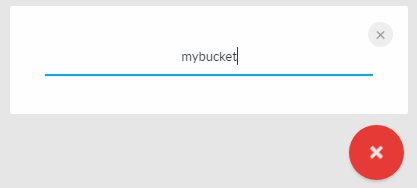
In the "New Bucket" dialog, enter a name for your bucket, as shown in Fig. 7. This name must be unique within this MinIO server, must be at least 3 characters long and may consist only of numbers, periods, hyphens, and lower-case letters. 

mio07-BucketName
Fig. 7

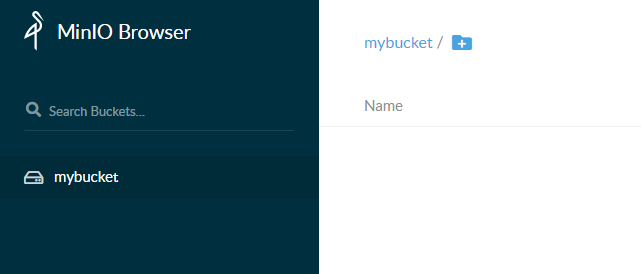
Press ENTER to create the bucket. The Bucket will now be listed along the left side, as shown in Fig. 8.

mio08-Bucket
Fig. 8

You can add files to this bucket by again clicking the lower-left [+] icon to display the popup menu shown in Fig. 9.

mio09-Menu
Fig. 9

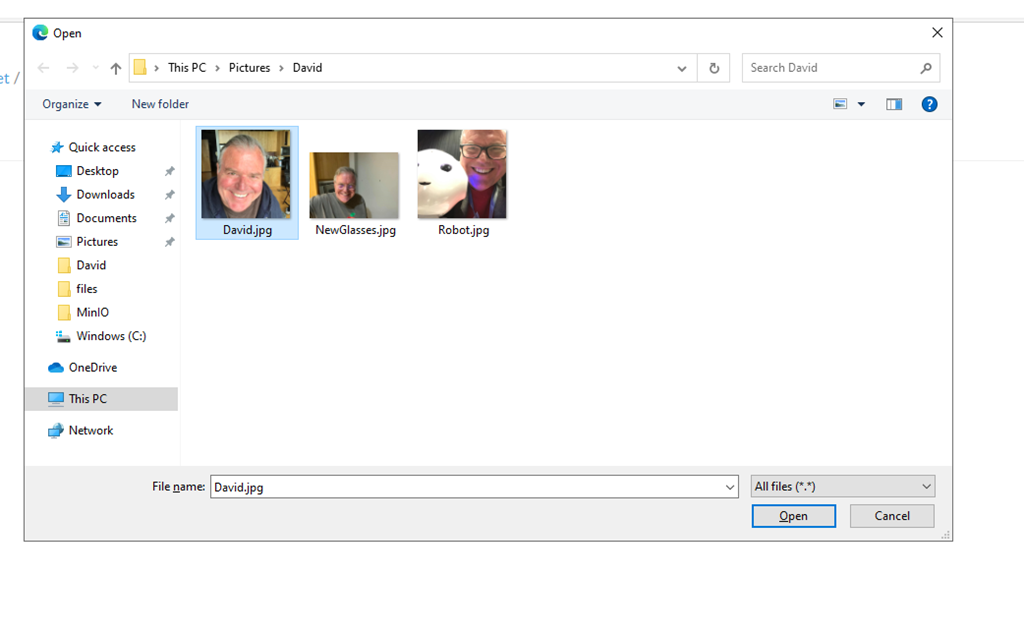
Click the "Upload File" icon (Fig. 10) to open a File Selection dialog, as shown in Fig. 11.

mio10-UploadFile
Fig. 10

mio11-SelectFile
Fig. 11

Navigate to and select a file on your local drive and click the [Open] button. The file will be listed within the bucket, as shown in Fig. 12.

mio12-ListFiles
Fig. 12

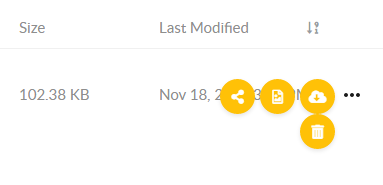
You can click the […] at the right of the file listing row to expand a menu with options to share, preview, download, or delete the file from MinIO, as shown in Fig. 13

mio13-Menu
Fig. 13

In this article, I introduced MinIO Server and showed the basics of getting started and using this object storage tool.


Episode 635

Rik Hepworth on Azure Governance

Many of the issues around cloud computing have nothing to do with writing code. Asking questions early about expected costs, geographic issues, and technologies to choose can save headaches later.

Rik Hepworth describes this governance - the rules by which we operate the cloud - and how we can better prepare to develop for the cloud.

Links:

http://aka.ms/governancedocs
http://aka.ms/GovernanceDocs
https://github.com/Azure/azure-policy


Tennessee Rhapsody

Comments [0]

It was an 8-day vacation filled with museums and bike riding.

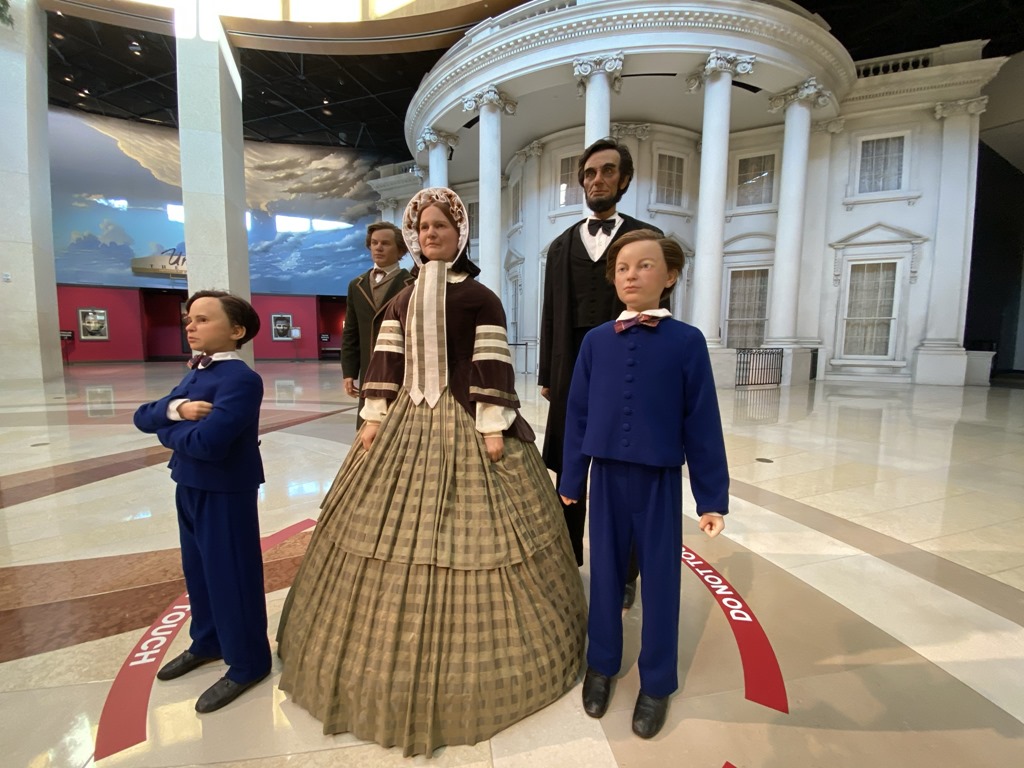
LincolnMuseum It began Saturday morning in Springfield, IL at the Abraham Lincoln Museum. Abe's Presidential Library across the street is closed - a victim of the current pandemic - but the library offered interesting exhibits about the life and times of our 16th President.

From Springfield, I drove to St. Louis, where we met my college friend Darlene, her husband Kevin, and their son Henry at Fitz's in University City. I love this place - mostly for their homemade root beer. Dar and Kevin were kind enough to let us stay at their B&B for 2 days. Sunday, we met my friend Jeff and his family for lunch and biked around Forest Park before watching a star show at the Planetarium at the St. Louis Science Center.

Monday, I drove to Memphis via Arkansas (it was my first time in Arkansas), and I stayed in Memphis until Thursday morning. A long bike ride on Tuesday left me exhausted and I drove around the area Wednesday morning, including a trip into Mississippi (it was my first time in Mississippi) for lunch; a walk by some of the city's mansions; a guided tour of Sun Studio; a drive past Graceland; and an afternoon at the National Civil Rights Museum. This museum was built in the Lorraine Hotel, where Dr. Martin Luther King, Jr. was assassinated in 1968.

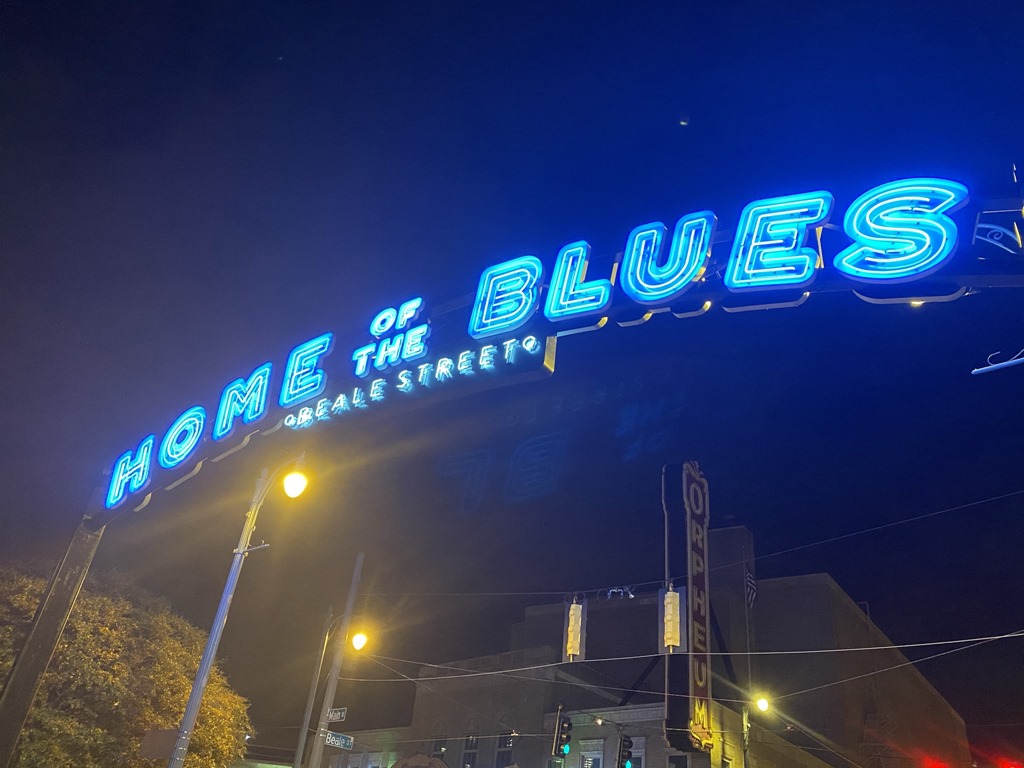
BealeStreet I saw some very good live music each night I was in Memphis. The pandemic kept Beale Street more quiet than usual, but there were still some good venues with some good blues. Wednesday evening, we had a chance to see the famous ducks of the Peabody hotel. Each day at 5PM, this avian family is escorted to the hotel penthouse by a bellman in full uniform.

Heritage I drove to Nashville Thursday for some more bike riding and some more live music. Friday morning was a visit to Andrew Jackson's Heritage - the 7th President's plantation outside Nashville. I learned a lot about this complex man. Friday afternoon was spent walking around downtown Nashville and touring the Johnny Cash Museum. Friday evening, I visited my friends Gaines and Mary at their home south of Nashville, where we enjoyed some hot chicken by the bonfire in their backyard.

NatchezTrace Before heading home, we took a drive through the scenic Natchez Trace, stopping at a country café in Leipers Fork, TN for a breakfast of biscuits & gravy and grits.

It was a near-perfect vacation, despite a few setbacks that included a lost credit card and a flat tire on the way home.

I rode about 50 miles, visited 3 museums, saw many live bands, visited some old friends, ate lots of good southern food, gained 2 pounds, and had a great time!

The challenge now is to remain isolated and schedule a COVID test, since Tennessee is a state with a spiking Coronavirus count.

Links


Episode 634

Scott Hanselman on Productivity

Scott Hanselman gives advice on how to use your time both effiently and effectively and maintain high productivity.

Links:

https://www.hanselman.com/

https://hanselminutes.com/


Episode 633

Glenn Block on Racial Justice

For the past few years, Glenn Block has been studying social justice and making himself more aware and more active. Glenn discusses some of the issues faced by marginalized people and what we can do to address these issues.

Books:

Other Links:


October 2020 Gratitudes

Comments [0]

11/1
Today I am grateful for a Spartan football victory over um yesterday.

10/31
Today I am grateful to see Joanna Connor in concert last night in Evanston.

10/30
Today I am grateful for live music and good food at Kaiser Tiger last night.

10/29
Today I am grateful for food that is both healthy and tasty.

10/28
Today I am grateful for matching charitable donations by my employer.

10/27
Today I am grateful for my personal trainer.

10/26
Today I am grateful to see the "Monet in Chicago" exhibit at the Art Institute of Chicago yesterday.

10/25
Today I am grateful for email, text, and other communication tools on my phone that allow me to connect almost anywhere.

10/24
Today I am grateful for assistance from my teammates.

10/23
Today I am grateful to resolve an infrastructure issue yesterday that had prevented me from getting much work done this week.

10/22
Today I am grateful for a ride through Forest Glenn Woods last night.

10/21
Today I am grateful for honest people.

10/20
Today I am grateful for a negative COVID test.

10/19
Today I am grateful for my new Tiles and app to keep track of my wallet, keys, and phone.

10/18
Today I am grateful to attend a blues festival yesterday in Bronzeville.

10/17
Today I am grateful
-to vote yesterday
-for dinner with Tim at Frontera Grill last night

10/16
Today I am grateful for a diverse group of friends.

10/15
Today I am grateful for:
-the hospitality of Doug and Sherree this week
-a few hours working in East Lansing, MI yesterday afternoon.

10/14
Today I am grateful:
-to be Dylan's sponsor at his confirmation last night
-to visit Diane's new home for the first time
-for 7 years at Microsoft

10/13
Today I am grateful:
-to sort through old family photos with my siblings last night
-for a bike ride to Romeo with KL Schwartz Sharp yesterday

10/12
Today I am grateful to visit my brother and his family.

10/11
Today I am grateful to see Michael McDermott in concert last night.

10/10
Today I am grateful for audiobooks

10/9
Today I am grateful for:
- a walk around Fumee Lake and Lake Antoine in Iron Mountain yesterday;
- my first time spending any significant time in Michigan's Upper Peninsula

10/8
Today I am grateful to hike around Pictured Rocks National Lakeshore and Presque Isle yesterday.

10/7
Today I am grateful for my first visit to Tahquamenon Falls and to Whitefish Point yesterday.

10/6
Today I am grateful for a bike ride in and around Petoskey with Patrick, Susan, and KL Schwartz Sharp yesterday.

10/5
Today I am grateful to explore hiking trails in northern Michigan with Patrick and Susan yesterday.

10/4
Today I am grateful for a walk through the woods with Patrick in Harbor Springs, MI yesterday.


British author Anthony Powell spent most of his life creating the 12-volume series A Dance to the Music of Time. The story is semi-autobiographical with narrator Nicholas Jenkins standing in for Powell. But the story is not about Jenkins/Powell. Although he shares 50 years of his life - from the early 1920s to the early 1970s - he reveals very little about himself: We never even learn the names of his children. Instead, the story focuses on the people in the narrator's life during these decades.

We meet many characters. Some exit Nick's life forever; some exit and return in a later book; and some die. The lives of the characters often intertwine - sometimes via implausible coincidences (Nick often runs into friends on the streets of the enormous city of London and in small villages in the UK). The story is told mostly in chronological order, with each book consisting of 3-4 set pieces that provide insight into the characters and the time. The narrative seldom ventures outside of England - even when the Nicholas and his friends serve in World War II.

The novels tell a story of English society during each era. Because most of the characters are upper middle class, the story focuses on the lesser aristocrats and bohemians. History happens off-stage, reflected in the lives of the people in the story. We hear of the world outside through gossip and conversations at a plethora of dinners and cocktail parties.

In this richly layered work, Powell addresses themes of marriage, relationships, divorce; of the connectedness between people and events; and of the varying philosophies that people use to make sense of the world. But mostly, it is about the changes that time brings to individuals and to relationships.

Reading this series can be a challenge. Hundreds of characters are introduced, and the reader cannot always tell immediately which will be significant later. The most interesting character is Kenneth Widmerpool - other the narrator, the only one to appear in every book. Widmerpool is arrogant, ambitious, and decidedly unlikeable, but rises quickly in business, the military, and politics.  Widmerpool exists also to introduce his wife - the beautiful femme fatale Pamela. Like a venomous creature, Pamela lures men to her; then attempts to destroy them.

Powell includes a lot of dialogue, but it is good dialogue because Nick surrounds himself with Clever people.

Each book stands alone; but this is much better read as a complete series. Keeping track of the characters is a challenge, but it is more meaningful when a character appears after an absence of many years.

If you have the time to dedicate to reading the 3000 pages of this series, the rewards are great.


GCast 97:

Accessing MinIO with the AWS S3 SDK

The AWS S3 SDK for Java allows you to read from and write to MinIO. This allows you to easily migrate an application from using S3 to using MinIO Server or Agent.

Code:

https://github.com/DavidGiard/MinIO_Java_Demo/releases/tag/GCast097


Episode 632

Magnus Martensson on the Cloud Adoption Framework

Magnus Martensson on the Cloud Adoption Framework Magnus Martensson describes the Cloud Adoption Framework - a collective set of guidance from Microsoft - and how you can use it to migrate or create applications in the cloud.

https://docs.microsoft.com/en-us/azure/cloud-adoption-framework


At any given time, we all have many things to do. We cannot do them all at once, so we must prioritize them. And we must keep track of them. Most of us keep track in our minds, which forces us to spend mental energy on something other than actually performing these actions.

In his book Getting Things Done, David Allen provides a system for organizing what need to do and accomplishing more. Allen's "GTD" methodology focuses on productivity and remove stress by focusing on things that are important and accomplishing those tasks.

His technique is straightforward.

Distinguish between projects and actions. Projects consist of a list of actions. We perform actions; not projects we perform actions, so identify the actions necessary to complete each project - particularly the very next action you need to perform.

Record these projects and actions in a safe place that you can refer to often. This may be paper or computer files or a software application. This gives you a way to always know what you should be working on and frees you from stressing about them.

Most people keep their list of action items in their head or in an amorphous storage mixed in with other things. This adds unnecessary mental work every time we look at the list.

Allen advocates keeping a "Mind like water", meaning we should focus exclusively on the task at hand.

Allen focuses more on the individual actions in our lives than on long- and medium-term goals; but he does advocate documenting these, as they drive our projects and our actions. A periodic review of our projects and goals is important to ensure we are staying on track.

Here is a key diagram presented in the book to assist you while going through your inbox and determining how to handle each item.

GTD-Flowchart

This was my second reading of David Allen's "Getting Things Done" and my first reading of the current edition, which includes references to some software that can help. Allen tends to favor low-tech approaches, such as recording and organizing with paper, pen, and folders, but he leaves the choice of systems to the reader.

As an obsessive list maker, I was already using many of Allen's techniques, but his process added some clarity to how I should approach my organization.

My life is less stressful in part because of the practices I have adopted from this book.


A Swiftly Tilting Planet is the third book in Madeleine L'Engle's Time Quintet, which follows the adventures of the Murray family. Ten years have passed since book 2's events and Meg is now married to Calvin and expecting their first child. Calvin's mother Branwen visits the Murray family for Thanksgiving, which is interrupted when the US president phones Meg's scientist father to inform him of an impending nuclear war threatened by the South American dictator "Mad Dog" Branzillo.

As in the previous two novels, the family seeks to avert the coming disaster and is assisted by an angelic figure - a winged unicorn named Gaudior in this story. But, while "A Wrinkle in Time" and "A Wind in the Door" dealt with time as a separate dimension, rather than a forward-only vector, this book introduces actual time travel. Meg's genius brother Charles Wallace and Gaudior travel back in time to discover the origins of Mad Dog and attempt to alter history and avert war.

This is a clever adventure story that kept me enthralled. It was nice to see Charles Wallace take a more active role, rather than being the child who must be rescued. Meg remains in the present but communicates telepathically with her brother across the centuries. The story spans hundreds of years, but is tied together by the familial relationship between the characters encountered by Gaudior and CW.  The only weakness was the transparent name games that the author played, which were too easy for the reader to figure out, even though it took genius Charles Wallace more than half the book to get it.

I look forward to volume 4.


Episode 631

Gary Short on The Mathematics of Covid19 & the Hero You've Never Heard Of

Gary Short teaches about the work of 19th century medical statistician William Farr, who pioneered the idea of recording cause of death, which allowed us to compile mortality rates. Gary discusses how Farr's ideas are used today as we draw meaningful information by analyzing the COVID-19 data and the challenges in analyzing that data.


A Wrinkle in Time by Madeleine L'Engle was one of my favourite books when I was a boy; and I enjoyed re-reading it a couple years ago. But I had no idea that L'Engle wrote a sequel. In fact, she wrote a total of five books featuring this family, which are collectively known as the "Time Quintet".

A Wind in the Door is the second book in the series. Meg is in high school and her brother Charles Wallace - a child prodigy whose intelligence borders on superhuman capabilities - is bullied at school because he is so different from his small-town classmates.

Meg and Charles's mother is studying farandolae - theoretical components of the mitochondria of human cells that are too small to be seen by any microscope. Charles Wallace is losing his farandolae and Meg shrinks down to go inside Charles's body and battle the evil forces that are attacking him in an effort to destroy everything in the universe. Meg is accompanied by her high school principal and assisted by an alien creature. During their ordeal, the team discovers that the farandolae are sentient creatures and that their destruction is engineered by the evil Echthroi, who are determined to bring chaos to the universe.

As with "Wrinkle", this book features an angelic creature who aids the children and a malevolent force bent on destroying the universe. In this case, the angelic creature is a many-eyed, many-winged monstrosity that resembles a group of dragons and the demonic race is the Echthroi.

While lacking the scope of the series’ first novel, this book does an excellent job of relating cosmic turmoil with personal struggles. The potential destruction of everything is reflected in the battle to save Charles. L'Engle combines the excitement of fantasy and science fiction with the normalcy of family life and the power of love in both contexts.


Beloved by Toni Morrison is a ghost story. But the haunting is far from the most disturbing part of this book.

Eighteen years ago, Sethe and her children escaped the Kentucky plantation "Sweet Home" to find refuge in Cincinnati at the home of her mother-in-law Baby Suggs. Now, the Civil War is over, Baby Sugs has died, Sethe's two sons have run away, and the house is occupied by Sethe, her daughter Denver, and the ghost of her dead 2-year-old daughter known only as "Beloved".

The townsfolk shun the house - known only by the partial address of "124". Presumably, they avoid 124 because of their fear of the ghost within; but, as the story unfolds, we learn of the tragic secret that drove a wedge between Sethe and the local community.

The novel is filled with symbolism, such as the four horsemen arriving to re-capture escaped slaves; and the incomplete street address - a nod to the incomplete lives of former slaves; and the tree-shaped scars on Sethe's back, which mirror the emotional scars on her soul.

But Morrison deals explicitly with many issues - particularly the dehumanizing aspects of slavery. Families were separated permanently; people were stripped of their names (most of the male slaves at Sweet Home were named "Paul"); beatings were common; negroes were compared to animals; and sexual assault went unpunished. For some, death was preferable to a life of slavery.

This was my second reading of Beloved and I am glad I returned to it, even after 20 years. The story is sometimes difficult to follow as it includes numerous shifts in time and perspective. Much of the book reads more like poetry than prose, forcing the reader to approach each chapter deliberately and more slowly than most novels.

But the extra effort pays off in this beautiful and tragic story.


NoMi04Saturday, I drove 7 hours from Chicago to Harbor Springs, MI and arrived a couple hours before nightfall, so my friend Pat met me and we went hiking through the nature preserve across the street from my Bed & Breakfast. Afterward, Pat drove me around Harbor Springs before we had dinner on the back patio of a local restaurant.

Pat and his wife Susan retired and moved up to Petoskey from Lansing (after a brief stay in nearby Pellston)

I brought my bike with me, but Sunday was too cold and wet for biking, so the three of us hiked area trails and explored the region. We traveled as far north as Sturgeon Bay.

On Monday, Karen joined us for a 20-mile ride along the trails that wind through the area lakes. Pat is a volunteer Trail Ambassador for the local Trails Council, which means he rides around providing to tourists information on the local biking trails. He knows where the good biking is.

NoMi05Tuesday morning, I drove up to Michigan's Upper Peninsula.

Immediately after crossing the Mackinac Bridge into the Upper Peninsula, my thoughts turned toward pasties. A pasty is a meat and vegetable pie introduced to this area by copper miners immigrating centuries ago from Cornwall, England. I had to stop at multiple places before I found one where the wait was less than a half hour. It was worth the effort. Few foods are as hearty as a UP Cornish Pasty.

From St. Ignace, I drove almost straight north as far as it was possible to drive.

NoMi01Whitefish Point juts out into Lake Superior at the entrance to Whitefish Bay (across from Sault Ste Marie) and is the site of hundreds of shipwrecks, including the famous Edmund Fitzgerald. Here, I got my first look at Lake Superior and toured the oldest operational lighthouse on the Lake. I bought a ticket to tour the lighthouse and the Great Lakes Shipwreck Museum. After my tour, I headed south to Paradise, MI to enjoy a cheeseburger in Paradise before driving west to spend the afternoon at Tahquamenon Falls State Park. The park contains a series of beautiful waterfalls along the Tahquamenon River.

NoMi02I spent Tuesday night in Munising near Pictured Rocks National Lakeshore. I had hoped to take a boat cruise along the coast, but rough water forced the cancellation of all Wednesday cruises, so I drove and hiked through the park and along the shore. This park features a number of beautiful waterfalls and rock formations.

The day ended with a drive to Marquette. The highlight of this part of my journey was walking around Presque Isle State Park - a peninsula that extends into Lake Superior, providing gorgeous views of the water and nearby islands.

NoMi03My final night was spent in Iron Mountain. In Iron Mountain, I walked around several area lakes, including a 7-mile hike around Lake Fumee. I was happy to see almost no one during my 2-hour trek. Next time, I will take my bike on this trail, which is unpaved but flat and well-maintained.

A few miles inland and all around the UP, the colors have begun to change as the leaves on the trees lose their bright green color in favor yellow, orange, and red, as if the forests were enveloped in a heatless flame. The effect is so stunning that many people downstate plan their weekend getaways just to drive "up north" and see "the colors" in the fall.

I brought my bike on this journey, but only rode one day thanks to uncertain weather and the rough ground where I ended up. I did manage to see multiple amazing sunsets. The west coast of Michigan is deservedly famous for sunsets over the lake.

This was my first vacation of 2020, so it was long overdue. It convinced me I need to do a better job of disconnecting from my job and being spontaneous.

Links:

More photos

Top of Michigan Trails Council

Great Lakes Shipwreck Museum

Tahquamenon Falls

Pictured Rocks National Lakeshore


Episode 630

Heather Downing on Developer Burnout

Developers can become burned out and the recent pandemic can make this even more prevalent. Heather Downing talks about the symptoms of developer burnout, how to recognize it, and how to deal with it.

https://twitter.com/quorralyne


The 4-Hour Workweek by Timothy Ferriss claims that you can earn more by working 4 hours per week than you currently make working 40 hours. I don't know about that, but the book does contain some good advice to use your time more efficiently.

A good chunk of this book focuses on starting and running your own business. Ferriss covers delegation of authority, marketing strategies, distribution options, and setting prices.  I am not really interest in starting a business, but I still got some useful information from the book.

I most liked his discussions on time management and how to free up your schedule by being deliberate about how you spend your time. 

Her is some of Mr. Ferriss's professional advice:
-Check email less frequently and at set times during the day. Never first thing in the morning.
-Avoid meetings. Ask for the notes instead.
-Eliminate those tasks that are unimportant and/or unproductive
-Delegate tasks you cannot eliminate. You can outsource many of these tasks for a small fee.
-Reduce interruptions. Require a clear agenda before meeting with someone
-Let everyone know you are very busy (even if you are not)
-Use autoreplies and FAQs to respond to questions

He also includes some advice about life beyond business
-Don't defer your rewards until you retire. Instead, take "mini-retirements" several times a year to enjoy life.
-When your work week reduces to 4 hours, fill your time with something fulfilling
-Define your goals. Do you want to be a millionaire, or do you want to live a millionaire lifestyle?

This book has its flaws. It is padded with testimonials (labeled as case studies) and Ferriss comes across as arrogant.

Some of the material here is out of date. Is Yahoo really the best place to launch an online store? Many of now the communication services he recommends are now available free from cell phone providers. Some of the companies and services he recommends no longer exist. But he maintains an active blog to address these changes.

I don't buy into the goal of the title. I don't aspire to work only 4 hours per day, so I don't set that as a realistic goal. But I did find enough useful information in this book to make it worthwhile.

The single biggest impact the book had on me came about halfway through reading it: I set it down and scheduled a vacation for next week!


I was in high school when I first read J.D. Salinger's The Catcher in the Rye - about the same age as the narrator Holden Caufield.

I did not have much in common with Caufield. I have never attended or even visited a private boarding school, much less been kicked out of several as Holden had. At 15 or 16, I did not have the cash necessary to hide and entertain myself in Manhattan for three days. And I did not have the nerve to strike up conversations with strangers or attempt to buy liquor in a bar or hire a prostitute.

But something about Holden's inner monologue resonated with me.  He felt alone in the world - disconnected from his surroundings. He wavered between feelings of superiority over the phonies in his life and inadequacy due to his own failings. He was intelligent, but unfocused - a classic underachiever.

Holden is an extrovert. He craves the company of others and has no trouble approaching strangers. But he is self-destructive and manages to destroy nearly every relationship in his life. Rude to nearly everyone - sometimes flying into a rage at the slightest provocation. Although his observations are often profound, their legitimacy is damaged by his focus on the negative. Haunted by the death of his brothers, he stumbles through life with no plan. The only genuine relationship he has is with his younger sister Phoebe.

Holden is far from likeable. He is too judgmental and far too cynical; but his frustration is understandable, which makes him relatable. He is the worst parts of me - judging the faults of those to whom he is attracted, but harboring resentment against himself. Holden is my feelings of alienation, angst, and insecurity that rear their ugly heads from time to time. 

I felt this a lot in high school.

And now – decades later – I sometimes still fall into that same pit.


Episode 629

Wilfried Motchoffo on A Path to a Tech Career

Wilfried Motchoffo did not take a straight path to a Tech Career. He immigrated to the US 4 years ago from France and Cameroon. He was homeless for almost a year and learned English before teaching himself coding, then taking software engineering classes. A chance encounter while driving for Lyft led to a Microsoft internship.


September 2020 Gratitudes

Comments [0]

10/4
Today I am grateful for a walk through the woods with Pat in Harbor Springs, MI yesterday.

10/3
Today I am grateful to see Deb Talan in concert last night.

10/2
Today I am grateful
-for Hattan's help with my questions yesterday about Kubernetes and Helm
-to explore the artwork at the Harold Washington library yesterday

10/1
Today I am grateful for all the educational videos available online.

9/30
Today I am grateful that I turned off the debate last night when I recognized I was not learning anything useful.

9/29
Today I am grateful for a ride around Goose Island yesterday.

9/28
Today I am grateful to attend the Hyde Park Jazz Festival yesterday.

9/27
Today I am grateful for my first visit to the Garfield Park Conservatory yesterday.

9/25
Today I am grateful for new bed sheets.

9/24
Today I am grateful for a bike ride along the trails in Skokie yesterday.

9/23
Today I am grateful for the lady who cleans my home a couple times a month.

9/22
Today I am grateful to speak at the Chicago Cloud Conference yesterday.

9/21
Today I am grateful to stumble upon a bunch of Mexican and Latinx picnics and music while riding through Humboldt Park yesterday.

9/20
Today I am grateful I've been able to maintain this exercise program for the past 2 months.

9/19
Today I am grateful for Ruth Bader Ginsburg and her lifetime of service to this world.

9/18
Today I am grateful for Jazz Showcase and the impact it has had on the local music scene for over 7 decades.

9/17
Today I am grateful that my sister sold her house yesterday.

9/16
Today I am grateful for ebooks

9/15
Today I am grateful for a walk around Wrigleyville last night with Tim.

9/14
Today I am grateful for lunch yesterday on the beach.

9/13
Today I am grateful for jazz music

9/12
Today I am grateful to finally hang these posters and photos in my home.

9/11
Today I am grateful for my annual physical this morning.

9/10
Today I am grateful to learn something new every day.

9/9
Today I am grateful to work with my personal trainer after a months-long interruption.

9/8
Today I am grateful to awaken to a gently falling rain in the early morning.

9/7
Today I am grateful for my new eyeglasses.


It has been two and a half years since I last visited the universe of Miles Vorkosigan. Other books called to me and drew me in after I finished "Memory", but I still feel a fondness for Miles - the son of a Baron of the galactic empire of the far future, who overcame sever birth defects to lead a life of adventure.

This month, I resumed Miles's story with Komarr.

Serious injuries sustained in the previous book (Memory) have forced Miles to retire from active military duty and become an Imperial Auditor. But life as an Auditor is far from boring. Miles travels to the colony planet of Komarr to investigate the destruction of a terraforming satellite. Komarr is significant to the galaxy due to the number of nearby wormholes, which make interstellar travel possible. It is also significant to Miles as the Miles's father was falsely accused of ordering the massacre or innocent civilians here a generation ago.

Here Miles discovers that money is diverted from the terraforming operation; he is captured twice; he investigates the deaths of two government officials; and he uncovers a plot against the empire.

And, as so often happens in Lois McMaster Bujold's novels, Miles is distracted by the beautiful Ekaterin. This potential romance stands out as the author fleshes out the character of Ekaterin very well. In fact, some of the story is told from her point of view - a rarity in a Miles story.

Komarr has all the elements that make Bujold's novels enjoyable - a resourceful but flawed hero; a mystery to solve; and more than one human interest story.

I look forward to continuing my journey through this universe.


GCast 96:

Using the MinIO Java Client SDK

Learn how to use the Java Client SDK to upload and download files to/from a MinIO server

Code: https://github.com/DavidGiard/MinIO_Java_Demo/releases/tag/GCast096


Episode 628

Alexandria Storm on Natural Language Processing and Inclusion

Alexandria Storm talks about the importance of having an inclusive group when developing software. She recently completed an internship with the Microsoft Bing team and she describes how a diverse representation can improve natural language processing - making searches more relevant by supporting different languages and dialects and taking into account location-sensitive searches.

She also discusses the importance of inclusion among tech companies and entrepreneurs for underrepresented groups, such as women, people of color, and queer and trans people.


"Anansi Boys" by Neil Gaiman

Comments [0]

When Fat Charlie's father died, he learned some secrets about his family: Charlie had a brother named Spider; and their father was in reality the mischievous god Anansi.

Spider shows up at Charlie's door and almost immediately begins using his magic to disrupt Charlie's life.

Neil Gaiman's Anansi Boys is a series of misadventures that takes the reader through alternate realities, ghosts, animal gods and demi-gods, voodoo, and a Caribbean kidnapping. The story draws a contrast between the timid, hyper-average Charlie and his father and brother, who spent their lives focused on wine, women, and song. But it also takes us through transformations as each brother is influenced by the other.

Like the spider-god Anansi, this story weaves a web that traps the characters and the reader in a funny, intriguing quest.

It is great fun in the way that Neil Gaiman has perfected. An excellent story, even by the standards set by Neil!


I enjoyed Eternity's Wheel more than the first two books of the InterWorld trilogy. As with the preceding books, Neil Gaiman's name appears at the top of the authors list, but it was actually written by Mallory Reaves with her father Michael assisting with the ideas.

This book wraps up the FrostNight saga that began in volume 2 - The Silver Dream.

The villains of Binary (which derives their power from science) and HEX (which derives their power from magic) have launched FrostNight in order to destroy all the different earth's from the different dimensions in order to take dominion over the chaos that remains. Joey Harker and the countless other versions of himself that make up InterWorld are battling to stop them. They are assisted by Timewatch - a police force that seeks to stabilize threats to the time stream.

The book is not complex but it introduces some interesting new characters and evolves some existing ones; and includes some clever possible time loop twists.


GCast 95:

Creating a MinIO Agent for Azure Blob Storage

Learn how to use MinIO to manage blobs in an Azure Storage Account


Irma Mesa on Cafecito

Comments [0]

Episode 627

Irma Mesa on Cafecito

Irma Mesa created Cafecito for those who are working from home. Cafecito uses machine learning algorithms to connect people to others with similar interests and schedule time to meet. She talks about building this technology and business and about the b2b service she is planning.

https://meetcafecito.com/

Rachel became fascinated by the sight of a beautiful copy that she would see from her seat on the train every morning. She fantasized about their idyllic life, so she was shocked to see the young wife kissing another man one morning and to learn the next day that this same wife had disappeared. She began investigating the disappearance and it was not long until she had injected herself into the incident and the lives of those involved.

The Girl on the Train by Paula Hawkins is told by three different women:

  • Rachel - An alcoholic who often drinks to the point of blacking out. She is reeling from the loss of her husband, who left her to marry his mistress.
  • Megan - Married to an emotionally abusive husband. She loves him but cannot resist sleeping with other men. She is haunted by a dark secret in her past.
  • Anna - The mistress who took away Rachel's husband. Her idyllic life with her new husband and baby is disrupted by Rachel's stalking.

The story involves the sudden disappearance of Megan. Rachel becomes obsessed with the case. Although she never met Megan, she would see her from her train nearly every day and fantasize about the perfect marriage she witnessed.

This suspenseful novel kept me interested until the end.

I loved the way the author began Megan's story a year before Rachel's, so we were able to see what led to her disappearance; I loved how Hawkins often related the same scene from three different perspectives; I loved how key factors were withheld and revealed later, taking the reader in a new direction; and I loved that each of the narrators was fatally flawed and unreliable, so we were left to guess at the truth.

The only weak point came near the end when the villain arrogantly and foolishly began relating their crime, reminiscent of a James Bond villain.

But this can be forgiven after the rollercoaster ride that is this novel.


Like most slackers, Jake Donaghue seldom puts thought into the future or the consequences of his actions.

Hoping to find a free place to stay, Jake visits his old girlfriend Anna and her actress sister Sadie. He then attempts to re-connect with his estranged friend Hugo. Jake was once close to each of these people but left them abruptly when he felt uncomfortable.

Iris Murdoch's Under the Net takes us through Jake's misadventures, including his kidnapping of a movie star dog, a riot on a film set, and an escape from a hospital.

The book focuses on miscommunications and the resulting misunderstandings and the incorrect perceptions that people tend to have of one another. Jake spends much of the novel searching for someone. He is ultimately searching for himself.

It is a farcical story of the self-destruction of a likeable rogue.

And it is great fun!


GCast 94:

Creating a MinIO Server

Learn how to create a MinIO server, organize into buckets; then, read and write files to the server.


Episode 626

Nayonna Purnell on Changing to a Career in IT

Nayonna Purnell was a teacher who decided a few years ago to change careers and become a software engineer. She talks abuot her journey, the challenges, and the rewards of that journey.


Two years ago, Joey Harker stumbled into another dimension and ended up joining Interworld - an elite fighting force consisting of versions of himself from multiple Earths who can walk between worlds and strive to prevent the bad guys from taking over the Earths of all the various dimensions.

In The Silver Dream, new characters are introduced. Most significant is Acacia Jones. She has the ability to "walk" between worlds but is clearly not another version of Joey.

During a training mission, Joey loses a teammate, discovers there is a traitor within Interworld, and is transported through time. 

This book is the sequel to Interworld and suffers from even less Gaiman than the first novel. The writing itself was mostly delegated to Mallory Reaves, daughter of Interworld co-author Michael Reaves.

This is a good Young Adult book and a quick read, but well below what Neil Gaiman fans have come to expect. And it ends with a cliffhanger, which pretty much means you must read book 3 to finish the story.


In 1960, Harper Lee published To Kill a Mockingbird, which has been rightly hailed as one of the greatest American novels of all time. 55 years later, her publisher released Lee's second novel Go Set a Watchman, which included some of the same characters as the first.

Watchman takes place two decades after Mockingbird. 26-year-old Jean Louise "Scout" Finch has returned to her childhood home of Maycomb, Alabama to visit her father Atticus. If you know Jean Louise from the earlier novel, you will not be surprised to learn she has grown into a strong-willed, independent woman during her time in New York. The novel follows Jean Louise as she interacts with the town folks and flashes back occasionally to her teenage years in Maycomb.  The story climaxes when JL discovers that Atticus holds racist beliefs inconsistent with her perception of him.

Although originally marketed as a sequel, Watchman is now seen as an early draft of Mockingbird. There is very little overlap in the scenes of the two novels, but Lee did reuse several passages in her final version of Mockingbird.

In addition, the central story of Mockingbird (Atticus defending Tom Robinson - a black man falsely accused of raping a white woman) is mentioned in Watchman, but some of the details are different.

I am happy this is not a sequel, because I disliked this version of Atticus. I grew up knowing Atticus as a hero worthy of admiration. He was open-minded and fighting for the rights of the oppressed negroes of the south; but here, he is transformed in 20 years into one who sees blacks as inferior to whites and unfit to govern themselves. In his 50s, he stood up to the status quo of a racist society; In his 70s, he saw the NAACP as a greater threat than Jim Crow laws.

Here are a few of examples of Atticus's philosophy in Watchman:

"Now think about this. What would happen if all the Negroes in the South were suddenly given full civil rights? I’ll tell you. There’d be another Reconstruction. Would you want your state governments run by people who don’t know how to run ’em?"

"Do you want Negroes by the carload in our schools and churches and theaters? Do you want them in our world?"

"Honey, you do not seem to understand that the Negroes down here are still in their childhood as a people. You should know it, you’ve seen it all your life. They’ve made terrific progress in adapting themselves to white ways, but they’re far from it yet. They were coming along fine, traveling at a rate they could absorb, more of ’em voting than ever before. Then the NAACP stepped in with its fantastic demands and shoddy ideas of government—can you blame the South for resenting being told what to do about its own people by people who have no idea of its daily problems?"

"If the scales were tipped over, what would you have? The county won’t keep a full board of registrars, because if the Negro vote edged out the white, you’d have Negroes in every county office."

It is comforting to think this is a different Atticus from an alternate universe and that Ms. Lee discarded him before deciding to publish her masterpiece. I can see hold onto the Atticus I know as the real one.


GCast 93:

Handling Spring Boot Errors with ControllerAdvice

In this video, you will learn how to use the ControllerAdvice pattern to centralize error handling in a Spring Boot application.

Code:
https://github.com/DavidGiard/java-spring-boot-demo/releases/tag/GCast93


Episode 625

Peter de Tender on Azure Certification

Azure trainer Peter de Tender talks about what it takes to acheive Azure certification.

Links:

https://microsoft.com/learn
https://www.007ffflearning.com
https://twitter.com/pdtit


August 2020 Gratitudes

Comments [0]

9/6
Today I am grateful to see the Dee Alexander Quartet at Jazz Showcase last night.

9/5
Today I am grateful for a 45-mile bike ride yesterday - my longest ride ever.

9/4
Today I am grateful for sushi.

9/3
Today I am grateful for the man that my son Tim has become.

9/2
Today I am grateful for an early birthday celebration with Tim last night.

9/1
Today I am grateful to successfully complete a project with a great team.

8/31
Today I am grateful for the puns of John Alexander.

8/30
Today I am grateful for a walk around Brookfield and a drive through Palos Park yesterday.

8/29
Today I am grateful for Friday afternoon "Happy Hour" chats with my team.

8/28
Today I am grateful to see Marty Sammon and Rick King playing blues at Kaiser Tiger last night.

8/27
Today I am grateful for kind words from my manager during my review at the end of the Fiscal Year.

8/26
Today I am grateful for an unexpected free lunch.

8/25
Today I am grateful to spend an afternoon working at a coffee shop for the first time in months.

8/24
Today I am grateful for great architecture in this city.

8/23
Today I am grateful to spend Ray Bradbury's 100th birthday in his hometown of Waukegan, IL.

8/22
Today I am grateful for the imagination of Ray Bradbury.

8/21
Today I am grateful to attend a live concert for the first time in months - Sharel Cassity at Jazz Showcase last night.

8/20
Today I am grateful for great movies.

8/19
Today I am grateful for a new photo of the sunrise over the ocean shared each morning by Dave Noderer.

8/18
Today I am grateful for a flu shot yesterday.

8/17
Today I am grateful for all the natural areas in the city.

8/16
Today I am grateful for my first visit to Marquette Park and to Dan Ryan Woods yesterday.

8/15
Today I am grateful to attend a virtual Happy Hour yesterday with Becky and her friends.

8/14
Today I am grateful for 3 doctor appointments this week.

8/13
Today I am grateful to have my son visit this past week.

8/12
Today I am grateful for a hot, fresh latte each morning.

8/11
Today I am grateful for the safety of my family and my home.

8/10
Today I am grateful to spend the weekend with my sons.

8/9
Today I am grateful for a delicious Italian dinner with Nick and Tim last night.

8/8
Today I am grateful for my new scale.

8/7
Today I am grateful that Larissa arrived safely in Michigan yesterday for her first step toward college this fall.

8/6
Today I am grateful to participate in the Microsoft mentorship program.

8/5
Today I am grateful for a nearby park where I can sit on a bench and read a book.

8/4
Today I am grateful to finalize my will and power of attorney.

8/3
Today I am grateful to arrive home safely last night after getting caught in thunderstorms miles from home.



I am conflicted how to judge Interworld. On the one hand, the book was co-written by Neil Gaiman - one of my favourite fantasy writers - and I am tempted to compare it to his other novels. On the other hand, Michael Reaves - known primarily as a screenwriter for superhero TV shows and the novelization of Star Wars movies - also contributes. Since I am unfamiliar with Mr. Reaves's work, I should probably just this book against all other YA fantasy novels.

For the record, the book is fine by the second standard; but disappointing by the first.

Interworld  tells the story of Joey Harker - a teenage boy, who finds himself transported across multiple dimensions where he learns that each dimension has its own variation of Earth and its own variation of Joey Harker and that these Harkers have special talents that make them an ideal space force to protect the universe from the bad guys. Joey joins the force after discovering he has a special talent for finding paths between dimensions.

The idea of multiple versions of our planet and universe is not new; nor is the idea  of a team of heroes fighting the bad guys across space and  dimensions; nor is the story's conflict between magic and science. The characters have potential, but none are really fleshed out to my satisfaction. Even the villains lack motivation other than their desire for revenge and domination.

I liked the character of Hue - an interdimensional creature, who speaks only in shifting colors and saves the day on multiple occasions.

As a pulp science fiction story, it is not bad. As a young adult novel, it is above average. As a Neil Gaiman story, it is below what I have come to expect. Overall, it felt rushed. "Interworld" was originally conceived as a television show and it feels like it was designed with that adaptation in mind.

Interworld is part 1 of a trilogy and it interested me enough to continue to book 2.


Damian Brady on MLOps

Comments [0]

Episode 624

Damian Brady on MLOps

Damian Brady describes how to assign the concepts of DevOps to Machine Learning projects.


The narrator of Flann O'Brien's At Swim-Two-Birds is a lazy student, who spends all his time in bed writing a novel about fictional author Dermot Trellis. Trellis is writing a book of his own but the characters in that book are frustrated by how poorly they are treated by their creator. At one point, Trellis invents a female character, then seduces her and fathers a fictional child. His characters become so frustrated that they drug their creator to gain some autonomy while he sleeps. Finally, Trellis's fictional son Orlick writes a story about his father in which Trellis is tortured and held on trial for his "crimes".

Sound confusing? It is supposed to be. O'Brien weaves together a complex story in which authors and their creations interact directly with one another in absurd ways. He includes tales of Irish folklore that include invisible fairies and the devil-like Pookas and empowers fictional characters with the ability to influence the author who created them.

The novel is difficult to read. Dialog is never delimited by quotation marks and the narration frequently shifts from an inner story to an outer story as characters interrupt one another in the middle of a story. Add to that the blurring between various realities and one can easily become lost. I frequently had to re-read sections to understand what was happening.

"At Swim-Two-Birds" is a novel within a novel within a novel in which the characters do not respect the boundaries of their own story. O'Brien displays enormous imagination and extraordinary discipline in keeping the stories consistent (if somewhat nonsensical) despite the multiple layers and plots.

He warns us from the start, when on page 1, O'Brien states: 

"One beginning and one ending for a book was a thing I did not agree with. A good book may have three openings entirely dissimilar and inter-related only in the prescience of the author, or for that matter one hundred times as many endings."

And he delivers with a clever work of metafiction.


Serial killer Herman Webster Mudgett, a.k.a. H. H. Holmes was born in New Hampshire; educated in Vermont and Michigan; arrested, tried, and convicted in Philadelphia; and murdered people in multiple cities across North America.

But he is most closely associated with Chicago and the 1893 World's Fair because he lured so many of his victims to his Englewood hotel during the Fair before killing them and either disposing of their bodies or selling their skeletons to medical researchers.

Holmes's story is told in The Devil in the White City: Murder, Magic, and Madness at the Fair That Changed America by Erik Larson. Holmes was a handsome charming sociopath. He was a liar and a polygamist who swindled almost everyone with whom he came in contact. His quick wit and charm allowed him to deflect attention away from his crimes and character flaws for years.

Alternating with Holmes's story in this book is one chronicling the race to complete and host the Fair itself - "the greatest fair in the history of the world", which was named The Columbian Exposition to celebrate the 400th anniversary of Christopher Columbus's journeys to The New World. The Expo suffered from financial problems, labor disputes, fatal fires and other disasters, construction problems, bank failures, a national recession, and even a political assassination. Architect Daniel Burnham is the star of this part of the story. The visionary architect succeeded in making the Exposition a memorable and profitable event. "The White City" refers to the expo buildings, which were all painted white and gleamed in the summer August sunshine.

L Frank Baum, Theodore Dreisel, Helen Keller, Anne Sullivan, and Dr. Alexander Graham Bell were among those influenced by their attendance at the Fair. Shredded wheat, zippers, the first Ferris wheel, Columbus Day, The Pledge of Allegiance, Juicy Fruit gum, Aunt Jemima, and Cracker Jacks are just some of the things introduced at this Exposition.

Burnham and Holmes never met and are only peripherally related by their connection to the Exposition - an event that Holmes attended only briefly. Still, Larson does a good job of weaving together their parallel stories. Each man was obsessed by the task before him - Burnham to create a memorable event that would put Chicago on the map as a world class city; and Holmes with his obsession to exercise absolute power over his victims.

The book is a work of non-fiction, but it reads like a mystery novel.

Although Larson brags that everything in quotes is directly from a written document, he does take liberties in setting scenes - even to the extent of telling the reader what is in the mind of his characters.  He also acknowledges that much about Holmes's crimes remains unknown. For instance, Holmes confessed to killing 27 people, but only 9 have been confirmed and some estimates put the number as high as 200.

So, take with a grain of salt the historical accuracy of The Devil in the White City.

But as an entertaining story it succeeds very well. 


Episode 623

Glenn Block on Astrophotography

Glenn Block has been exploring the world of Astrophotography. He shares what he has learned about photographing stars, nebulas, galaxies, and deep space objects. He talks about the equipment to buy and how it is used.

https://www.instagram.com/glennblock/
https://amzn.to/34lr3Pc
https://astrobackyard.com/
https://www.cloudynights.com/


The Death of the Heart by Elizabeth Bowen is the story of Portia - a teenage orphan living in 1930s London with her half brother Thomas and his wife Anna, who are not thrilled to have her. Portia is courted by twenty-something Eddie, who tells her he loves her. But she is disappointed and disillusioned when Eddie turns out to be a cad. Portia is an awkward child, largely due to her isolated upbringing, so she doesn't understand the insensitivity of those around her. Nearly everyone in her life is courteous, but cold.

The strength of this novel is its dialogue. Bowen captures perfectly the austere tone and small talk of polite English society. Her prose also paints a clear picture of the settings and the characters.

While weak on plot, presents a satirical look at the hypocrisy and dishonesty of people across various classes. It gives the reader a feeling for Portia's disillusionment, as her expectations of those around her are shattered. It is a story of teen angst and of the shallowness of just about all the characters.


Randle Patrick McMurphy had a plan. After being sentenced to a work farm, he grew tired of the hard labor, so he pretended to be crazy in order to be transferred to the state mental hospital.

But he did not know what he was getting into. He found himself in a ward run by Nurse Ratched, a former army nurse, who exerted absolute control over her domain. She favored order and discipline over everything else - including helping the patients under her care. McMurphy's rebellious ways and his questioning of authority conflicted with Nurse Ratched's routine and the two butted heads often. Ratched mostly used a passive-aggressive strategy to manipulate her patients, but she would stop at nothing - up to and including shock therapy and lobotomy.

McMurphy's antics inspired the other men to stand up for themselves and to think for themselves. To a man, they have been repressed and emasculated since their arrival.

One Flew Over the Cuckoo’s Nest by Ken Kesey is told by "Chief" Bromden - a gentle Native American who has been in the ward for years. Everyone mistakenly believes the Chief is a deaf mute, so he observes everything and reports it to the reader with a mostly dispassionate eye.

But this is far from a dispassionate novel.

Kesey fills the ward with colorful characters, who are intimidated by Ratched, but inspired by McMurphy's free spirit to assert their own rights. They begin to demand human respect.

McMurphy is no angel. He offers no apologies for his past crimes; and he is a misogynist and he exploits those around him. But he offers hope for the emasculated victims of Nurse Ratchet. He inspires them to regain their lost dignity. And he does so at great personal risk  to himself.

And Nurse Ratched is one of the great villains in the history of literature (and in cinema; she was portrayed brilliantly by Louise Fletcher in Milos Forman's excellent 1975 adaption).

One Flew Over the Cuckoo’s Nest is the story of order versus chaos; of independence versus control; of the rights of individuals versus the demands of the establishment. It is about power and abuse of power.

Kesey makes us feel the pain of those who have lost their dignity and their hope. And he inspires us to regain it.


<< Older Posts | Newer Posts >>