Episode 622

Jon Skeet on Programming an Electronic Drum Kit

Jon Skeet has a new electronic drum kit and has been writing code to automate its functionality.

He talks about various types of applications he has written (WPF, Console app, command-line, Blazor) and what he learne along the way.

http://vdrumexplorer.jonskeet.uk/


It is doubtful that Harper Lee understood the impact of her novel To Kill a Mockingbird would have on American thought and culture. Yet the book remains in print 60 years after its original publication and has been taught and debated in school since its initial publication in 1960.

The story is told by Scout Finch - a 6-8-year old tomboy raised by her widowed father Atticus in the small fictious town of Maycomb, AL in the 1930s.  It is a story of life and morality in the rural south of the depression. Scout and her brother Jem learn about life from their father - an idealistic lawyer assigned to defend Tom Robinson - a local black man accused of raping and beating a white woman. Atticus does not shrink from his duty and delivers a convincing defense, even though he faces the anger of many of the racist townspeople. It is a lost cause that he faces unflinchingly because it is the right thing to do.

Woven through this racial drama is the story of Boo Radley - the silent (presumably autistic) neighbor who never leaves his house. Neighborhood children are fascinated and afraid of this mysterious invisible presence in their town.

But it is much more than these stories. It is about family and community relationships; and the expectations of gender roles; and why people hate one another.

Atticus is among the most noble heroes in literature. Not only does he take on an unpopular position - standing up for black rights in the deep south of the last century - but he refuses to judge his persecutors. He repeatedly turns the other cheek to those who attack him. In Atticus's own words:

"You never really understand a person until you consider things from his point of view... Until you climb inside of his skin and walk around in it."

Maycomb is divided into a caste system: The educated whites, the poor whites, and the blacks live separately, and each group is suspicious of the other with many finding faults with those outside their group. But Atticus does not see the world this way. He tries to understand the world through the experiences of others, and he tries to teach  this to his children. Scout and Jem learn to accept those different from themselves. They lose their childhood innocence when they experience the hatred and prejudice of the community for the first time; but they are elevated by the idealism and integrity of their father, who teaches them tolerance and empathy.

To Kill a Mockingbird by Harper Lee is a timeless morality tale! It is the story of injustice and intolerance and tolerance and morality and courage and gender roles. It is a coming-of-age novel.


"In fact, no immigrant in American history has ever made a larger contribution than Alexander Hamilton"
-Ron Chernow

Alexander Hamilton was born in the Caribbean and immigrated to New York City as a young man in 1772. The illegitimate child of a Scottish Laird and a divorced woman, his father abandoned him early and his mother died young. After his arrival, young Hamilton quickly aligned himself with the revolutionaries seeking independence from Great Britain. He rose to prominence as the George Washington's top aide-de-camp (effectively his chief of staff) during the Revolutionary War; then as a leader in battle; and finally, as a skilled politician and statesman in the newly-formed republic.

During the early days of the United States, Hamilton was arguably the most powerful man in the country, other than George Washington, who served as a father figure to his young aid for much of his career.

Hamilton was an integral part of the American Revolution, the Continental Congress, the Constitutional Convention, and the Washington administration. He founded the national bank, the Coast Guard, and the US Customs House.

He used his excellent skills as an orator and writer to persuade the passage of the US Constitution. James Madison was the primary author of the Constitution; but Hamilton was its most successful advocate, writing 51 of the 85 Federalist Papers - a set of pamphlets that were instrumental in convincing the public and the Congress to accept the guidelines for the new government.

As the first Secretary of the Treasury, he became a hero to the merchants of New York thanks to his ability to repeatedly avoid financial crises and maintain some degree of stability in the young economy. He was able to do so despite having no previous examples on which to draw.

Shortly after the formation of the United States, the country began to break into factions, forming the first political parties. People were divided between urban vs rural lifestyles; northern vs southern geography; slaveholders vs abolitionists; and those who believe power should be concentrated centrally or distributed among the states. Hamilton was a northern urban abolitionist, but he expended most of his energy fighting for a strong central government. As a result of his articulation of this principle, he became the leader of the Federalist Party.

Hamilton's success and strong opinions attracted the ire of numerous rivals - many of whom spread false rumours, accusing him of embezzling or attempting to create a monarchy in the US. Many of Hamilton's enemies accused him of benefitting financially from his role in government, even though no proof has ever been found to substantiate claims of professional impropriety.

But Alexander Hamilton was not without his faults. He was arrogant, short-tempered, and prone to hold a grudge. These characteristics became more pronounced after Washington's retirement. Washington and Hamilton remained close friends; but when Washington retired from public life, he no longer held the same calming influence over his protégé. Hamilton's public disputes with Thomas Jefferson, John Adams, and James Madison became increasingly hostile as both sides resorted more frequently to personal attacks against the other.

And, although he was faithful in his professional duties, he was a faithless husband and famous for his womanizing. This despite having a beautiful, loving, and faithful wife. One of his greatest mistakes was an affair with a married woman who later conspired with her husband to successfully blackmail Hamilton. When this became public, it damaged Hamilton's reputation greatly.

The last years of Hamilton's life were marked with tragedy. His eldest and favourite son was killed in a duel; his political influence diminished, along with the popularity of the Federalist Party; and he worked to remove himself from debt. Ultimately, his disagreements with Aaron Burr (Jefferson's Vice President) resulted in Burr blaming him for his own political failures, which led to the duel that took Hamilton's life.

Chernow does a masterful job walking the line between historian and storyteller. He presents numerous details of Hamilton's life and enhances these incidents with historical context. But he also keeps us engaged by telling Hamilton's story as the life of a real human being. Chernow is clearly a fan of Hamilton and his contributions to America; but he does a good job pointing out his weaknesses and how they hindered his personal and professional life.

Ron Chernow’s Alexander Hamilton - the book - is a Rags-to-riches story; a love story; a story of political intrigue; and a tragic story of self-destruction.


GCast 91:

Throwing and Catching Custom Exceptions in a Java Spring Boot Application

This video shows how to respond appropriately to errors in a Spring Boot application by creating and throwing custom exceptions when appropriate; then, handling them in the controller and returning an appropriate HTTP response to the client.

Source code: https://github.com/DavidGiard/java-spring-boot-demo/releases/tag/GCast91


Episode 621

Donovan Brown on App Innovations

App Innovations is a concept in new and existing applications are designed to take advantage of what the cloud offers. Donovan Brown talks about some of these advantages and decisions around this strategy.

Links:

https://www.donovanbrown.com/


Frank Bascombe is drifting through life and telling us about it as he goes through it.

He wrote one popular short story collection, then tried unsuccessfully to write a novel. He taught at a small college but succeeded only in seducing an emotionless Muslim grad student before quitting just short of one semester. Ultimately, he took a job as a sportswriter because it required little effort, involvement, or commitment on his part.

His existential crisis began with the death of his young son, which prompted him to quit his novel and embark on a series of one-night stands while traveling away from his wife. His marriage ended when his wife discovered letters from another woman, prompting her to burn the contents of her hope chest. Frank does not bother to tell his wife that he never slept with or even kissed the woman in the letters. He accepts her judgement and their divorce.

Except for an occasional flashback, Richard Ford's 1986 novel The Sportswriter, is told in the first person and in the present tense. This emphasizes to the reader that we are inside Frank's head, experiencing his thoughts and actions as he does. It is primarily a stream-of-consciousness story and it works.

It works because, although Bascombe is without direction, he is very much self-aware. He accepts his limitations and makes no effort to stretch himself beyond them. He understands his weaknesses - he just is not motivated to correct them. The story often reads like a confession. Frank does not even like sports or people, although his job is to write about both. And he continues with it because he is good at it. It is the path of least resistance.
   
Frank has no friends. He does not need or want them. He even keeps his young, beautiful, sexy girlfriend at an emotional arm's length; but people confide him - probably because they see him as non-judgmental, although this may be the result of him thinking of other things when pretending to listen to their problems. One casual acquaintance considers Frank his best friend and writes him a letter just before committing suicide.

Ford does an excellent job of building a flawed, yet sympathetic character. I saw many of my own flaws in Bascombe. Although I constantly try to rise above mediocrity, I find that this is often a struggle against my own complacency. The easier path is easier and always tempting. 


John Cheever's "Falconer" is the story of Zeke Farragut was a university professor convicted of killing his brother and sentenced to serve time at Falconer State Prison.

The book explores life inside a prison and the society that persists there. It is not about the brutality of prison - a theme of so many other novels; rather it is about the  prisoners' relationships with the guards and with one another. Men come to Farragut and tell them about themselves - often confessing a great deal.

We also learn a lot about Farragut himself. We perceive that he is an educated man by the language of three letters he writes. Farragut is a former heroin addict and a current methadone addict, and we learn what led to his addiction. We learn about his failing marriage and his current relationship with his wife. And despite having a wife on the outside, Farragut begins a sexual and romantic relationship with another male prisoner. Interestingly, we do not learn the details of his crime until the end of the novel.

This delving into the mind of the protagonist gives the story a very personal feel, making one forget that it is written in the third person.

As a psychological analysis, Cheever's novel is brilliant. It goes beyond a story of crime and punishment and incarceration. It is the story of a man and how he feels and how he copes.


GCast 90:

Basic Error Handling in a Spring Boot Web Service

Learn how to handle errors in a Spring Boot application.


Episode 620

Tibi Covaci on Creating a GitHub Action

Tibi Covaci talks about a custom GitHub action that he created to deploy a node.js application to Azure. He describes some of the challenges he encountered and how he was able to overcome them.


July 2020 Gratitudes

Comments [0]

8/2
Today I am grateful to visit the world's largest coffee house yesterday.

8/1
Today I am grateful to receive the Sacrament of Reconciliation yesterday for the first time in longer than I care to admit.

7/31
Today I am grateful for a walk around Winnetka, IL and Loyola University-Chicago yesterday.

7/30
Today I am grateful for my bicycle.

7/29
Today I am grateful for frictionless Amazon returns.

7/28
Today I am grateful for my first visit to Northerly Island this summer.

7/27
Today I am grateful I finally found the time this weekend to record some screencasts of some of the things I've learned the past few months.

7/26
Today I am grateful for my new alarm clock.

7/25
Today I am grateful for a bike ride yesterday along The 606 - an elevated trail in northwest Chicago.

7/24
Today I am grateful for 2 days in west Michigan.

7/23
Today I am grateful for walks yesterday around South Haven, Holland, and Three Oaks.

7/22
Today I am grateful for a walk along Silver Beach in St. Joseph, MI last night.

7/21
Today I am grateful for a hot bath to relieve stress.

7/20
Today I am grateful that my brother is out of the hospital after checking in almost a week ago and being diagnosed with blood clots and respiratory issues due to COVID-19.

7/19
Today I am grateful to attend a Chicago Dogs baseball game last night.

7/18
Today I am grateful to complete Anthony Powell's epic 12-volume, 3000-page, 50-year series "A Dance to the Music of Time"

7/17
Today I am grateful to those who took the time to document history.

7/16
Today I am grateful for dinner by the river in Milwaukee last night before the skies opened up.

7/15
Today I am grateful for my longest ride of the year (so far)

7/14
Today I am grateful that the pain in my ankle has subsided.

7/13
Today I am grateful to live in a city that remembers its history.

7/12
Today I am grateful:
-to attend the South Loop Gathering for Unity, Peace, and Love yesterday
-for a final drink at the Scout Waterhouse & Kitchen before they close for good

7/11
Today I am grateful for a walk around Highland Park, IL yesterday.

7/10
Today I am grateful to sit on my balcony last night and watch the city on a warm summer evening.

7/9
Today I am grateful for a new case for my phone.

7/8
Today I am grateful for dinner with Emilija last night.

7/7
Today I am grateful for my new phone case.

7/6
Today I am grateful for a new rug in my office.

7/5
Today I am grateful to watch fireworks from my balcony last night.


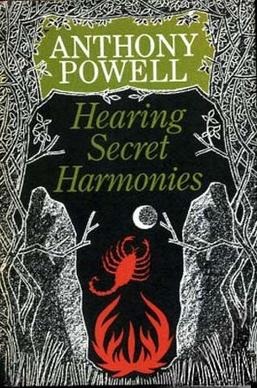
12-HearingSecretHarmoniesAfter 12 volumes, Anthony Powell concludes his epic series A Dance to the Music of Time with Hearing Secret Harmonies.

It is the late 1960s. We meet Fiona - the niece of narrator Nick Jenkins, along with some of the members of the cult to which she belongs, including its creepy and charismatic leader Scorpio Murtlock. We will see more of them later in the story.

Much of this series has dealt with Kenneth Widmerpool - a former classmate of narrator Nick Jenkins - who has risen to power through blind ambition; so, it is fitting that the final volume focuses much of its energies on his last days. Widmerpool is now an old man losing some of his cognitive abilities. He now rejects bourgeois society, embraces the counterculture, has joined Murtlock's cult, and is striving for humility. He is regretting some of his past actions - possibly as a result of his wife's suicide in the previous novel. Part of the old Widmerpool remains, as he challenges Murtlock for control of the cult.

A few other old characters return - some only peripherally:

  • American writer Russell Gwinnett is presented the Magnus Donners Memorial Prize for his biography of the late X Trapnel.
  • Sir Magnus's widow Matilda oversees the award and a wedding later takes place at their former castle.
  • The teenage twin daughters of J.G. Quiggin become frequent companions of Widmerpool
  • One character appears whom Jenkins met briefly at a college party in Book 1 and has not seen in the decades since.
  • Bithel - a WWII comrade of Jenkins's, whom Widmerpool had kicked out of the army for drunkenness - is now an old man and a member of this same cult.

The cult attempts to raise from the dead Dr. Trelawney, who led a cult in earlier Time novels.

In a series not known for plot twists or cliffhangers, this final novel does a good job of wrapping up the story.

This series as a whole exceeds the quality of any individual novels.

Reading A Dance to the Music of Time has been an amazing journey and I am happy to complete that journey.


GCast 89:

HTTP Request and Response Headers in a Spring Boot Application

Learn how to read headers from an HTTP Request and write them to an HTTP Response.


Episode 619

Mete Atamel on Serverless Containers

Google Cloud Developer Advocate Mete Atamel describes some of the tools for managing serverless containers in the cloud. He discusses the advantages of K Native, Tekton pipelines, Build Packs, and Cloud Run.

Links:

https://knative.dev/

https://cloud.google.com/tekton/

https://buildpacks.io/

https://atamel.dev/

https://cloud.google.com/run/


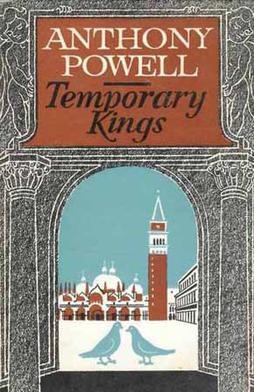
11-TemporaryKingsTemporary Kings is the penultimate book in Anthony Powell's epic 12-volume series A Dance to the Music of Time and covers the end of the 1950s - 10 years after the preceding novel - Books Do Furnish a Room.

Book 10 introduced - then killed off writer X. Trapnel. But he lives on in "Kings". Two new characters - both American - want to tell his life story. Scholar Russell Gwinnett is researching a biography of X; and film producer Louis Glober wants to make a movie about X's life.    

Narrator Nick Jenkins and those around him are getting older and some pass on, but those who survive retain and evolve their core personalities. One character observes that "...growing old’s like being increasingly penalized for a crime you haven’t committed."

The Widmerpools return. After losing re-election to the House of Commons, Kenneth is granted a Lordship to continue his social ascendency. But he is still married to the awful Pamela, who becomes even more terrible than she has in the past. Kenneth is accused of spying and Pamela is accused of killing her lover and these accusations are addressed in a rant by Pamela near the end of the story.

The revelations near the end are atypical of this series, which heretofore tended to favor character development over plot twists. The latter events are foreshadowed by a painting observed earlier in the novel.

Thanks largely to the ending, this was one of the more entertaining books in the series.


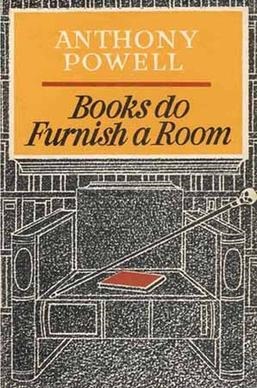
10-BooksDoFurnishARoomWorld War II has come to an end and Nick Jenkins, the narrator of Anthony Powell's 12-volume A Dance to the Music of Time has taken a job in a publishing house and is writing a biography. Goods are scarce and the nation is tired, but everyone is moving forward with their lives.

Books Do Furnish a Room begins the final trilogy/season/movement of the series.

The ambitious, but insufferable Kenneth Widmerpool has been elected to the House of Lords, which should make him happy; but, as expected, his marriage to femme fatale Pamela Flitton presents many personal difficulties.

This book is mostly about Pamela and the newly-introduced X. Trapnel - an enigmatic author, who becomes infatuated and entangled with Pamela - again with predictably disastrous consequences. Pamela is cruel and manipulative and unfeeling and fascinating. She draws men to her and poisons them, before leaving them damaged.

As always, Powell does an excellent job at building characters and evolving them as they age.


Episode 618

Dave Pine on NET 5 and the Docs team

Dave Pine discusses the coming features in .NET 5 and .NET MAUI and how it affects his Microsoft Documentation teams. We also touch on ethics in open source development and his show - .NET Docs Show.

Links:

https://docs.microsoft.com/

https://dotnetdocs.dev/


09-TheMilitaryPhilosophersWe are now at book 9. The Autumn Cycle (or the Third Movement, depending if you  are using the music or painting allegory) of Andrew Powell's 12-volume A Dance to the Music of Time.

The Military Philosophers covers narrator Nick Jenkins's life as World War II comes to a close. Although Nick remains mostly in Britain as a staff officer and never comes close to the front, he is still greatly affected by the war. He is eventually promoted to Major and he loses two of his oldest friends in the fighting, along with a longtime family friend. All the deaths appear "off camera", but they still move us as we know the history of each victim.

As always, the narrator's life is overshadowed by the lives of those around them and the events in which they find themselves. In this case, the event is the second world war and this book covers about two-thirds of it. It moves quickly and we see the change in people. Nick runs into a comrade from his first unit and is barely remembered because it was so long ago (although it was only a few years).

Kenneth Widmerpool - the ambitious former classmate, who appears in every novel of the series - continues to rise in power, eventually becoming a Colonel. But we see the dark side of his ambition, as some amoral decisions present themselves - decisions that cost the lives of others.

We are introduced to Charles Stringham's niece Pamela Flitton, a Pamela Flitton who keeps reappearing throughout the novel.

Near the end of the book, an old character returns who I suspect will alter Nick's postwar life.

And the author makes reference to French novelist Marcel Proust, with whom he is often compared.

I was touched by a scene in which Nick fights to secure from a General the only room with a bath because an Indian officer of lower rank needed it "for religious reasons". Nick never asks the specifics of the religion and does not try to understand it; but fights for him anyway.

Powell does an excellent job of bringing his characters together and evolving them over time; and he does a good job of conveying the weariness felt by England at the end of the war. A celebration at St. Paul's feels more like a funeral than a commemoration.


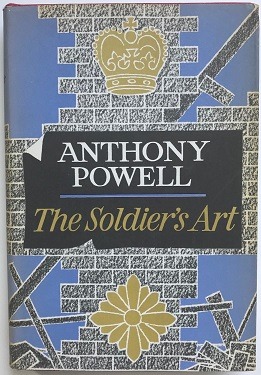
08-TheSoldiersArtIt is 1941 and London is suffering regular bombing raids by the Germans.

Anthony Powell's The Soldier's Art (volume 8 of A Dance to the Music of Time) follows narrator Nick Jenkins's life in the army and the lives of those around him.

The war takes its toll, as bombs kill several of Nick's family, friends, and acquaintances and others die in battle or suicide.

Nick encounters his old friend Charles Stringham, who appears to have recovered from his alcoholism and found some stability - if not happiness - as a cog in the army.

Nick continues to bump into many of his old acquaintances, often at the same time and place - coincidences that are common in this series.

This book shines a light on the petty politics of military and its officers. The omnipresent Kenneth Widmerpool features prominently and he seems to be more and more dominated by his ambition.

I find myself more and more engaged in these characters as the series progresses. I grieve at their deaths of some and I hope for their recoveries of others.


Episode 617

Kayla Cinnamon on Windows Terminal

Windows Terminal, which just released version 1.0 provides a single interface for almost any command-line system. PM Kayla Cinnamon discusses the existing features and what is coming in this tool.

https://github.com/microsoft/terminal
https://aka.ms/terminal-docs


07-TheValleyOfBonesThe Valley of Bones begins the second half of Anthony Powell's epic 12-volume cycle "A Dance to the Music of Time".

It is 1940 and Narrator Nick Jenkins is now in the army and England is now at war with Germany. Nick travels with his outfit to Wales and Ireland but returns to London for a weekend leave to attend a cocktail party with his pregnant wife.

For most of this series, Nick has interacted almost exclusively with his own class - the British middle/upper class and the London arts community. But in Valley, he meets many people outside his social stratum. This gives us a peek into a different part of society in England. The enlisted soldiers are drawn from working men, while the officers were bank managers and other professionals.

Powell includes satire of the military, from the incompetent general to the drunken aid.

This is a good opening to the 3-volume World War II cycle.


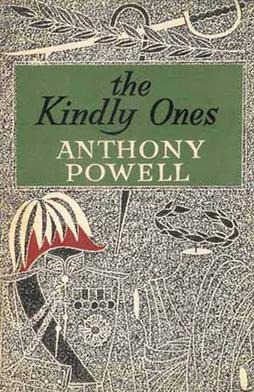
06-TheKindlyOnesAnthony Powell's The Kindly Ones begins and ends with a prelude to world war.

The opening chapter takes us back to narrator Nick Jenkins's childhood - at the outbreak of World War I. We see a love quadrangle among the family servants that results in a nervous breakdown for one of them; a visit from Nick's Uncle Giles; news of the assassination of the Archduke Ferdinand, plunging Europe into war; and a local cult leader.

In the closing chapters, England is preparing for an entry into World War II and Nick must make arrangements for his uncle's funeral. Several characters from Jenkins's past turn up at the small town where he is arranging the funeral - remarkable coincidence, but seemingly necessary to advance the story.

In between, a group of friends attend a dinner party at the home of Sir Magnus Donner. The party turns slightly decadent as the guests pose for photographs as the seven deadly sins - a game that nearly results in another nervous breakdown.

At the halfway point of his 12-volume A Dance to the Music of Time series, Powell concludes the "Summer" cycle (or "Second Movement", depending if you accept the painting or the music metaphor for this work) and leads us into the war. One gets a sense of foreboding as the storylines take darker turns.

I liked the preludes to world war that bookends the novel, and the evolution of the characters over time.

I look forward to the second half of this cycle.


Episode 616

Yina Arenas on Microsoft Graph

Microsoft Graph is a tool that allows you to query and analyze data about a user - including messages, calendar items, SharePoint lists, shared documents, devices, and many mores. Program Manager Yina Arenas describes how developers can use Graph to generate insights and enhance their applications. She also lists some of the new and recently-announced features of Graph.

Links:

https://graph.microsoft.com/

https://aka.ms/ge


June 2020 Gratitudes

Comments [0]

7/5
Today I am grateful to watch fireworks from my balcony last night.

7/4
Today I am grateful to be a citizen of the United States of America.

7/3
Today I am grateful for easy Amazon returns.

7/2
Today I am grateful for new bike pedals.

7/1
Today I am grateful to ride the northern part of the Chicago Lakefront Trail for the first time since the lockdown.

6/30
Today I am grateful for meals from 2 different African countries yesterday.

6/29
Today I am grateful for my new iPhone.

6/28
Today I am grateful for my first visit to Jackson Park.

6/27
Today I am grateful for my first car wash in almost a year.

6/26
Today I am grateful for a long bike ride yesterday.

6/25
Today I am grateful to have Nick and Adriana here this week.

6/24
Today I am grateful for dinner with family in a beer garden last night.

6/23
Today I am grateful to those who have had a positive influence on my character.

6/22
Today I am grateful to spend Father's Day with family and friends.

6/21
Today I am grateful to be a father.

6/20
Today I am grateful for a chance to visit many places in south Chicago honoring the contributions of African Americans to this city and country.

6/19
Today I am grateful for a day off to relax and reflect.

6/18
Today I am grateful to those who provide constructive feedback.

6/17
Today I am grateful for all the public art in my city.

6/16
Today I am grateful for so many beautiful churches in my city.

6/15
Today I am grateful for eBooks.

6/14
Today I am grateful to all those who donated over $1700 to the National Suicide Prevention Lifeline last week.

6/13
Today I am grateful to Eric for inspiring me to publicly support mental health this past month.

6/12
Today I am grateful for my new bike lock.

6/11
Today I am grateful for my new shorts, so I no longer need to choose between long pants and gym shorts on a hot day.

6/10
Today I am grateful for mailmen (and women)

6/9
Today I am grateful that the Chicago Public Library re-opened yesterday.

6/8
Today I am grateful for a weekend in southwest Michigan.


05-CasanovasChineseRestaurantThe fifth novel of Anthony Powell's A Dance to the Music of Time is the darkest so far in the series.

Powell bookends his story nicely with a visit to

The novel begins with a flash-forward to a woman singing near a bombed-out restaurant in war-torn London, which reminds narrator Nick Jenkins of a dinner years earlier with the now-deceased Mr. Deacon, musician Hugh Moreland, music critic Maclintick, and other English bohemians at the Italian-turned-Chinese restaurant named Casanova's Chinese Restaurant, which is also the title of this book. During the flashback, the group discusses marriage, seduction, suicide, and other topics that become relevant later in the novel. The conversation is recalled near the end when one of the group of friends kills himself, following the destruction of his marriage.

Earlier books in the series presented relationships and marriages that failed for various reasons, but CCR presents one particularly dysfunctional relationship in which the couple bicker constantly - often to the embarrassment of those around them. The situation is at first amusing but leas to a tragic end.

Characters from previous novels make appearances. The eccentric Erridge has disappeared to fight in the Spanish Civil War, only to return at the story's conclusion. And Nick's school friend Stringham shows up unannounced and drunk at his mother's party.

Again, the narrator's life takes a back seat to those around him. Nick's wife miscarries their child, but that event is glossed over and only seems a reason to run into Morland at the hospital and more attention is devoted to the     birth and death of Morland's child.

This book is darker than the first four with its suicide, infidelity, alcoholism, and divorce. But it is not without its humor.


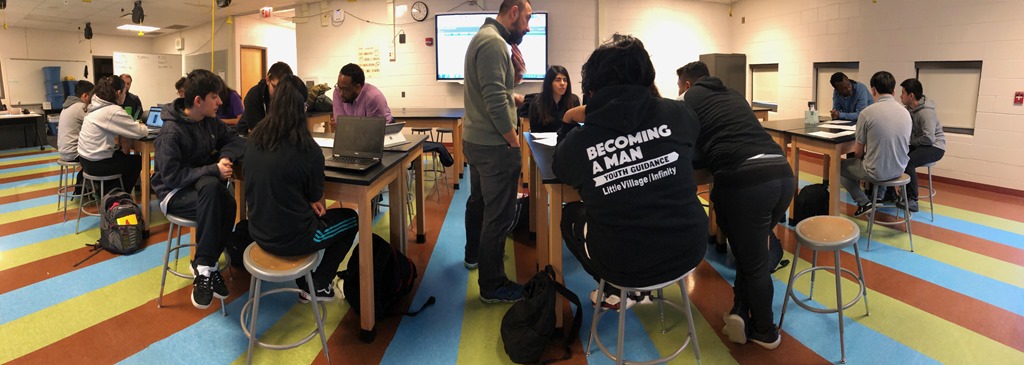
StemChallengeLast month, I completed a school year working with students at Infinity Math, Science & Technology High School.

The students were participating in the Illinois Science & Technology Institute's STEM challenge and I was one of a group of volunteers helping to mentor them. This year's theme asked students to design projects using Artificial Intelligence. I was impressed by the projects - each of which was designed to help those less fortunate. The three projects delivered were:

Fast Food Sign Language - an application designed to assist deaf people communicating their order at a fast food restaurant

OS-Fruitable - an app designed to help blind people by identify a fruit and its level of spoilage, based on a phone photograph

Pal Protect - a virtual friend device that allows parents to track younger children and for children to call for assistance when needed, while also providing entertainment.

We were supposed to host the school presentations at the Chicago Microsoft office; then select one team to represent the school at the statewide showcase to be held at the Museum of Science and Industry. But the COVID-19 crisis threw a monkey wrench into those plans. So this event was entirely virtual.

It was a pleasure to see the ideas that students came up with to help their communities using AI. And it was a pleasure mentoring high school students for this event the second year in a row.

I am looking forward to next year!


Episode 615

Sven Aelterman on Data in Education

Sven Aelterman is a Cloud Solution Architect and a former IT manager amd professor at a university. He talks about the type of data used by educational institutions, some of the compliance requirements around educational data, and tools used for managing student information.


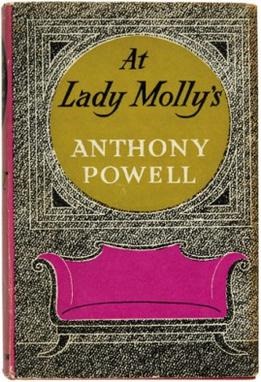
04-AtLadyMollysAnthony Powell's A Dance to the Music of Time marches into the summer of Nick Jenkins's life with volume 4 in the series - At Lady Molly's.

Nick becomes engaged but relays this information almost as an afterthought as he continues to focus attention on other characters.

The Tolland family figures heavily in this book, as numerous siblings, in-laws, and others pop in and out of the story. It is a large family with some eccentric characters - most especially the patriarch Erridge, who rejects society's expectations and decides to live among the proletariat in order to understand their struggles.

Widmerpool again figures heavily in this story as we learn of his engagement to a much older woman.

Weaved throughout is the story of Mona - a relatively minor character who establishes relationships with major characters, then leaves each for another. She seems to represent the impermanence of the current life of everyone in this intra-war England.

The outside world invades the bohemian and upper-class dinner parties more in  this book than in previous ones as the characters discuss the likelihood of war with Germany and Marxist Quiggin associates with Erridge.

The characters still intrigue me and, with a third of the story behind me, I am committed to continuing this series.


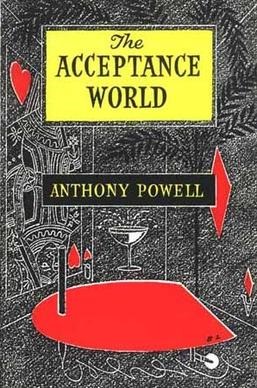
03-TheAcceptanceWorldThe Acceptance World is the third novel in Anthony Powell's epic A Dance to the Music of Time series.

Narrator Nick Jenkins has progressed somewhat in his career and has even written (but not published) a book.

We get a bit of mysticism (a fortune teller and a séance), a bit of politics with Quiggin expressing his Marxist views, and a bit of economics with Widmerpool's long-winded speech on the topic.

And we get numerous marriages and divorces - a sign of the fast times of the Jazz Age in England. But the Jazz Age has passed, and 1930s England is experiencing the upheaval of worldwide economic depression and the spread of new political ideas.

This novel reveals more of Nick than the first two and he finally connects with Jean Templer - sister of his school friend Peter - even though Jean is married to someone else.

The first quarter of the series is now complete. I don't know if Powell planned it this way, but the first three volumes are sometimes referred to as "The First Movement", as if the entire series were a symphony; or as "Spring" to separate Nick's life into four seasons.


Episode 614

Jeff Fritz on Migrating from Web Forms to Blazor

Blazor allows you to create client-side applications using C#. Jeff Fritz discusses the process of migrating applications based on Web Forms to take advantage of Blazor, without re-writing the entire application. He is building an Open Source project - Blazor Web Forms Components - live on his Twitch channel.

https://github.com/FritzAndFriends/BlazorWebFormsComponents
https://www.twitch.tv/csharpfritz
https://conf.livecoders.dev


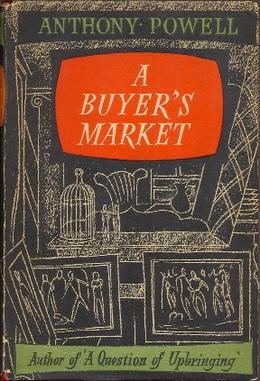
02-ABuyersMarketBuyer's Market is the second book in Anthony Powell's "A Dance to the Music of Time" series.

Our narrator Nick Jenkins has graduated from university and moved to London where he has a job at a publishing house, a girlfriend named Barbara, and invitations to a lot of parties. He encounters many of the characters introduced in volume 1 (A Question of Upbringing), such as Uncle Giles, Stringham, and Widmerpool; and Powell introduces a few new characters, such as Mr. Deacon, an artist who was a friend of Nick's parents.

Like the first novel, this book explores the changing relationships between Nick and his friends. Only Uncle Giles seems consistent in his behavior as the years pass.

For me, the most interesting character was Widmerpool, who displays and odd combination of social awkwardness and arrogance - a trait I have observed in others; a trait that moves me to both annoyance and pity.

The other plot point that intrigued me was Jenkins's relationship with women. We see his affair with Barbara (presumably his first girlfriend) and his dealings with the rambunctious and sexually liberated Gipsy Jones.

Nick's career has not yet started; his love life is erratically beginning; and his place in the universe. The character development compensates for a minimal story and lead me to volume 3.


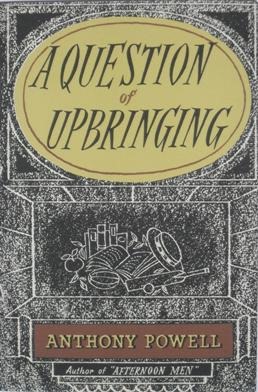
01-AQuestionOfUpbringingA Question of Upbringing kicks off Anthony Powell's 12-volume cycle A Dance to the Music of Time.

Nicholas Jenkins narrates the story of his school days in England in the 1920s.

Not much happens in this story. At school, Jenkins hangs out with his two friends - Charles Stringham and Peter Templer. They play a prank on their annoying housemaster and they laugh about their odd classmate Widmerpool. At the end of the term, Jenkins first visits with Templer's family; then spends the summer in France with friends of his family, where he encounters Widmerpool and begins to reassess his opinion of him. When Jenkins returns to school, he finds that he and his friends have drifted apart.

This book stands alone, but it seems incomplete. Each scene seemed disconnected from the others until at least two-thirds through the novel - almost like a collection of short stories.

However, I enjoyed the individual scenes, I enjoyed Powell's prose, and I enjoyed the characters, which I am told will reappear and develop throughout the series.

I am ready for Book 2.


Episode 613

Jason Fox on Spatial Computing

Jason Fox describes the science of Spatial Computing, which allows a computer to become aware of its physical environment; and talks about some practical applications that take advantage of this technology.

https://www.awexr.com/


DogSoldiersJohn Converse was once a successful playwright. But his ideas dried up and he found himself working as a correspondent during the Vietnam War. But, even at this job, inspiration escaped him. So, he decided to smuggle heroin into the United States, enlisting his old friend Ray Hicks to transport the drugs to his wife Marge in California.

Things go terribly wrong. The bad guys learn about the drugs and try to steal them. They threaten Hicks and Marge; then, kidnap Converse. Hicks and Marge go on the run, trying to find a way to sell their product and escape their pursuers.

Dog Soldiers by Robert Stone is a thriller with a suspenseful buildup and an exciting climax. But it is also a commentary on the cynicism that swept America after the idealism of the 1960s counterculture. American soldiers are selling narcotics, cops are corrupt, and young people are bored with LSD and trying more dangerous drugs.

Stone intersperses the action with philosophical musings via the inner dialogue of each character. There are moments of humor, of reflection, and of fear.

The thoughts of one character as he slowly dies while trying to escape through the desert is particularly poignant.

Dog Soldiers won the 1975 National Book Award. It is not a classic, but it is an exciting and well-written novel, with enough ideas to exercise your brain.


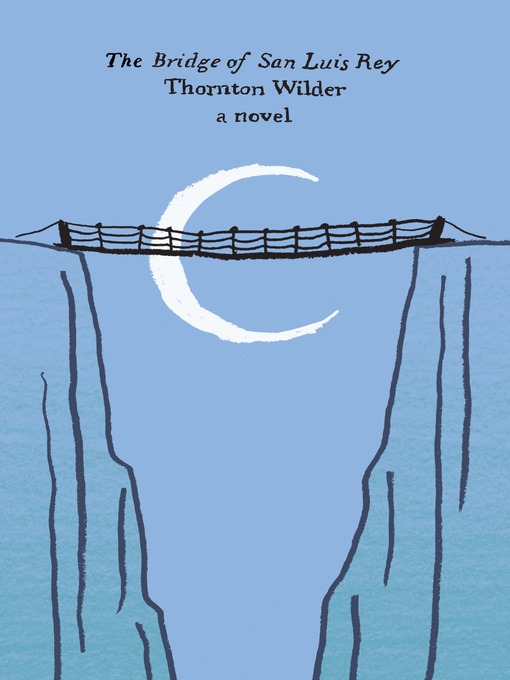
BridgeOfSanLuisReyIn 18th century Peru, Brother Juniper was out for a walk when he witnessed the bridge collapse, sending 5 people plunging to their death in chasm below. Why these people?, he wondered. Was there something about them that destined them for this tragic end? Was their death random chance or part of a divine plan? Why was I spared?

"Some say that we shall never know and that to the gods we are like the flies that the boys kill on a summer day, and some say, on the contrary, that the very sparrows do not lose a feather that has not been brushed away by the finger of God."

He spent years investigating - to learn about the five victims.

  • Marquesa de Montemayor was a mother mourning the damaged relationship with her daughter. She and her orphaned companion Pepita were returning from praying for the daughter at a nearby shrine.
  • Esteban was on his way to serve on a sailing vessel to help him heal from the death of his twin brother and to earn money for a gift for the Abbess who cared for the boys when they were young.
  • Uncle Pio had just begun to reconcile with his estranged niece and was on his way to Lima with her son Don Jaime.

There are no heroes or villains here - just people living their lives and loving one another and fighting one another. The three sets of victims did not know one another, but their lives were connected through their interactions with others.

The lives of the five people yield no clue as to why they were selected for death on this day and no clarity on God's plan.
Brother Juniper is ultimately punished for even asking his questions.

Thornton Wilder's The Bridge of San Luis Rey is a brief, simple story that brings the reader into the interconnected lives of the characters. We see how they struggle with loss and how they deal with grief. We witness the cruelty of the world as events beyond their control affect their lives.

It is this and the beauty and subtlety of Wilder's prose that won this novel the 1928 Pulitzer Prize.

The book does not answer Brother Juniper's questions about God's plan, but it does offer a message on the meaning of life:

"Soon we will die, and every memory of those five will disappear from the earth, and we ourselves will be loved for a short time, and then forgotten. But love will have sufficed; all those motions of love return to the Love that created them. Not even memory is necessary to love. There is a world of the living and a world of the dead, and the bridge is love, only survival, the only meaning"


Episode 612

Troy Hunt on The Role of Technology in Social Isolation

The COVID-19 pandemic and responses to it have affected many aspects of our lives. Troy Hunt discusses how technology and technologists have adapted to this.

Links:

https://haveibeenpwned.com/

https://www.troyhunt.com/


May 2020 Gratitudes

Comments [0]

6/7
Today I am grateful for:
-Attending the St. Joseph Farmers Market for the first time
-My first visit to Grand Mere State Park in Stevensville
-A backyard BBQ and bonfire in Three Oaks last night

6/6
Today I am grateful to watch the sun set over Lake Michigan last night.

6/5
Today I am grateful for open-minded people.

6/4
Today I am grateful for those who make an effort to bring people together.

6/3
Today I am grateful to those who are peacefully protesting against injustice.

6/1
Today I am grateful that the violence and vandalism in Chicago and other cities the past few days has mostly spared my neighborhood.

5/31
Today I am grateful for a day in Three Oaks, MI with Emilija Dinah, and Patrick.

5/30
Today I am grateful to finally receive my replacement driver's license.

5/29
Today I am grateful for my new spiralizer.

5/28
Today I am grateful for the Illinois STEM challenge and an opportunity to serve as a mentor this year.

5/27
Today I am grateful
-to Yev for taking the time to explain some Java concepts to me yesterday
-to cash in hundreds of dollars of Bing Rewards for Amazon gift cards.

5/26
Today I am grateful for
-a 5-day weekend
-my first visit to Washington Park

5/25
Today I am grateful to all the men and women who gave their life protecting my country.

5/24
Today I am grateful that my ice maker, which has been broken for weeks, is now fixed.

5/23
Today I am grateful for
-my first visit to Riverbank Neighbors Park
-a food truck selling tasty pierogis in Ukrainian Village

5/22
Today I am grateful for all the beautiful parks in my city. ‬

5/21
Today I am grateful for 2 bonus vacation days.

5/20
Today I am grateful for my first visit to Humboldt Park - a large beautiful park in the city.

5/19
Today I am grateful to complete a required company certification - a process I began months ago.

5/18
Today I am grateful for kind words from a customer after my team and I presented what we had been working on.

5/17
Today I am grateful for online Mass

5/16
Today I am grateful I've been able to keep up a daily exercise routine during this lockdown.

5/15
Today I am grateful for new tires on my bike.

5/14
Today I am grateful I was able to help my son file his taxes last night.

5/13
Today I am grateful to the organizers of DevAroundTheSun, who help the tech community and to raise money to fight COVID-19.

#devaroundthesun

5/12
Today I am grateful to sort, catalog, and/or dispose of all these old hard drives.

5/11
Today I am grateful to all the mothers who love their children and make them a priority in their lives.

5/10
Today I am grateful for a walk along the Fox River in Batavia yesterday.

5/9
Today I am grateful for Indian food.

5/8
Today I am grateful for good health.

5/7
Today I am grateful to those with the courage to speak truth to power.

5/6
Today I am grateful for tacos.

5/5
Today I am grateful for social media, which helps me stay in touch with friends during this lockdown.

5/4
Today I am grateful to spend much of this past weekend reading for pleasure.


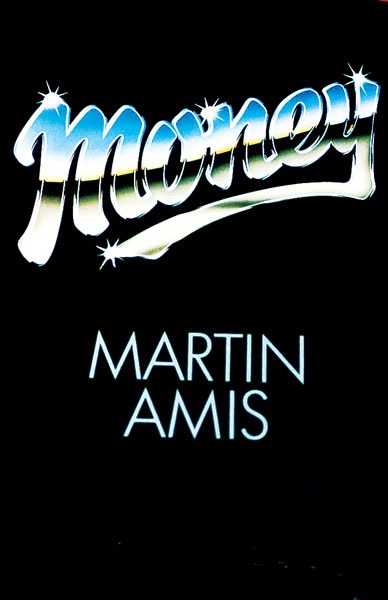
MoneyJohn Self is a successful director of advertising commercials, getting ready to direct his first feature film. He has a seemingly limitless budget for this film and is promised a huge salary. The Englishman travels from his London home to New York and back multiple times, consuming physical pleasures along the way.

Martin Amis's novel Money -sometimes titled Money: A Suicide Note- tells Self's story.

John leads a life of hedonism and debauchery, gliding from booze to porn to drugs to prostitutes to bar fights to masturbation to his girlfriend. And, despite his recent directing contract, he has trouble with money.

Most of his problems are Self-inflicted. He is an overweight drunk and a sex addict and a misogynist and is sometimes violent and he is extremely careless with money. Here are some examples of John's philosophy:

"The first thing I wonder about a woman is: Will I f*ck it? Similarly, the first thing I wonder about a man is: Will I fight it?"

"I disclaim responsibility for many of my thoughts. They don't come from me. They come from these squatters and hobos who hang out in my head"

But John is also a victim.

He suffers from a severe toothache and from tinnitus. When he came into money, his father presented him with a bill for the cost of his upbringing; his gold-digging girlfriend is unfaithful and is spending his savings; each of the film's actors pressures him to radically alter the movie's script in order to satisfy their ego; Self has a mysterious enemy, who calls him to harass and threaten him and seems to know everything about his life. And there are other forces conspiring against Self of which he is unaware until the end of the novel.

Amis does a good job building a character that is at once abhorrent and sympathetic. John Self is clever, but unlikeable. His first-person narrative is the stream of consciousness made popular by writers like Henry Miller, Vladimir Nabokov, Malcolm Lowry, and Jack Kerouak. And Self's path to self-destruction is not unlike the narrators of "Tropic of Cancer", "Lolita", "Under the Volcano", and "On the Road".

And the author's ability to take a complex, unlikely story filled with hyperbole and make it seem plausible is admirable, as is the humor with which he tells this story. Amis even inserts himself into the book, as the arrogant writer that John approaches to rewrite his screenplay. He may add himself as a character to convince the reader that he is not the vulgar anti-hero narrator.

It helped that I listened to the audiobook, which was expertly narrated by Graeme Malcom, who reminds me very much of Michael Caine

Money is a commentary on the excess consumerism of the 1980s; but it will remain relevant as long as humans value money over other aspects of their life.


GCast 87:

Logging to Azure Application Insights from a Java Spring Boot Application

With a few configuration settings, you can push your logs from a Java Spring Boot application into Azure Application Insights - even if the app is not running in Azure!


When working with Git, I find myself frequently typing “git status” - a useful command that shows me on which branch I am working and the number of uncommitted files that have been changed, added, and deleted. An example is shown in Fig. 1:

gp01-gitstatus
Fig. 1

As you can see, I am working on the "dgiard/posh-git-demo" branch, I have added 1 file, deleted 1 file, and changed 1 file since my last commit.

But what if I could always see this information? What if was appended to the command line, so I never had to type "git status"?

The posh-git tool provides exactly this functionality.

To install posh-git, run Windows PowerShell as an administrator.

At the PowerShell command prompt, enter  

PowerShellGet\Install-Module posh-git

and press "Y" when prompted for confirmation.

Then, enter the command 

import-module posh-git

Your command prompt will change to something like the one shown in Fig. 2.

gp02-gitposhPsPrompt
Fig. 2

Notice the text in square brackets after the path. It lists the current branch no which I am working, followed by the number of files I have added, changed, or deleted (if any) since my last commit. The red text, indicates these changes not been added to my git rep repository. If I issue a "git add", the text will change to green to indicate they are ready to commit, as shown in Fig. 3.

gp03-added
Fig. 3

After I commit the files, I only see my current branch and no uncommitted files, as shown in Fig. 4.

gp04-commit
Fig. 4

Of course, I can get more details by typing "git status"; but most of the time, this is all the information I need.


Thank you to Hattan for showing me this tool.


Episode 611

Nik Molnar on Visual Studio Codespaces

Visual Studio Codespaces (formerly Visual Studio Online) is a cloud-based development environment that you can connect to from Visual Studio Code, within a browser, and from Visual Studio (in private preview). PM Nik Molnar describes the capabilities and how it works.

Links:

https://online.visualstudio.com/

https://github.com/nikmd23/ballpark-tracker


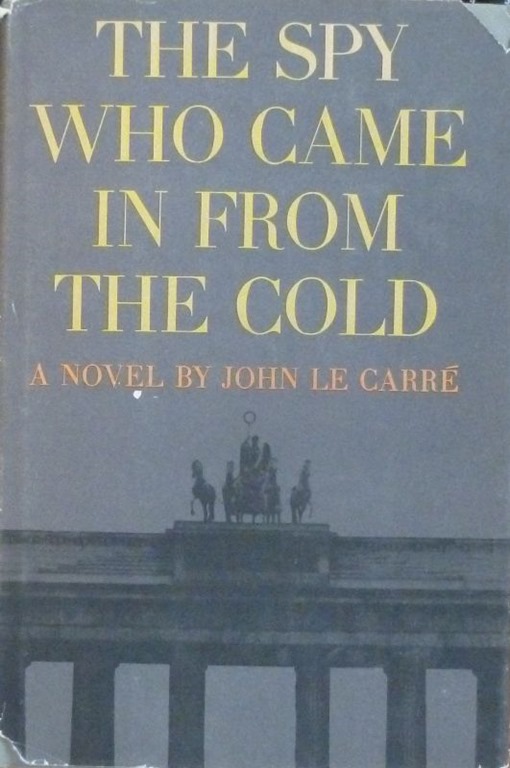
SpyWhoCameInFromTheColdIt is the early 1960s at the height of the Cold War. Alec Leamas is the Berlin Station Head for the British Intelligence agency known as the "The Circus". Operations in Berlin have not gone well and Leamas is taking the blame.

When Leamas returns to England, the Circus chief - who goes by the name "Control" - gives him a new assignment. Leamas is told to pretend to leave The Circus under bad circumstances and lead a life of isolation, alcohol, debt, and bitterness. The Circus even circulates rumours of incompetence and embezzlement to make his despair more convincing. Sure enough, an agent of the Eastern Bloc approaches Leamas after he` is released from jail on an assault conviction.

Leamas defects to the other side and sows suspicion amongst his enemies. But is Leamas the manipulator or is he the one being manipulated?

John Le Carré is a master at building suspense. For a novel with very little action (much of it is interrogation), I found myself riveted to "The Spy Who Came in from the Cold" - anxious to know what will happen next. He kept me guessing until the end - pointing the reader in one direction, before pulling back the curtain to reveal a new twist.

On the surface, this is a complex spy novel with espionage and double agents and double-crossings and triple-crossings.

But there is a subtext to this novel that elevates it from good to great. The Communists of the East and the Democracies of the West each hold to ideals that they believe are best for their society. Yet, the agents protecting these societies are willing to completely ignore those ideals to protect their societies. To them, values are meaningless when a war must be won. To protect the interests of the state, bad guys are protected, and idealists are destroyed. England may believe in democracy for its citizens, but The Circus will abandon all national principles to win the Cold War. Leamas has become almost numb to this hypocrisy. He strives to ignore the moral issues and just do his job. If it were not for the love story, he would have succeeded.


SandmanLong ago, in an isolated temple in the mountains near Kyoto, a magical fox falls in love with a monk. When the monk's life is threatened by a powerful rich man and his hired demons, the monk and the fox must choose whether to sacrifice themselves for the other.

They seek the help of Morpheus, the King of All Night's Dreaming - a character introduced in Gaiman's popular Sandman comic series.

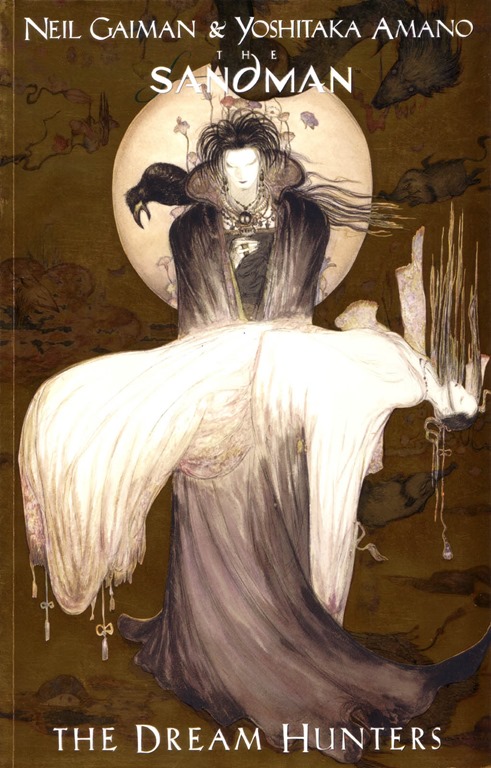
Sandman: The Dream Hunters is a novella written by Neil Gaiman and illustrated by Yoshitaka Amano. Amano is famous for his work on anime projects video games and he adds depth to this story with beautiful watercolor and charcoal images.

This is a simple fairy tale, with the feel of Japanese folklore. It does not add much to the Sandman legend, as Morpheus is a peripheral character here, but he helps to tie the story together with his advice and philosophy.

Immediately after reading this novella, I read P Craig Russell’s comic adaptation, which was a simplified version of the same story and also worthwhile.

The Dream Hunters is a beautiful tragic love story, told with Gaiman's lyrical charm.


The fourth and final keynote of Microsoft Build 2020 focused on Teams, Microsoft Graph, Windows, and the Fluid Framework. As has been the case for some time, Teams appears to be innovating at a rapid pace. I was encouraged by the unified Windows platform, which allowed developers to combine UWP and desktop apps – a source of frustration in the past.

Here are my notes:

Teams

Changing the way people work and learn

Collaboration app

Extensible: Build apps using

Using Power platform

Bot framework

Graph API

SharePoint framework

New capabilities

Teams extensions for VS code and VS

Select type of app

Build app

Test in Teams with 1 click

Publish

To App Store

To your  tenant

Teams + Power Apps

Use templates or create from scratch

Customize Teams

Drag and drop

Multiple windows

GA this summer

AAD Single Sign on

Activity Feed API

Users can customize workspace with apps

Users can pop-out apps


Microsoft Graph

API to access mail, people,

Call via HTTP requests

SDKs for multiple languages

New

View and Modify permissions

Microsoft Graph Toolkit

Extend M365 (e.g., extend Teams)

Build your own apps

http://graph.microsoft.com

Publisher verification and certification

Apps verified/certified by MS

Increase trust

IT admins can set policies around this

Connectors

Move data in and out of MS Graph

e.g., Move data to/from Azure

Security and Compliance

e.g., Teams Chat webhook API

Knowledge Generation

Project Cortex

Knowledge network across org

e.g., show info about a specific topic


Fluid Framework

Content-centric collaboration

Built for end-users and developers

End-users

Components

Tables, lists

Can insert into email and chat

Rendered in-line

Developers

Web-based framework

Distributed data structures, data merge

Embed into other apps

http://fluid.microsoft.com

Low latency

Demo

Replace JavaScript Map with Fluid SharedMap

Listen to events on SharedMap

Framework is open source


Windows

Unifying App Development

Project Reunion

Unifying UWP and desktop apps/libraries

Decoupling from OS

Mix and match apps

No need to wait for users to update OS

New WinUI controls

Support for swiping gesture

Number control has ability to  do math

Windows Virtual Desktop (WVD)

Apps adapt when running on iPad, Linux, other platforms


GCast 86:

Logging in a Java Spring Boot Application

Learn how to add logging to your Java Spring Boot application and configure the level of that logging.


The third keynote at Microsoft Build 2020 was the most informative one that I’ve watched so far. It was hosted by Scott Guthrie, but included presentations and interviews by many other Microsoft experts, including Donovan Brown and CVPs Amanda Silver, Julia White, and Rohan Kumar. I’m most interested in exploring Codespaces (which was discussed in Keynote 2) and the new Machine Learning Studio.

Here are my notes:


95% of Fortune 500 companies use Azure

61 Azure regions


Sustainability

Carbon negative by 2030

By 2050, Remove all historical Microsoft carbon emissions

$1 billion climate innovation fund


Teams

75 million daily users

Built on Azure


Developing for the Cloud

Demo: Single Page App

Static Web Apps + Serverless Functions

Deployed from VS Code via GitHub

New Azure service; Static Web  App (Preview)

Github actions

Pull Request from VS Code, using GitHub extensions

Codespaces


Azure Static Web Apps

Currently in preview

Dynamic scaling

Github native workflow

Use JavaScript framework or static site generator to build app

You can Configure routing, auth, custom domains


Visual Studio Codespaces

Development environment in browser

Hosted in Azure

Extensions supported

VS or VS Code experience


Azure Serverless

Azure Kubernetes Service

Windows Server containers (new)

Azure Private Link

Spot pricing

cheaper, but allows for some interruptions

For more tolerant apps


Azure Cosmos DB

Free tier

Serverless pricing

pay only when used

May be cheaper for "spiky" workloads

Auto-scale

99.999% availability


Cognitive Services

AI in Azure

Built-in models

Customizable models

Personalizer

Rationalization service

Apprentice mode: Run along time existing service

New Speech voice styles

Enhanced container support


Power Apps

Developers and "Citizen Developers"


Demo: Covid-19 screening

VS Connected Services experience

Wizard to connect to Azure resources, such as CosmosDB

HTTPRepl

Browse and debug API

Command line

ls: List services in API

get: execute HTTP GET on API


Interview with Starbucks CTO Gerri Martin-Flickinger

Using MS collaboration tools (e.g., "Teams") to connect teams

Using Azure to  analyze COVID-19 and understand which stores to open, when, and how to ope


Azure Synapse Analytics

Data warehouse

Integration with Power BI and Azure Machine Learning

Azure Synapse Link

Cloud native implementation of hybrid transactional analytical processing

Links operation databases to Synapse

Data available in seconds

No need for ETL pipelines

Currently available for Cosmos DB (other databases coming)

[Synapse Link] button in CosmosDB "Data Explorer" blade


New Azure Machine Learning Studio

Notebooks

Designer: drag and drop

Wizard


Azure Machine Learning Responsible ML (announced)

Understand, protect, and control data and models


This year’s Microsoft Build conference was entirely online, which changed the format of the keynote presentations. In the second keynote, Scott Hanselman sat at his home computer and connected with others at Microsoft via Teams. They showed off some of the projects they were working on, including a Xamarin application and a dog-tracking application; but, these apps were just an excuse to talk about some of the newer technologies from Microsoft. Technologies covered included Codespace, Guthub mobile, Wingget, WSL2, and Windows Terminal.

The conversations were enhanced by Hanselman’s wit.

Here are my notes:

WinGet

Package manager for Windows

e.g.,

winget install terminal

aka.ms/winget


Coding in Teams

@codeconversations

Allows you to write code

Start with ``` to go into executable  code in the cloud

aka.ms/codeconversations


WSL2

Real Linux kernel

Docker desktop works

GIMP running in WSL2

GUI in Linux

currently in preview; Available later this year

aka.ms/wsl


Windows Terminal is now version 1.0 (finally)

Unicode characters

Background images


GitHub

Just acquired npm

99% of npm packages hosted on github

Github is now free - even for private repos with unlimited people

Enterprise features available for a fee

Github mobile app for iOS and Android


GitHub Mobile

Check on pull requests and issues

Comment on Pull Requests


Codespace

Development environment in the cloud

From github repository, click green [Code] button

From dropdown: Open in Codespace

Opens dev environment in browser

Similar to VS Code

Settings | Preferences Sync

Select settings

[Turn on]

Same theme and extensions on-premise as in the cloud

LiveShare

Connect and collaborate with others using Visual Studio or Visual Studio Code

aka.ms/codepaces


Visual Studio Code

21,000+ extensions


Xamarin

Hot reload: Changes reflected immediately in running app (no recompile / redeploy required)


Episode 610

Christine Matheney on Teaching Computer Science to the Next Generation

Christine Matheney is passionate about teaching science and technology to young people. She works with Girl Scouts and high school students and teachers, helping them learning Computer Science. She discusses her activities and what Microsoft is doing in this area.


LordOfTheFliesWhat would happen if a plane crashed on a deserted island and the only survivors were a group of English schoolboys?

Would they form their own society?

Would they establish rules by which to govern themselves?

Would they be kind to one another?

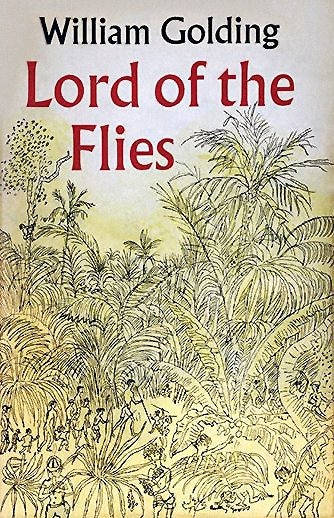
William Golding describes this scenario in his 1954 novel Lord of the Flies.

It is a dark story.

After their plane crashes, killing all adults on board, the boys attempt to self-govern, but quickly devolve into savagery. The stronger boys seize power and bully the weaker ones.

Golding uses the boys on the island as a microcosm of society. Without the rule of law to govern them, the strongest take over and exert their way upon the weaker ones.

Not one of the boys is over 12 years old, but it is easy to forget this as they grow more violent and emotion overrides reason and groupthink overrules logic.

A power struggle takes place between Ralph, who tries to establish order and a set of rules to help the boys survive and increase their chance of rescue; and Jack, who appeals to their emotions and plays on their fear of an alleged monstrous beast on the island.

As their makeshift society collapses, they begin to worship the head of a pig swarming with flies (their "Lord of the flies") and even robbery and murder is no longer taboo to some of them.

I read this parable 20 years ago and again this week - and I loved it. Golding paints a dark picture of the chaos that results when rules are not enforced. We see ourselves in these young boys and it is not the best part of ourselves.


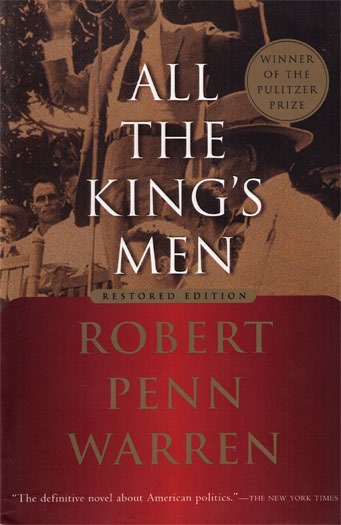
AllTheKingsMenAll the King’s Men by Robert Penn Warren tells the story of Willie Stark - a southern country lawyer who beat the system and became Governor.

Stark began as "Cousin Willie from the country". His first entry into public life was to fight against a back-room deal that handed a school construction project to an undeserving contractor - a deal that resulted in the deaths and injury of dozens of children when a fire escape collapsed a couple years later. Willie continued his fight against the political establishment and eventually became governor. But, as he accumulated more power, he lost the idealism of his youth. Eventually, he became known to all his associates as "The Boss".

Willie was charismatic and popular because he championed the common man. But he was also brutal and would not hesitate to destroy his enemies. He often resorted to bullying, bribery, and blackmail to accomplish his goals and maintain his power. He built and presided over his own political machine.

Eventually, Willie encounters problems against which he is powerless.

But All the King's Men is not just the story of Willie Stark. It is as at least as much about Jack Burden - Stark's friend and right-hand man and the narrator of Warren's novel. Like Willie, Burden abandons his ideals as he carries out Willie's plans - ignoring the consequences of his actions.

And the book is very much about the consequences of actions. Neither man has trouble rationalizing his choices. Stark believes that the ends justify the means - that it is ok to accumulate power by any means necessary because he is doing good with that power. He is convinced there is only evil in the world, so he must use that evil as a tool to make good. Stark is not a bad man. But, in his quest to do good, he ends up causing bad things.

Burton, in contrast adopts a nihilistic attitude in which he ignores any results of his action. He lives much of his life through Willie and abandons his own sense of responsibility.

Even many of the minor characters in  the novel compromise their principles at least once - invariably with negative unintended results.

This is a novel about the corruption of power and the hypocrisy inherent in American politics and the consequence of using the end to justify the means and the limits of that power once obtained. Although written in 1947 and chronicling a fictional southern state governor (presumably based on Louisiana governor Huey Long), one can find parallels in the current administration.


The Microsoft Build conference had a different feel this year as the global threat of the COVID-19 virus forced the company to host the entire conference online – mostly from the homes of the developers and managers. Of course, this affected me less than others because I have never actually attended Build in person.

I always make a point of watching the opening keynotes, as this is where one hears about new announcements and the things about which Microsoft is most excited.

The day 1 keynote featured Satya Nadella calling attention to the success of Azure, Office 365, and Microsoft 365. He invited a couple of guest speakers to demonstrate how they were using Microsoft technologies to improve their business.

Immediately after Satya’s address, the finals for Imagine Cup were held. This is an international student tech competition that included thousands of submissions from all over the world. The 6 semi-finalists were introduced; the 3 finalists presented their project, and a champion was announced. This event is close to my heart, since I was involved a few years ago. Team Hollo from Hong Kong won with a project that used AI to track mood by analyzing video and voice and comparing it to pre-built models, as a way of combatting depression and suicide.

Here are my notes from Day 1:

Satya Nadella

CodeSpace

Provision dev box in cloud, provisioned with VS Code

Work from any device

WSL 2

Linux on  Windows

Power Platform


95% of Fortune 500 use Azure

Cloud extends to edge

Azure Arc


Microsoft 365

Build apps or extend apps


Power Platform

Rapid App Dev tool for professional developers

Also for "Citizen developers" who don't write code for a living

3.5 million users

Extends M365

1-click: Add Power Apps to Teams


Distributed Infrastructure

95% of Fortune 500 use Azure

Most data regions (61)


"Project Reunion"

Unify Win32 and USP app development


Case Study: Folding@Home

Greg Bowman, PhD, Washington U St Louis

Studying how proteins fold

Distributed computing to home computers

https://foldingathome.org/


Case Study

San Francisco Conservatory of Music

App integrates with Teams

Use Teams to perform for and interact with audience

Tudor Fay, New Blue, Inc.


Imagine Cup

6 semi-finalists

3 Finalists

Tremor Vision

United States

Parkinson's

Azure Custom vision to detect tremors associated with Parkinson's

Team Syrinx

Tokyo

Lost voice

Device on throat. Generates vibration patterns.

Hollo (winner!)

University of Hong Kong

Mood tracking app

Use Azure to track face, voice. Use models to evaluate mental health


New features for education

Microsoft Learn Student Ambassador

New student hub on Microsoft Learn

Student Zone at Build


<< Older Posts | Newer Posts >>