June 2023 Gratitudes

Comments [0]

6/5
Today I am grateful to watch the NBA Finals with my son last night.

6/6
Today I am grateful for the times I have been able to escape a toxic work environment.

6/7
Today I am grateful to get a lot done yesterday and today.

6/8
Today I am grateful for a classical music concert at Lakeshore Park last night

6/9
Today I am grateful to be a teacher and coach for a Java workshop this week.

6/10
Today I am grateful for lunch with Adam yesterday.

6/11
Today I am grateful to see:
- "Personality: The Lloyd Price Story" at the Studebaker Theatre yesterday afternoon
- James McMurtry in concert last night at the Old Town School of Folk Music

6/12
Today I am grateful to see Los Lobos at the Chicago Blues Festival last night.

6/13
Today I am grateful for a vacation day yesterday, just to relax and recharge.

6/14
Today I am grateful to catch up on writing book reviews last night.

6/15
Today I am grateful to attend a Partnership Leaders event in downtown Chicago last night.

6/16
Today I am grateful:
- to see Cracker in concert yesterday
- to drink țuică with Dan and Randy last night

6/17
Today I am grateful:
-to the organizers of #juneteenthconf yesterday
-to see an excellent production of The Who's "Tommy" at the Goodman Theatre last night.

6/18
Today I am grateful to be a father to two amazing sons!

6/19
Today I am grateful to those who called or messaged me with a Father's Day greeting yesterday.

6/20
Today I am grateful for:
- a visit from my son on his birthday
- Jenni's ice cream for Father's Day

6/21
Today I am grateful to catch up with Josh yesterday.

6/22
Today I am grateful for a free concert at the Chicago Women's Park and Gardens last night.

6/23
Today I am grateful for a new washer and dryer.

6/24
Today I am grateful for a bike ride along the lake front with Thad yesterday.

6/25
Today I am grateful to see Asteroid City at the Music Box Theatre last night.

6/26
Today I am grateful to finish a draft of this presentation I have been working on for a week.

6/27
Today I am grateful for some good discussions yesterday about my goals for next Fiscal Year.

6/28
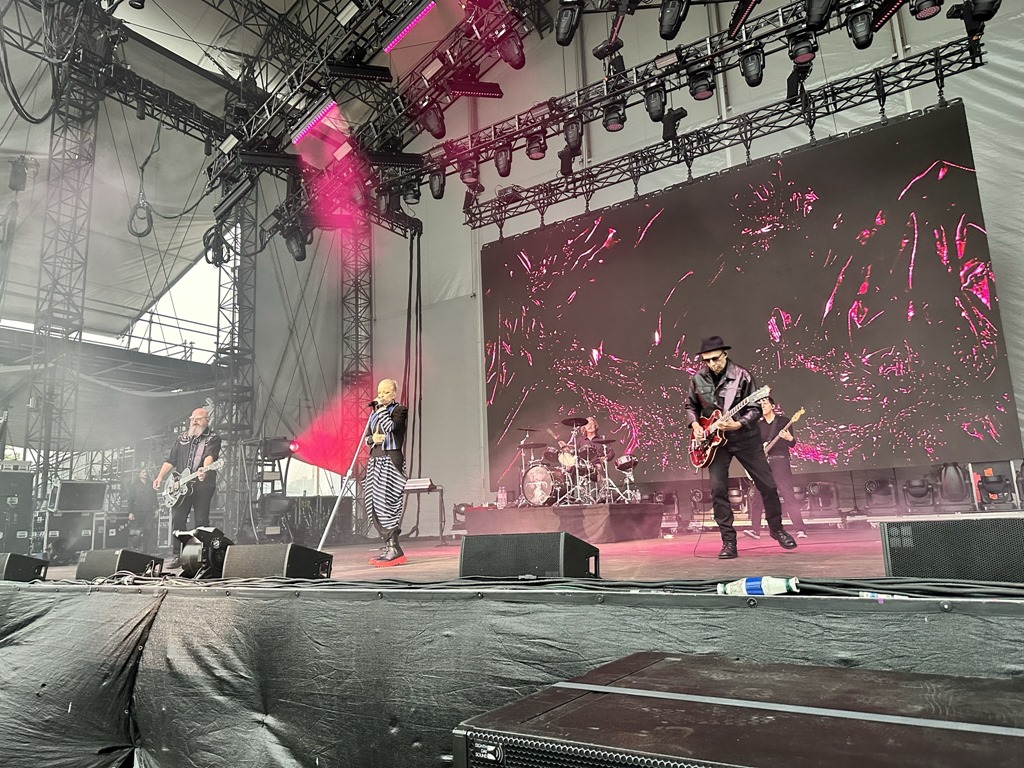
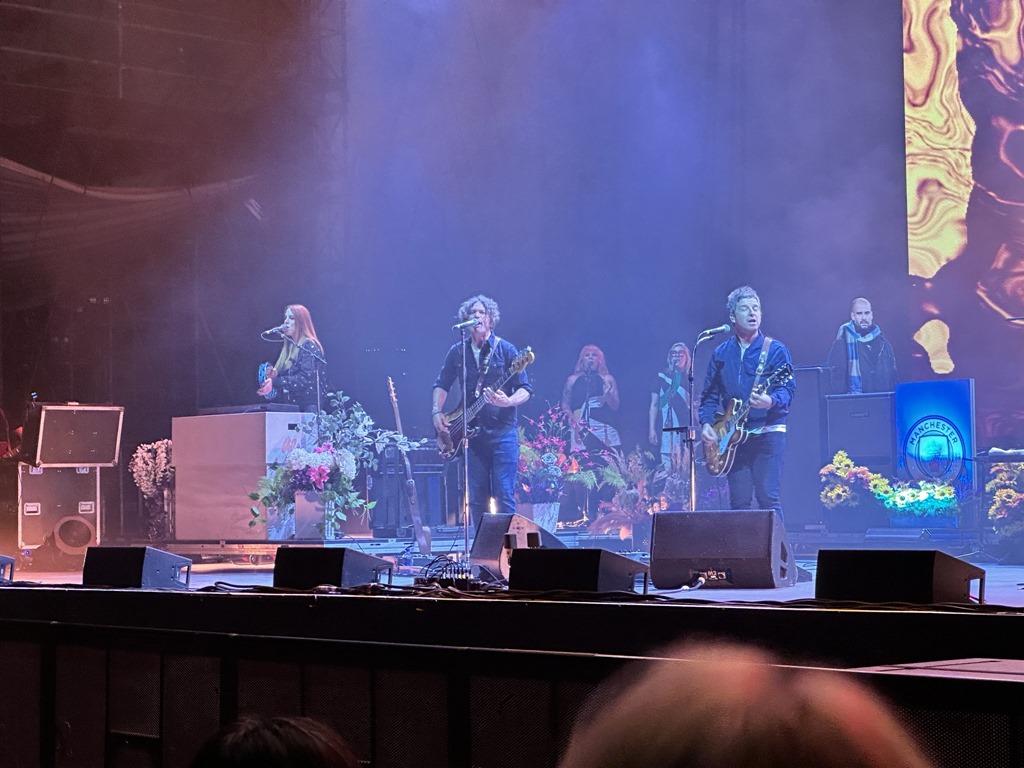
Today I am grateful to see Garbage and Noel Gallagher in concert last night.

6/29
Today I am grateful:
- to attend a West Michigan White Caps game with J. last night
- to meet Hall of Famer Jack Morris
- to drive a Tesla for the first time

6/30
Today I am grateful for:
- Lunch with Chris and J. yesterday
- J.'s hospitality this week
- Coffee with Nick in Kalamazoo on my way home

7/1
Today I am grateful to catch up with Mike yesterday.

7/2
Today I am grateful for dinner and a Cubs game with family last night to celebrate my son's birthday.


When I arrived at the Huntington Bank Pavilion Tuesday evening, I had no idea who the headliner was. Noel Gallagher rose to fame as the lead singer of Oasis. Oasis split up in 2009, and his new band - Noel Gallagher's High Flying Birds - has had success in the UK and Europe but has not equaled that popularity in the US. Garbage filled arenas during their heyday of the 1990s, but these days find their greatest commercial success outside the US.

MetricIt turned out that Noel Gallagher was the headliner. But the show did not begin with Garbage. Rather, Metric - a hard-rocking band from Toronto featuring the angelic vocals of Emily Haines – opened the night's entertainment with an entertaining set.

GarbageGarbage took the stage next. Although lead singer Shirley Manson hails from Scotland, the group has upper Midwest roots. They formed in Madison, WI in 1993. Manson's energetic vocals contrast with her voice between songs as she charmed the crowd and voiced her love of Chicago, which the band visits every year. They played for an over an hour before announcing they had to cut the set short due to poor air quality (fires in Canada drifted smoke across the northern US) and Manson's asthma.

Noel GallagherFor Noel Gallagher, stagehands placed dozens of live flower arrangements around the stage. Gallagher played mostly acoustic guitar, switching to electric occasionally. His songs have an energy and a lot of lyrical complexity. He let the music do most of the talking, addressing the crowd sparsely between songs. The audience was on its feet most of the night, singing along. The show's first half featured the music of  High Flying Birds, while the final half dozen songs were from Gallagher's Oasis days.

The band closed with a singalong of Bob Dylan's "Quinn The Eskimo," followed by a rousing rendition of "Don't Look Back in Anger."

While The Flying Birds did not return to the stage for an encore, it was a full night. Three bands, a smoky sky, and three excellent sets left the audience satisfied.


Episode 755

Andy Huang on Application Resiliency

Cloud Solution Architect Andy Huang describes how you can make your applications more resilient - able to survive unexpected failures and surges in demand.


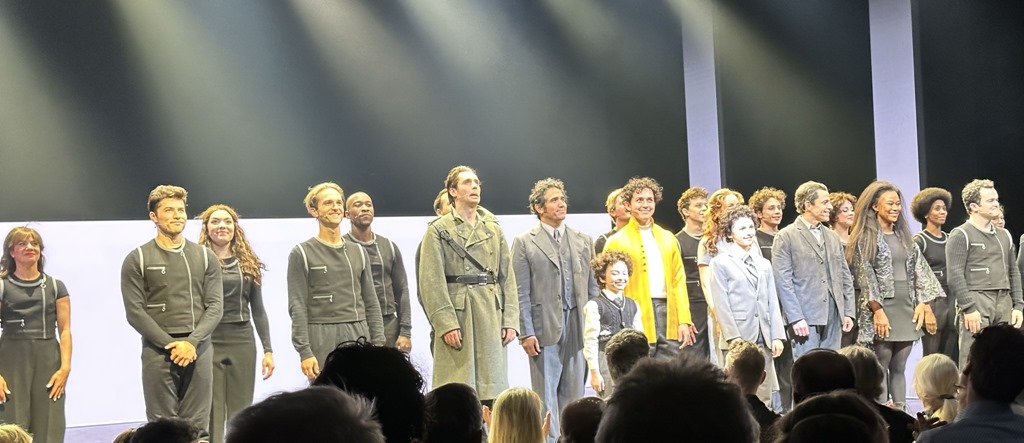
Tommy cast curtain callPete Townsend was only 23 years old when he composed the rock opera "Tommy." The Who recorded it and released the album in 1969, and it became a classic in the ensuing years.

Since then, many people have adapted this story and music to stage and film. This month, the Goodman Theatre brought a new interpretation to Chicago, directed by Des McAnuff.

For the few people unfamiliar with The Who's breakthrough album, it tells the story of Tommy - a boy who becomes deaf, dumb, and blind to repress the experience after witnessing his father's murder of his mother's lover. Tommy inspires a cult following as a young adult when the world learns he has an almost supernatural ability to play pinball.

The official opening is June 23, but I saw a preview performance Friday evening. McAnuff's adaptation sticks closely to the original story, although he altered the ending to create a more sympathetic title character.

The music was great, of course. Updated arrangements kept it familiar but fresh. Listening to these songs was like visiting an old friend after a long time apart and discovering how they had grown over the years.

The minimalist set lit by high-contrast lighting gave the show a futuristic feel. Rectangles - framed by bright neon lights - represented doors, mirrors, and pinball machines.

Three actors played Tommy at various ages and often interacted to represent the character's inward reflection.

Act 1 was flawless. The cast perfectly executed every song, dance, and emotion. While still good, the second act lacked some of the energy prior o intermission.

I do not think I have ever witnessed a show that generated so much excitement from the audience. One could hear cheering mid-song and see fists pumped in time to the beat.

Rumor has it that Townsend will appear at the Goodman one night during the show's run. He was not in attendance Friday, but his spirit was alive.


Cracker in concert, 2023A blood donation led me to discover the music of Cracker.

I was at the Red Cross thirty years ago, where I had just given a pint of my blood. The nurse on duty told me they were giving away a free CD or tape to anyone who donated today. I searched the available collection of mildly popular bands and selected Cracker's eponymous debut album. I took home the CD and played it for days, relishing the energy the band brought to songs like "Teen Angst," "Happy Birthday to Me," and "Someday."

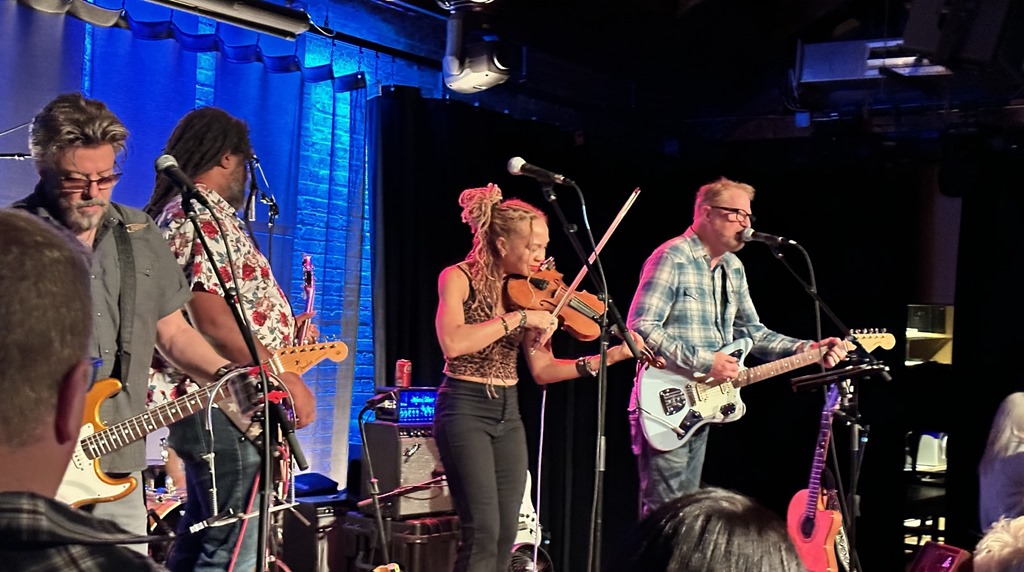
Decades later, I finally saw the band in concert Thursday night at SPACE in Evanston. David Lowery and Johnny Hickman remain from the original group. They each provide guitar and lead vocals, the core of Cracker's sound. They are joined these days by bassist Bryan Howard and drummer Carlton "Coco" Owens. On this night, a local violinist had added extra textures to the music when she joined them on stage.

Some performers talk to the audience between each song. Not Cracker.
Some musicians bring a dozen guitars on stage and switch each song. Not Cracker.

Cracker lets their music do the talking for them.

They played "Teen Angst" and "Someday" from my blood donation album (but not "Happy Birthday to Me"), along with their hit song "Low" and selections from their nine studio albums. They mixed in "Ambiguity Song" and "Take the Skinheads Bowling" from Lowery's earlier band, Camper Van Beethoven.

Lowery sang lead on most songs. These songs tended toward the post-punk-pop sound that made the band famous in the 1990s, along with a few blues numbers. When Hickman took the lead, the band shifted to more of an alt-country sound. The encore set opened with Hickman singing and playing solo "Poor Life Choices" - a song he wrote during the recent pandemic that had the audience singing along to his clever lyrics.

Catchy guitar licks and high energy kept the audience bouncing for the night before heading home to rest their aging bodies.


GCast 151:

Transactable Containers Labs, Lab 1, part 2: Deploying the Containers

A walkthrough of Lab 1 of the Transactable Containers labs Learn how a Microsoft partner can create, package, and submit a Kubernetes application to the Azure marketplace

This video walks through the second half of Lab 1 in which you deploy your containers to an Azure Container Registry.

Links: https://microsoft.github.io/Mastering-the-Marketplace/container/#hands-on-labs
https://davidgiard.com/becoming-a-microsoft-partner


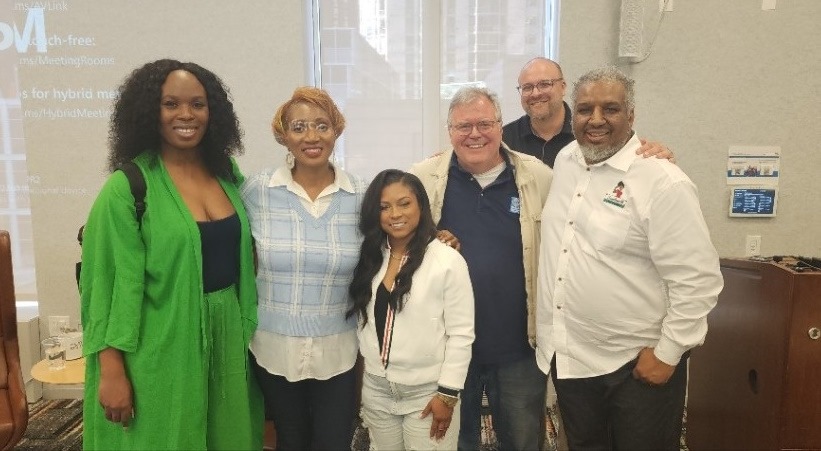
OrganizersAndHelpersAndMindaHartsMichael Brown of Microsoft's Commercial Software Engineering has hosted the Juneteenth Conference virtually for years. This year, he decided to hold an in-person event. Although he currently lives in the Seattle area, Michael selected Chicago - where he grew up - as a location for the 2023 event. Ultimately, he chose a hybrid format that attracted 40-50 people, most of whom were in-person at the downtown Chicago Microsoft office.

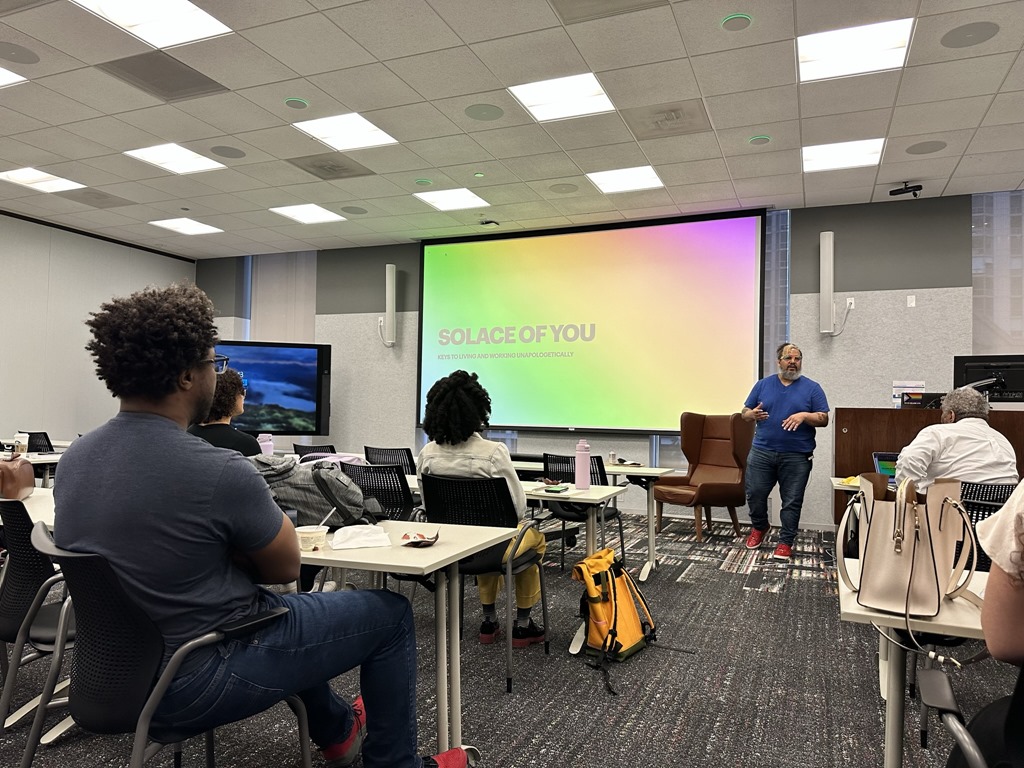
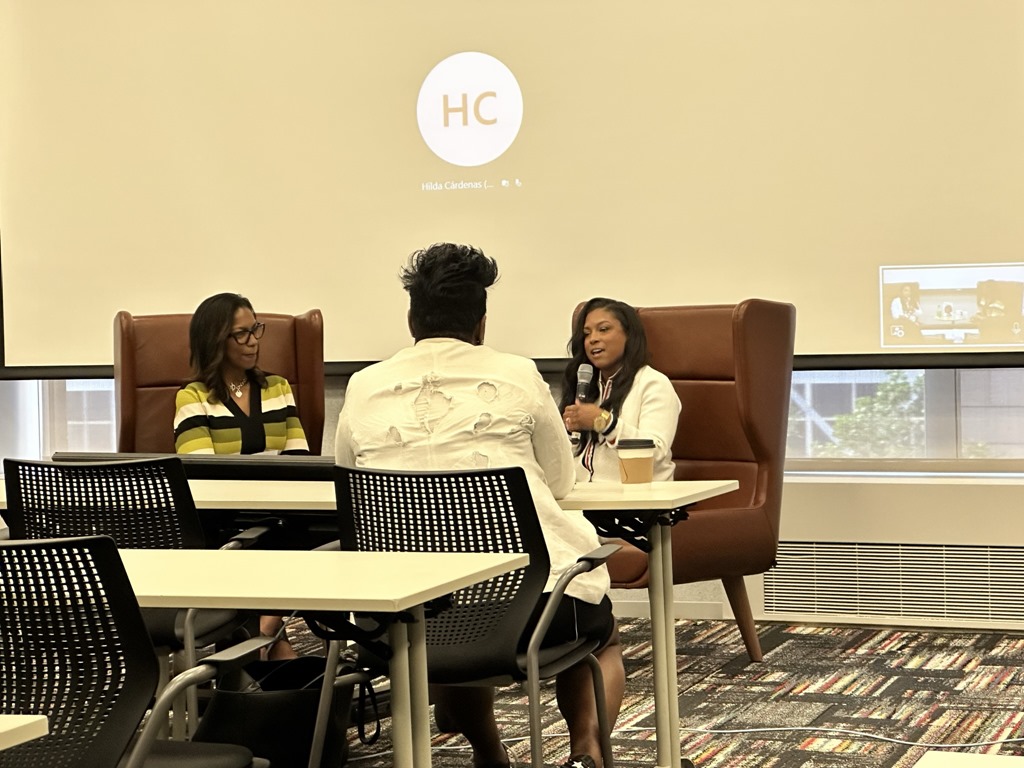
The conference began and ended with all attendees in the same room listening to Tim Banks (opening keynote) and Minda Harts (closing interview).

Tim Banks delivering the keynoteTim Banks delivered an excellent keynote address titled "The Solace of You," he encouraged people to identify their true selves and avoid tying their identity solely to their occupations. He recalled the days when African Americans had no choice but to dress and act like white military men and when everyone was discouraged from revealing any hint of mental illness or deviation from the norm. Change happens when people use their available platform to advocate for themselves and others, much as Tim has done speaking for groups underrepresented in the tech industry. "Use your voice," he told us.

Minda Harts and Brandi BrownThe day's final session brought everyone back to this room as Brandi Brown interviewed Minda Harts. Minda is the author of "The Memo" and "Right Within: How to Heal from Racial Trauma in the Workplace." Minda shared her journey in corporate America, where she was the only woman of color in almost every organization she joined. After years of dealing with microaggressions from managers and co-workers, she chose a different path, writing about and publishing her experiences and how she began to heal from toxic work relationships.

Eight more sessions by eight speakers filled the four time slots between Tim's and Minda's sessions.

Some of the presentations were technical. Kedasha Kerr gave a presentation in which she used GitHub co-pilot to write a node application that called the Chat GPT API. Dolly Desir walked through the basics of logging and monitoring in her talk "From Zero to Monitored."

But most presentations focused on people, relationships, careers, and workplaces. I heard multiple times that the conference was not intended to be a technical conference; instead, it was a conference for black people in tech.

Athena Sayaka told her story of channeling her traits into productivity in her talk "How To Leverage Your Neurodivergence At Work." When Ashley Janelle presented "4 Steps to Becoming a UX/UI Designer," she spoke about ways to build your portfolio and enter the field.

For most time slots, I had to choose between two appealing sessions to attend. Fortunately, the talks were recorded and are or will be available here.

Michael and Brandi Brown did the work of organizing and running the conference. Because I live in Chicago, I and some others in the Chicagoland area helped to promote it locally and facilitate communication between the Browns and the local office.

I was not the target audience for this event. All the speakers and 90% of the attendees were black, and the messaging was often directed at African Americans (I heard things like "This is what we experience"; "This is what we need to do"). But I never felt excluded and learned something from the messages I heard. The conference provided a perspective that can help me be aware of how my words and actions may be seen by others, even if I do not intend them in this way.

Everyone I spoke with got something out of the day.


Episode 754

Alex Mattoni on Cycle.io

Alex Mattoni discusses cycle.io - a DevOps tool that streamlines hybrid infrastructure management and container orchestration.


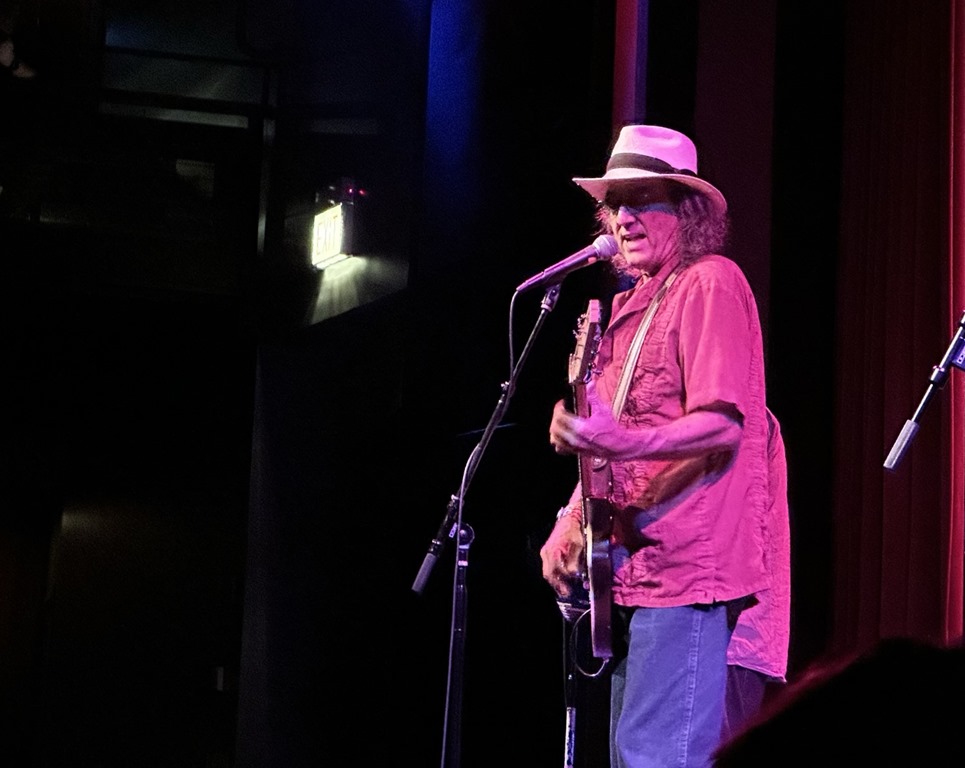
Larry McMurtry 2023James McMurtry grew up in a literary household, so it is no surprise that his music contains some of the most clever and poignant lyrics you will ever hear. McMurtry's father, Larry McMurtry, wrote dozens of novels, including his 1985 Pulitzer Prize winner "Lonesome Dove." Son James channeled that creativity into songwriting.

The Austin-based singer-songwriter performed Saturday evening in front of a sold-out crowd at the Old Town School of Folk Music.

The evening began with Betty Soo, another singer-songwriter from Austin, whose voice, music, and emotion won over the audience. Soo accompanied herself solo on guitar for most of the set but was joined for the last few songs by McMurtry's guitarist and drummer. The pace of the music changed from reflective to rocking when the solo became a trio.

After a short break, the players returned to the stage, led by McMurtry, who played for over 90 minutes of high-quality music. He did not talk much and never smiled, but his songs pleased the audience.

"Canola Fields" paints a picture as a man drives across southern Alberta and is reminded of a lost love when he sees canola fields ("About the same chartreuse as that '69 Bug you used to drive around San Jose.")

"Childish Things" is told from the perspective of a middle-aged man lamenting his childhood life.

His song "Choctaw Bingo" tells the story of a dysfunctional family heading from various places around the country to visit eccentric Uncle Slayton in Oklahoma ("You know he had to leave Texas, but he won't say why"). He introduced this song, calling it "a medley of our hit," but this was tongue in cheek as McMurtry has never had much commercial success. But audiences still flock to see him because he has a gift for captivating the listener.

He does not talk much, but he speaks volumes through his music.


Personality castLloyd Price was one of the early pioneers of the style of rhythm and blues that evolved into Rock & Roll. A draft notice from the US Army during the Korean War hindered his influence on popular music. His deployment interrupted his music career for two years just as his fame began to rise. Still, Price returned to writing and recording hit songs after the war.

"Personality: The Lloyd Price Musical" tells his story.

Musician  Dave Bartholomew and record producer Art Rupe discovered Price when they heard his song "Lawdy Miss Clawdy" and invited him to record with Specialty Records in 1952. Success followed quickly, as did women, a broken marriage, and greed.

Actor Saint Aubyn narrates the musical, playing the part of an older Lloyd Price, while Darian Peer acts out Price as a teenager and young adult. After the Korean War, Aubyn steps in to play both the title character and the narrator.

Personality castThe show focuses on Price's career and his friendship with his manager Harold Logan. The two collaborated on several business ventures, including a nightclub and a record company. Their friendship was based on loyalty and trust - two things often lacking in the entertainment industry - and lasted until Logan's murder in 1962.

You would expect the music to be great, and it is. Lloyd Price penned most of the songs, but we get a few made songs famous by the likes of Sister Rosetta Tharpe, Little Richard, and Emma Franklin (Aretha's sister.) The play also brings to life contemporary musicians Louis Armstrong, Fats Waller, and Sam Cooke.

I received complimentary tickets to a preview performance of "Personality," and I am delighted I did. The music, the dancing, the acting, and the script were all enjoyable.


After a recent Windows update, I noticed a change in the behavior of Outlook and Edge.

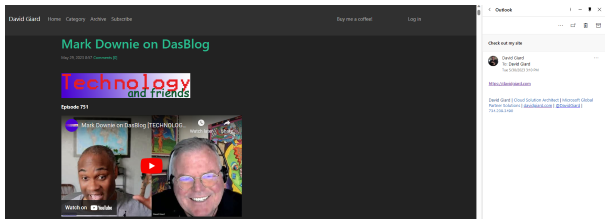
When I click a link in an email message, it opens a web page in a browser. This behavior has been true for many years. But now, the browser contains a sidebar with the email message, as shown in Fig. 1.

Outlook Pane

Fig. 1

The sidebar is often a useful feature, but not in this context - at least not for me. It adds no value and takes up valuable screen space, so I end up closing it 99.9% of the time.

In this article, I will show you how to toggle this feature on and off.

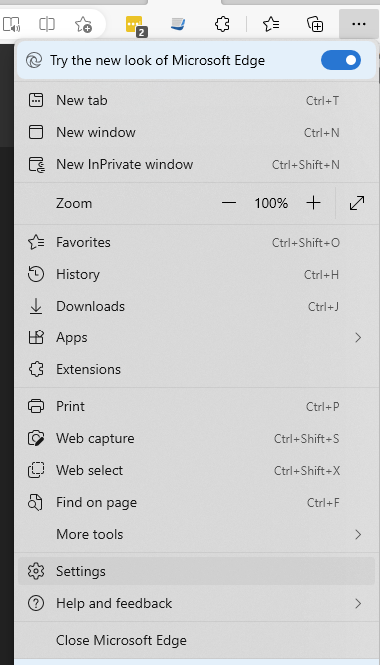
Click the "Settings and More" button (Fig. 2) to expand the menu shown in Fig. 3.

Edge Menu Button

Fig. 2

Edge Menu

Fig. 3

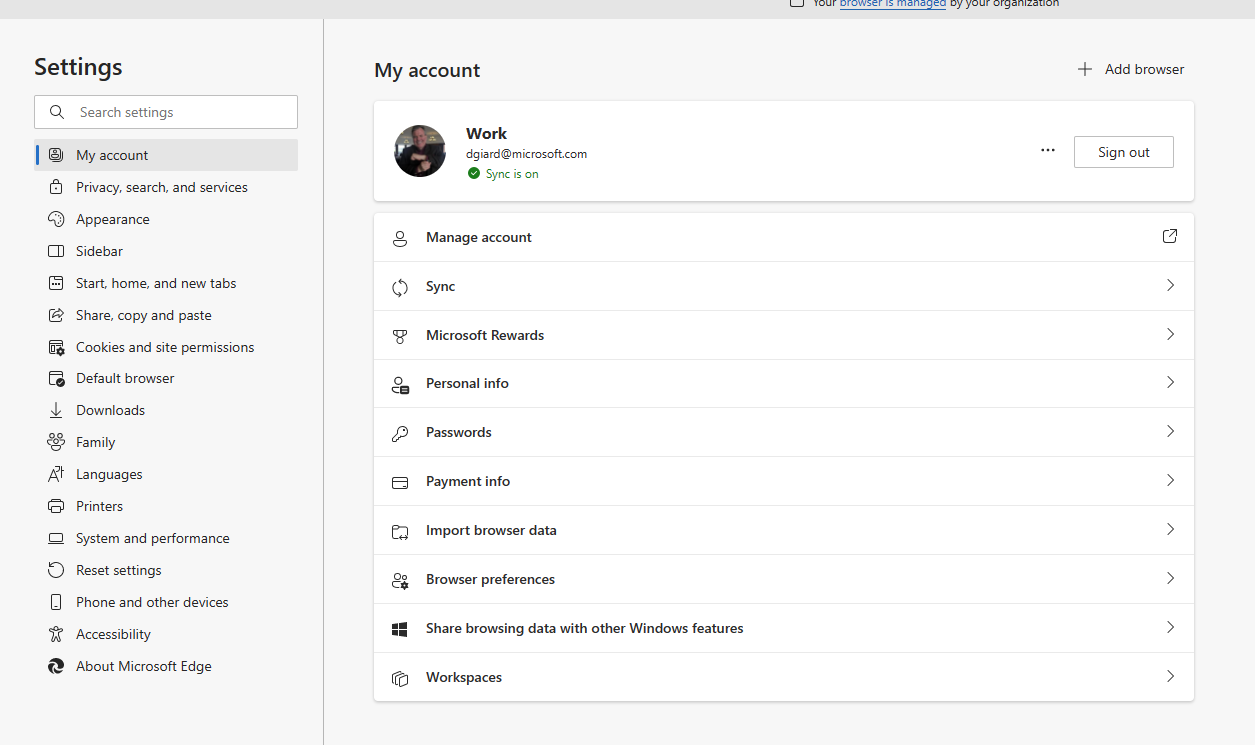
Select [Settings] to open the "Settings" blade, as shown in Fig. 4.

Settings blade

Fig. 4

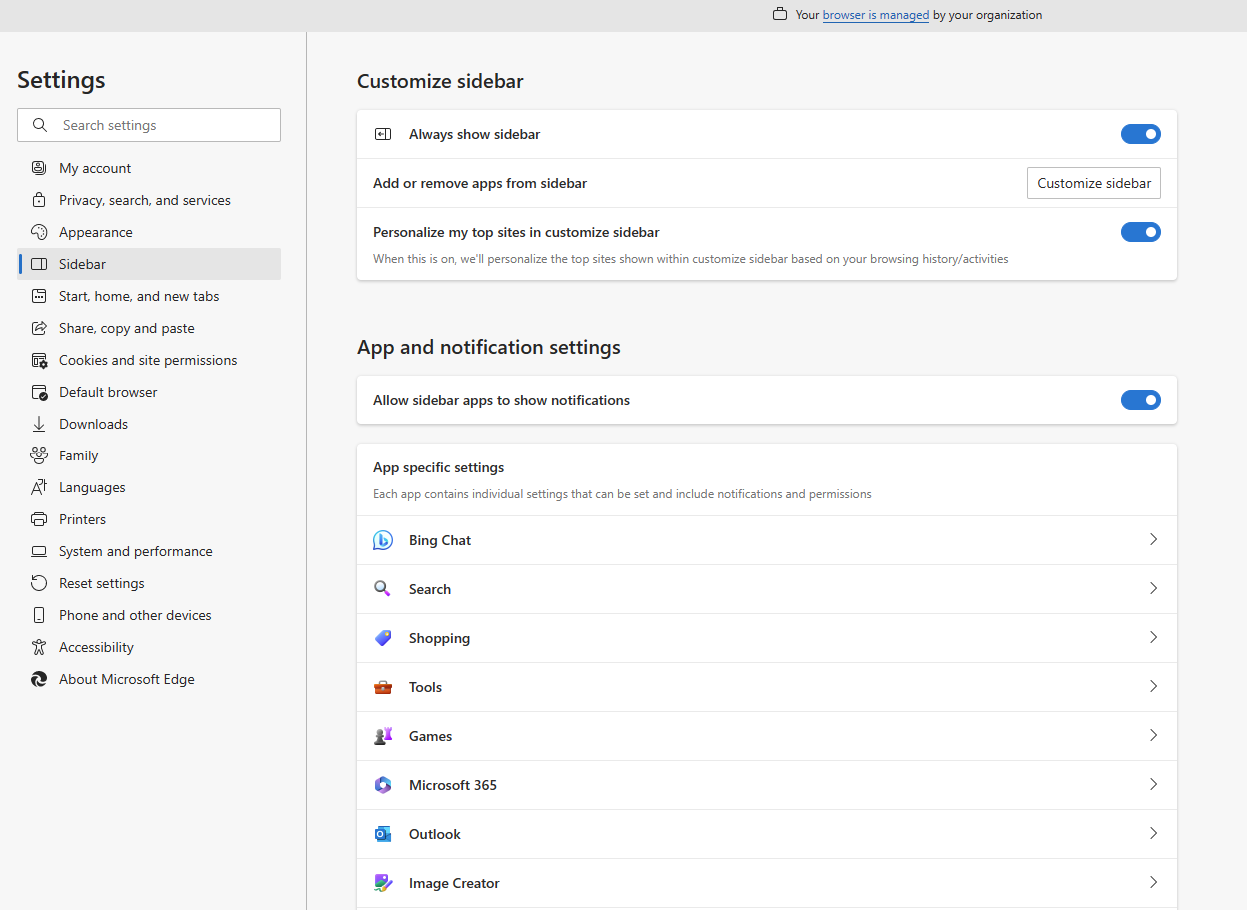
Click the [Sidebar] button (Fig. 5) to open the "Sidebar" blade, as shown in Fig. 6.

Sidebar Button

Fig. 5

Sidebar Blade

Fig. 6

Under the "App specific settings" section, click the [Outlook] button (Fig. 7) to open the "App and notification settings / Outlook" dialog, as shown in Fig. 8.

Outlook Button

Fig. 7

Outlook Blade

Fig. 8

Toggle the switch next to "Automatically open Outlook email context in the side pane. Turn it off if you do not want this sidebar displayed when you click a link in an email message. Turn it on if you like this behavior. There is no [Save] button. The setting is automatically and immediately saved.

Decide whether or not you want this feature and change this setting according to your preferences.


Episode 753

Nikki Conley on Video Indexer

Nikkie Conley describes the Azure Video Indexer - a tool that uses Artificial Intelligence to analyze audio and video files and identify objects, faces, scenes, keywords, emotions, and transcripts.


"George Washington Crosby began to hallucinate eight days before he died."

Paul Harding hit the ground running with his 2009 debut novel "Tinkers."

"Tinkers" tells the story of the final eight days of George Crosby's life. As George lies dying in his living room surrounded by his family, he thinks back on his father, Howard, who walked out on his family when George was a boy. The story switches to Howard's life a generation earlier. Howard was an epileptic and left home when he discovered his wife was planning to commit him to an institution. Finally, we learn the story of Howard's father, whose wife committed him when his mental capacity deteriorated.

Harding tells this multi-generational story nonlinearly, revealing family secrets through the eyes of unreliable narrators, many of whom are losing their mental facilities. He tells a moving story of people and relationships and helplessness and growing old.

The author switches between first-person and third-person narration; between prose and poetry; and between past and present. Despite these sometimes jarring shifts, the story flows naturally, guiding the reader to its conclusion.
It is a touching story that earned its accolades.


What would happen if soldiers on the front line of a war refused to continue fighting?

William Faulkner's 1954 novel "A Fable" explores this possibility. In the middle of World War I, a French Corporal persuades his comrades to ignore their orders and stop fighting the Germans. The Germans notice and also cease hostilities. The truce spreads to the armies of other countries in the conflict, and the war is brought temporarily to a halt. The peace enrages commanders on both sides, who interpret the soldiers' actions as Mutiny. The opposing generals meet in secret to determine how to deal with this threat to their authority.

Like most Faulkner novels, this one is difficult to read. Long, involved sentences with parenthetical asides, most of which provide important background information and some of which reflect seemingly random musings of the author, challenge the reader's attention. Often followed by sentence fragments. The author declines to provide names for most of his characters forcing the reader to keep track of them by their titles - and sometimes not even that.

Unlike most Faulkner novels, he sets this one outside the fictional Mississippi county of Yoknapatawpha. The battlefields of eastern France provide a different flavor from most of his writing.

The Corporal exhibits numerous similarities to Jesus Christ. He begins by converting the twelve men in his squad, who spread the message to the rest of the army. He is betrayed by one of his followers. He is arrested, tried, and executed before the women in his life come to claim his body. The story takes place over a few days and parallels the Passion of the Christ.

Although this novel won the Pulitzer Prize for Fiction and the National Book Award, it has been largely forgotten. Critics hold many of Faulkner's earlier works in much higher regard.

The book's strength is its satire. It underscores the absurdity of war and the lengths those invested in combat will go to perpetuate it. I wonder if Joseph Heller drew some inspiration when he penned his classic anti-war farce "Catch-22." Heller's execution was superior, but Faulkner came first.


GCast 150:

Transactable Containers Labs, Lab 1, part 1: Creating and running containers locally

A walkthrough of Lab 1 of the Transactable Containers labs Learn how a Microsoft partner can create, package, and submit a Kubernetes application to the Azure marketplace

This video walks you through the first half of lab 1 in which you will create and run containers on your local machine.

Links: https://microsoft.github.io/Mastering-the-Marketplace/container/#hands-on-labs
https://davidgiard.com/becoming-a-microsoft-partner


Episode 752

Pete Rodriguez on a Career in Technology

Pete Rodriguez has spent almost 3 decades in technology. He discusses how to decide which part of tech you should work in, the value of switching jobs, and other factors to take into account throughout your career.


May 2023 Gratitudes

Comments [0]

5/8
Today I am grateful to celebrate Tim and Natale's engagement with lunch at Au Cheval yesterday

5/9
Today I am grateful to participate in a game show with my co-workers (even though I lost)

5/10
Today I am grateful for everything my father taught me.

5/11
Today I am grateful for a gift of a new travel mug.

5/12
Today I am grateful to drive my son and his wife to the airport today for their honeymoon.

5/13
Today I am grateful to purchase a bunch of tickets this week for upcoming concerts

5/14
Today I am grateful to see Wayne Newton and Tony Orlando in concert last night.

5/15
Today I am grateful to see the Cowboy Junkies in concert last night.

5/16
Today I am grateful for all the beautiful murals in Pilsen.

5/17
Today I am grateful to dog sit Maisie and Zoe this week.

5/18
Today I am grateful for the baristas at work yesterday.

5/19
Today I am grateful to my co-workers who wrote kind things about me.

5/20
Today I am grateful for coffee with Peter and Michael yesterday

5/21
Today I am grateful to attend Shannon's birthday party yesterday and meet some interesting people.

5/22
Today I am grateful for the puppies who kept me company this past week.

5/23
Today I am grateful for dinner and conversation with Mike last night.

5/24
Today I am grateful to attend the Microsoft Build conference, even if it is only virtually.

5/25
Today I am grateful for the taste of Bailey's Irish Cream.

5/26
Today I am grateful to see the final episode of "The Marvelous Mrs. Maisel" last night at the Regal Theater.

5/27
Today I am grateful
- to stumble upon a street fair in Pilsen while riding my bike yesterday
- to pick up my son and daughter-in-law at the airport as they return from their honeymoon

5/28
Today I am grateful for
- breakfast and a visit to the Art Institute of Chicago with Amanda and Megan
- Seeing "London Road" at Theatre Wit last night

5/29
Today I am grateful
- to attend Hyram's tombstone unveiling ceremony yesterday
- to all the men and women who gave their lives in defense of our country

5/30
Today I am grateful for a 3-day weekend

5/31
Today I am grateful to receive a bunch of texts from my family the past 2 days.

6/1
Today I am grateful for 1 year at this role and for the improvement over my last one.

6/2
Today I am grateful for a phone call with Steve yesterday.

6/3
Today I am grateful to talk with Dave for the first time in a long time.

6/4
Today I am grateful for breakfast with Shannon and her family yesterday.


LondonRoadI have never seen anything quite like "London Road."

The Shattered Globe Theatre group performs the Alecky Blythe / Adam Cork musical at Theatre Wit this month. The show has been so popular that the Theater has extended its run two extra weeks to June 11. I caught the Friday night performance.

"London Road" revolves around the community's reaction to a series of murders in the small city of Ipswich in eastern England. We never witness the murderer or the murders. The show focuses instead on the reactions of the townspeople. They live in fear for their safety; they follow the police hunt and the ensuing trial; they voice their opinions on the victims - all of whom were prostitutes. The play takes the form of a documentary set to music.

Blythe spent months interviewing Ipswich citizens about the crimes, and he used the text of those interviews as the lyrics of his songs. He retained the text verbatim, including filler words such as "like" and "um." But he set them to music, and his singers often repeated significant lines through multiple verses. The effect is often hypnotic, although some songs continue longer than necessary.

Because each member of the 11-person ensemble cast plays dozens of parts, the audience experiences no character development. Instead, the character of the town itself evolves throughout the ordeal of the attacks.

Actors quickly switch roles, and women often play the parts of men, sometimes making the play difficult to follow. But the performers pulled it off.  Their singing, speaking, and body movements conveyed the emotions of each line. The set was minimalist in the extreme. No props adorned the stage and the play was visually enhanced only by a set of video screens above the performers. Most of the urban scenes were shown upside down, rotating at the beginning and end to display a right-sided “London Road” street sign. The actors often retreated into a small chamber in each corner of the stage and the audience saw only a live video feed of their performance.

This was the first professional performance of "London Road" in North America. It will likely not be the last.


Episode 751

Mark Downie on DasBlog

Mark Downie describes the DasBlog blogging engine, its history, what makes it unique, and how it has changed over the years.

Links:
https://github.com/poppastring/dasblog-core
https://www.poppastring.com/


Leigh Bardugo's debut novel "Shadow and Bone" follows many popular tropes in young adult fantasy literature. It is a coming-of-age story about a young woman who discovers and attempts to master her magical power so that she can save the world. Most novels of this genre are set in a world inspired by medieval England or Western Europe, but this one takes place in a country reminiscent of czarist Russia. The nation of Revka features a royal family more concerned with the trappings of luxury than with the affairs of their country, a madman who wields power from behind the throne, and many characters and locations with Russian-sounding names.

Teenage orphan Alina travels through the Unsea with her best and only friend Mal. The Unsea is a once fertile land, now shrouded in darkness and populated by monsters due to a curse placed centuries ago. During a monster attack, Alina discovers that she possesses a power that allows her to emit blinding light. The powerful Grisha learn of Alina's power and take her in to train her. They tell her that this power can return the Unsea to its original form, uniting Revka and restoring access to the sea. The Darkling – leader of the Grisha - takes a particular interest in Alina.

Bardugo does a good job developing the characters and building her world. There are enough twists to keep the reader interested without complicating the story beyond comprehension. The book was successful enough to warrant two sequels, four more books set in the same world, and a Netflix series.

"Shadow and Bone" is filled with cliches (a love triangle; a mentor-turned-baddie; a pair of orphans who rise to their potential), but it is enjoyable.

I have already begun book 2 of the trilogy.


The title of Mark Manson's book "The Subtle Art of Not Giving a F*ck" is misleading. Manson does not suggest we should stop caring about everything. He says that we should choose the things about which we care.

Manson speaks in a sarcastic, casual tone peppered with profanity. It is entertaining initially, but the style wears down after a while. By Chapter 3, he sounds like a stand-up comic performing on open mic night at a bowling alley. Fortunately, he tones down this schtick in later chapters.

But his sometimes childish style does not discount his advice, which is often good. Among his suggestions:

  • Examine your own weaknesses and work to improve them. Accept failure and pain as necessary steps in improving yourself. The key to success is solving problems - not avoiding or denying them.
  • A sense of entitlement is an inhibitor to success.
  • Learn to set boundaries and commit to things you really care about.
  • Appreciate life and recognize that it is short and precious.

If this all sounds like common sense, you are correct. Manson's book is a collection of common-sense advice, told in a sometimes-witty manner, interspersed with anecdotes from his own life. It is a quick read with some good nuggets, one of my favourites of which is:

"To be happy we need something to solve. Happiness is therefore a form of action; it's an activity, not something that is passively bestowed upon you"

I don't give a lot of f*cks for this book, but I give a few.


Day 2 of Microsoft Build began with a keynote address.

The talk opened with a reiteration of yesterday's topic: Copilot. Copilot is a set of services that interact with Microsoft products, providing artificial intelligence and allowing users to interact by entering text in a natural language, such as English. The speaker reiterated that technology works across applications, calling it "ChatGPT for the enterprise." We saw a demo of a Copilot plugin that interacted with multiple applications, passing data between them. It understood the context of each application and the relationship between each. A user asked a question of Copilot from within Teams, and Copilot responded by interacting with Outlook, Microsoft Graph, and Jira. The following demo showed Copilot allowing a user to interact with Viva sales using natural English sentences, thanks to Copilot.

Once again, we heard about Windows Copilot, which will be accessed from the Windows taskbar and will allow you to use AI to tie together multiple applications. Windows Copilot will allow you to summarize documents, rewrite text, or adjust desktop settings - all from your Windows desktop. This product will be in preview in June and part of Windows by "the holidays," according to the keynote.

About half the day two keynote focused on Copilot, and much of it repeated information released the previous day.

However, Microsoft showed off a few new products in the second half of the keynote, including

  • Dev Home - a centralized dashboard where you can manage dev environments, packages, projects, and repositories. It is currently in preview.
  • Dev Drive - a way to create a separate drive on your computer with increased performance and security. This is a feature of Dev Home.
  • Dev Box - high-performance cloud-based workstations for developers.

Here are a few more announcements of interest:

  • Windows will allow you to end a task without opening Task Manager
  • The Terminal will support "TearOuts," allowing you to manage multiple command line sessions better.
  • A Windows Subsystem for Android was announced
  • The Windows store will use AI to suggest appropriate keywords when you publish your app.

I found Wednesday's keynote less engaging than Tuesday's. There were a few demos, but most were too short to gain information. Also, the Day 2 speakers were not at the high level of Satya Nadella, Scott Guthrie, and Seth Juarez, who are among the business's best.

As I said in my previous post, do not interpret this article as an announcement from Microsoft. I am stating my own opinions based on what I heard or misheard today.


GCast 149:

Having Fun with ChatGPT

Here are some fun and interesting things you can do with ChatGPT


I do not recall any Microsoft Build keynote that focused so much on a single topic as I saw this year.

The Day 1 keynote focused almost exclusively on Artificial Intelligence (AI) products, services, and innovations from Microsoft.

Here are the things that stood out to me during this 2+ hour presentation.

Satya began by revealing that Microsoft has 50 new announcements this week, and he would discuss five of them now. The five were:

  • Bring Bing to ChatGPT
  • Windows Copilot
  • Copilot stack
  • Azure AI Studio
  • Microsoft Fabric

He did not say so but suggested that these were the most significant announcements. He and others dove deeper into each of them throughout the keynote.

Microsoft has released and announced several products under the name "Copilot." Each product uses artificial intelligence to enhance a technology stack, such as GitHub, Teams, or Dynamics. These products provide a conversational interface to assist with common tasks within the application. The team devoted much of the keynote to improvements in these.

Each Copilot technology will have a consistent orchestration model, making it easier to do things like build plug-ins for multiple Copilot services

Satya announced Copilot for Windows. This technology adds a prompt to the Windows taskbar, allowing you to use AI to enhance many of your running applications.

GitHub Copilot has been around for a few years, but Scott Guthrie and Thomas Dohmke announced the private preview of Copilot X that adds a chat prompt to Visual Studio Code, allowing you to interact with AI using text. You can use natural language (such as English) to ask Copilot to explain, write, or improve code or to write unit tests.

Seth Juarez gave a demonstration of Prompt Flow - a tool that allows you to develop end-to-end AI systems using large language models. It will enable you to input your own model data and control each step's input, output, and validation.

Sara Bird showed off the Azure AI Content Safety Service that reviews input data and provides ratings based on categories of violence, self-harm, sexual, and hate speech. You can use this to filter out content you deem inappropriate. This tool can even be plugged into Prompt Flow.

For those concerned about privacy, Satya announced that each Azure OpenAI instance is isolated from other customers to improve privacy and increase trust.


Microsoft Fabric is now in public preview. Fabric is a service that integrates tools and data from multiple sources.

Here are a few other announcements of note

  • Azure data centers feature "Infiniband" cables, which no other cloud provider has. These allow for the highest network bandwidth available.
  • Microsoft plans to add 120 new data centers in 2023
  • Azure has added supercomputers to some data centers. These are designed for AI processing and model building.
  • Microsoft Azure will soon offer Nvidia Omniverse Cloud, which allows developers to design, build, and test industrial metaverse apps.

Guthrie concluded the keynote by reiterating Microsoft's commitment to being carbon negative by 2030. He added that Microsoft is committed to removing all carbon they have emitted since its 1975 founding by the year 2050 - something I had not yet heard.

The most exciting feature for me is Copilot X. I signed up for the preview and am waiting to hear if I got in.

A message repeated over and over: these tools are exciting, but the real excitement will be when developers use them to build something amazing!

Please note that this post is not an official announcement from Microsoft. These are the things I heard while listening to the keynote. It is entirely possible that I misheard or misinterpreted some information.


Episode 750

Tommy Falgout on the Azure Marketplace and Transactable Containers

Tommy Falgout describes the Microsoft Partnership program, how partners can publish applications into the Azure Marketplace, and the new Transactable Containers publish process.

Links:

https://microsoft.github.io/Mastering-the-Marketplace/

https://partner.microsoft.com/

https://lastcoolnameleft.github.io/how-to-partner-with-microsoft/


CowboyJunkies-1Some bands were born to wear black.

Sunday evening at the Old Town School of Folk Music, Cowboy Junkies lead singer Margot Timmons joked several times that the band had no happy songs to perform - even on Mother's Day. "After all these years, you'd think we'd have something happy to sing about," she quipped to the audience's laughter.

The Junkies wore black and played sad songs for over two hours - including a fifteen-minute break. Margot was joined on stage by her brothers Peter (drums) and Michael (guitar), along with bassist Alan Anton and multi-instrumentalist Jeff Bird.

CowboyJunkies-2Set Number 1 mainly consisted of cover songs, including deep tracks from Neil Young ("Don't Let It Bring You Down"), The Rolling Stones ("No Expectations"), and David Bowie ("Five Years:), as well as the band's 1988 hit version of the Velvet Underground's "Sweet Jane." They closed the second set with "Blue Moon" and ended the encore set with a bluesy version of Patsy Cline's "Walkin' After Midnight."

The group's lineup has remained unchanged since the release of their first album in 1986. Even though the band's core consists of three siblings, this is a remarkable level of consistency. They sound as good as they did when I first discovered their music decades ago. Michael's guitar and Margot's singing combine in an ethereal mix that hypnotizes the audience. Peter’s drumming is subtler than most band – he favors brushes over drumsticks on most songs, which complements the haunting melodies perfectly. And Bird showed the ability to make a mandolin sound like an electric guitar on one song and like an oboe on the next.

This evening's show was the final concert of their current tour before they all returned to Toronto.

The songs were sad, but the audience went away happy.


I was about ten years old when my father took us to see Wayne Newton at the Kennedy Center for the Performing Arts in Washington, DC. At the time, I had no idea who Wayne Newton was, and many of the jokes he told went over my head. I believe I enjoyed the show, but I never expected to see Newton again.

Half a century later, I saw him perform again.

On Saturday night, Mr. Newton sang at the Hard Rock Casino in Gary, Indiana – a rare departure from his residency at the Flamingo in Las Vegas.

TonyOrlando2023It was not just Wayne Newton on the bill. His old friend Tony Orlando performed a set to kick off the evening.

Orlando rocketed to fame in the early 1970s as the leader of Tony Orlando and Dawn, who released a string of Number 1 hits and starred in a popular TV variety show. Tony has long since split with Dawn, but he began his set this night singing all his hit songs, including opening with his signature tune: "Tie a Yellow Ribbon Round the Old Oak Tree." His band followed these with a collection of hit songs from the 70s and 80s, originally performed by groups like Earth Wind & Fire, Paul Simon, and The Beatles.

WayneNewton2023Following a brief intermission, Wayne Newton took the stage backed by an orchestra - half of which consisted of local musicians. After decades of Las Vegas residency, he has refined his act to be the consummate showman. Most famous for his singing, Newton also played a variety of instruments, told jokes, and bantered with the crowd. Great stamina and a few cosmetic tweaks (His teeth are so white, they appear to glow) made him appear to defy his 81 years.

Wayne Newton is known for his interpretations of others' songs and he sang many of these tonight, including his biggest hits: "Danke Schoen" and "Daddy Don't You Walk So Fast." A highlight of the evening came when he played a video of the late Sammy Davis Jr. performing live 40 years ago while Wayne sang a duet on stage with the image of the deceased singer. Newton charmed the audience throughout, pointing and smiling at folks and even planting a kiss on two ladies in the front row.

Although Newton was the evening's final performer, the show billed the two as co-headliners. They share a similar career path - from chart success to lounge singer to entertainment icon. They also share a passion for supporting the US Military. In 2000, Wayne took over Bob Hope's role as chairman of the United Service Organizations Celebrity Circle, and the families of military personnel returning from overseas have adopted Tony's "Yellow Ribbon" as their theme song.

I don't often listen to Wayne Newton and Tony Orlando at home, but I have fond memories of their music from my youth. I am glad I had a chance to see them live. Maybe I will see them again in another 50 years.


Years ago, I sat in a theater in Columbus, OH, listening to Elizabeth share her story. She was coming out of a difficult time in her life. She coped with her life turmoil by maintaining a gratitude journal. Each day, Elizabeth would write something for which she was grateful. It was not easy at first, but it helped. And, as time passed, she found it easier to think of things for which she was grateful.

Months later, I was in Kalamazoo, MI, listening to Layla share a similar story about how expressing gratitude each day helped her focus on the positive things in her life. Her presentation's title was "Find Your Happy," and thinking of things for which she was grateful was one way to focus on the positive aspects of her life.

I was intrigued. I had recently experienced some significant setbacks in my life. A painful divorce, a difficult move, and a new job that involved a substantial pay cut wore down my stamina and often left me feeling helpless. When I heard Layla and Elizabeth, my life had already begun to improve, but I often found myself drowning in self-pity. I was an active participant on several social media platforms, and I looked back at the thoughts I shared in previous months. Reading them, I saw a negative person with a pessimistic outlook. This discovery surprised me, as it did not match my self-perception.

I resolved to change.

Inspired by Elizabeth and Layla, I adopted a new daily habit. Each morning, my first thought after waking was to find something in my life for which I was grateful. I decided to share this thought on Facebook and Twitter. I did this every day for a week. Then every day for a month. Then a month turned into a year.

It is now ten years later, and I have missed very few days of posting daily gratitude.

Some days, I find it challenging to think of something. But I always do, which tells me that the positive things in life are sometimes hidden, but they are always there.

There are a few things for which I am grateful every day, such as my sons, my health, a steady job, and a safe and comfortable place to live. I try not to repeat myself, and I try to focus on things that are relevant at the moment, such as something I did or experienced yesterday.

I do this primarily for myself. It is a daily reminder to focus on the positive things in my life.

But many people have told me that my posts inspire them. Just like Layla and Elizabeth continue to inspire me. And that makes me smile.


Episode 749

Keith Casey on ngrok and Webhooks

Keith Casey explains the ngrok reverse proxy tool, how it is useful for those creating and consuming APIs, and webhooks.fyi, which assists people using webhooks.

Links:

https://webhooks.fyi 


I have noticed that a movie can be successful if it has nothing more than a good beginning and a good ending. The beginning must be good enough that people do not walk out or switch channels early; the ending stays in the audience's mind long after they finish watching. If a movie has a strong beginning and end, people will remember it fondly, even if the middle 80% is crap.

Robert Jordan must have understood this principle when he applied it to his "Wheel of Time" series. Although Jordan did not survive to complete the series, his widow selected Brandon Sanderson to finish what Jordan began. Sanderson tied up many plot threads and added action to the story in the final three volumes. "A Memory of Light" is the finale of the 14-volume epic series.

After years of buildup, the forces of good - led by Rand al'Thor - and the forces of evil - led by The Dark One - finally clash in an epic war. The book - the entire series, in fact - climaxes in a chapter almost 200 pages long, titled "The Last Battle." This chapter switches context between the multiple fronts of the battle, fought by the myriad of characters introduced in the preceding volumes.

With the possible exception of volume 1, the books written by Sanderson are the strongest of the series, and "A Memory of Light" is the best of these three.

Jordan's strength was world-building. Sanderson's strength is storytelling. The two combine their powers in this Coda.

More than once, I came close to abandoning this series, but I soldiered on in anticipation of the finale. Fortunately, Sanderson brings a solid conclusion to a series that lost steam about halfway through as the action dragged and the plot moved at a glacial pace. It is safe to say that Sanderson saved this series for me.

It has been almost a year and a half since I began this journey. I feel a sense of accomplishment after conquering fourteen books and many thousands of pages.

The strong ending will stay in my mind long after I have finished reading.


IntoTheWoodsStephen Sondheim's "Into the Woods" mashes up many Brothers Grimm fairy tales. Broadway performers brought the show to life Friday evening at Chicago's Nederlander Theater.

The play interweaves the tales of the various legendary characters: A witch promises fertility to a childless couple if they can bring to her "the cow as white as milk, the cape as red as blood, the hair as yellow as corn, and the slipper as pure as gold" - a collection of artifacts that happen to correspond with artifacts from Jack & the Beanstalk, Little Red Riding Hood, Rapunzel, and Cinderella. All the characters face challenges during the quest, but Act 1 concludes with a happy ending to each storyline.

Sadly, things begin to deteriorate in Act 2. Instead of living happily ever after, the heroes confront everyday challenges, such as marital infidelity, the death of a loved one, deciding on a scapegoat, and battling a giant who descended from the sky to seek revenge for the death of her husband.

James Lapine's script provides enough humor and twists to keep us entertained for almost three hours while comforting us with the stories from our childhood.

Stephen Sondheim's music and lyrics are excellent, as always. The legendary composer and lyricist, who passed away in 2021, achieves a high mark - even by his own standards. His melodies are charming, and his lyrics are clever. In describing her aging cow, Jack's mother sings: "We've no time to sit and dither; While her withers wither with her."

The cast was superb. About half reprised roles they performed in a recent Broadway production. Gavin Creel and Jason Forbach particularly impressed as the two princes with their bright brightly-colored costumes and their exaggerated emotions. Kathy Geraghty stole the shown whenever she was on stage as a sassy Little Red Riding Hood, switching between skipping along happily to igniting into a tantrum. Unsurprisingly, real-life husband and wife Sebastian Arcelus and Stephanie J. Block showed great chemistry as the Baker and his Wife. Puppeteer Kennedy Kanagawa, who controlled Jack's sad but affectionate cow Milky White, did an excellent job portraying the emotions of the creature. He later returned with a friend, as they portrayed the female giant by marching giant shoes across the stage.

Tonight's cast was as enthusiastic as I have seen at a major theater production. The audience held their applause an extra few songs after each song and applauded each actor when they first appeared on stage. The enthusiasm may have been due to the abundance of children in the audience or the familiarity of the characters. Or it may have been a response to the excellent material and performances.


GCast 148:

Working with ChatGPT

An overview of ChatGPT, how you can use it to work more effectively, and a discussion on the ethics of using the results.


Episode 748

Chris Woodruff on HTTP

A lot of tools abstract away the complexities of HTTP. But Chris Woodruff believes it is essential for developers to understand HTTP when writing web APIs. He breaks down the fundamentals of this technology for us in this video.


May 2023 Gratitudes

Comments [0]

4/3
Today I am grateful to see Emmaline in concert last night

4/4
Today I am grateful that my son called me from Paris, France yesterday morning.

4/5
Today I am grateful to take a day off when I am feeling unwell.

4/6
Today I am grateful for lunch with Juan yesterday.

4/7
Today I am grateful that I feel safe

4/8
Today I am grateful I made it 40 days without alcohol or meat

4/9
Today I am grateful for my son's engagement to a wonderful young woman.

4/10
Today I am grateful to spend Easter with my family in Michigan

4/11
Today I am grateful that my sister received her lab results this morning and she is now cancer-free!

4/12
Today I am grateful for no bad news from my dermatologist yesterday

4/13
Today I am grateful to spend time this week with Randy

4/14
Today I am grateful that I survived the recent round of layoffs at my company.

4/15
Today I am grateful to see "A Soldier's Play" last night.

4/16
Today I am grateful to see the musical "Jagged Little Pill" last night.

4/17
Today I am grateful to finish preparing my taxes.

4/18
Today I am grateful to unexpectedly run into many old friends at the Microsoft office last night.

4/19
Today I am grateful for the taste of ice cream

4/20
Today I am grateful to those who lift me up when I am down.

4/21
Today I am grateful to virtually attend the 20th Anniversary celebration of #GLUGNET last night with Joe, Sam, and Carl.

4/22
Today I am grateful to the bike shop that repaired my wheel yesterday and did not charge me.

4/23
Today I am grateful to attend an engagement party for my son and my future daughter-in-law and to meet my future in-laws.

4/24
Today I am grateful for new shoes

4/25
Today I am grateful for a conversation with Shahed yesterday.

4/26
Today I am grateful for 10 years of daily gratitude

4/27
Today I am grateful to see "Last Night and the Night Before" at the Steppenwolf Theatre last night.

4/28
Today I am grateful:
- to attend the ISTC STEM Showcase yesterday and see my students show off the project they built
- to see a presentation by high-level Microsoft executives in Chicago yesterday
- to attend a private Microsoft reception last night

4/29
Today I am grateful
- to participate in a Career Panel for Hispanic high school students
- for a barbeque picnic with the class I helped mentor this year

4/30
Today I am grateful:
- to interview high school students yesterday in Chicago for the Hidden Genius program
- to see Graham Nash in concert last night

5/1
Today I am grateful for dinner with my siblings last night in Michigan

5/2
Today I am grateful to attend my nephew Dylan's lacrosse game last night.

5/3
Today I am grateful for a few days in Michigan visiting family

5/4
Today I am grateful for Inbox Zero

5/5
Today I am grateful to Zerto for a free ticket to see Guardians of the Galaxy 3 last night.

5/6
Today I am grateful to see "Into the Woods" at the Nederlander Theatre last night.

5/7
Today I am grateful that the predicted rain held off today.


GrahamNash2023Graham Nash has recorded six solo albums over the past fifty years. Many good tunes and a few minor hits came from these albums. He could have filled his set Friday night at the Old Town School of Folk Music with songs from those albums. He could have used the show to promote his latest recordings. But, early in the show, he pointed out that he would need to remove some of the old songs if he added new songs.

He looked out across the crowd and their hair of silver and blue, and he concluded what they came to hear. They came for his old hits - particularly those he recorded with some combination of Stephen Stills, Neil Young, and the recently deceased David Crosby. Nash was a founding member of three groups that involved these men: Crosby Stills & Nash, Crosby Stills Nash & Young, and Crosby & Nash. The groups achieved their greatest success in the 1970s, thanks mainly to their excellent vocal harmonies. Still and Young did not appear on stage in Chicago, but guitarist Todd Caldwell and keyboardist Shane Fontayne joined Nash on stage and filled in admirably.

Nash opened with CSN's 1982 hit "Wasted on the Way." He followed this with "Bus Stop," a hit for the Hollies, another band founded by Nash.

Between songs, the singer told stories of his career: the time he entered a talent show opposite John Lennon and Paul McCartney and won (which may have been because John and Paul missed the judging, which took place after the last bus back to Liverpool); the time Joni Mitchell inspired him to write a song when she bought a vase and placed flowers in it while he lit a fire; and the time a drug dealer bet him $500 he could not write "a song before you go," which he did and titled it "Just a Song Before I Go." Graham claimed that a relative of the dealer wrote him a check for $500 and slipped it to him years later.

The stories may or may not be true, but that mattered little to the audience, which found them entertaining.

Nash paid tribute to his late friend David Crosby, singing "To the Last Whale," "Critical Mass," and "Wind on the Water" - songs that the two recorded as a duet years ago. "We all expected David to go much sooner than he did," quipped Graham.

After two sets, the band performed an encore that concluded with "Teach Your Children," which brought the crowd to its feet to sing along, providing a beautiful ending to a beautiful show.


I have lost track of how many years I have been doing this. I think this is the fifth year mentoring Chicago high school students as part of the Illinois STEM Challenge, but it could be the sixth.

This year was different from the previous two. I was able to work directly with the students rather than remotely via messages and video chats.

The COVID pandemic hit the United States in 2020, interrupting the school year's end and forcing the cancellation of the student showcase. In 2021, every Chicago public school held classes virtually, so this program was 100% virtual. 2022 was a hybrid model, but I could only attend in person a few times, thanks to a demanding day job. But this year, I worked in person with the students for almost four months, helping them form and develop ideas on how to use technology to make the world more sustainable.

During the four-month program, each team of 3-6 students designed a project around the theme of sustainability.

After months of work, the four teams presented their ideas to the class and the mentors. The projects included:

  • Adding sustainability information to garment receipts to provide better transparency to consumers
  • Self-driving robots that can speed up the loading and unloading of trucks, reducing emissions
  • Water-powered vehicles, reducing the consumption of non-renewable carbon fuels
  • A browser plug-in for Bing that displayed a sustainability score whenever it listed a company and allowed users to earn points for supporting sustainable companies

The other mentors and I selected Team 8 to represent their school at the ISTC Showcase. We chose the Bing plug-in based on an excellent demo they created. We then helped the team to refine their presentation and their speaking skills.

On April 27, Team 8 presented their project to a larger audience at the Showcase in Chicago's West Loop neighborhood. It was their best delivery yet, which impressed those who saw it.

I am already looking forward to next year!


Episode 747

Eldert Grootenboer on Azure Service Bus

Eldert Grootenboer describes Azure Service Bus, its uses, how to work with it, and how it differs from other Azure queuing technologies. He also reveals a couple of upcoming features.


Overview

Nine years ago, I accepted a job in Chicago and I moved here a few months later. I still feel that I am exploring this and discovering new things to see and do.

When friends and family visit, they often ask me for suggestions on what to do. I compiled this list for them and for anyone else considering visiting the Windy City.

It is not intended to be an exhaustive list. Rather, these are the things that I enjoy about the city.

Museums

Chicago has some world class museums. The most famous are:

I recommend buying tickets in advance on a summer weekend to avoid the lines.

There are also a bunch of small museums, such as the National Museum of Mexican Art, the Museum of Contemporary Art, the Chicago Architecture Center, the National Hellenic Museum, and a bunch of historically preserved homes.

Frank Lloyd Wright’s studio is in Oak Park, just west of Chicago and he designed many buildings in the area.

Sports

  • Baseball: There are 2 Major League teams: The White Sox and the Cubs. There are some Minor League baseball teams in the Chicago area, but they are not downtown
  • Soccer: Chicago Fire
  • American football: Bears

Most of the local colleges have sports teams. Check their web sites if you are interested.

Music

Chicago has many excellent music venues and just about every band stops here on their tours. I prefer the smaller clubs. My favourites are:

Free Touristy Stuff

Here are a few popular tourist spots near downtown. All offer free admission, but you will need to pay for parking.

  • Grant Park
  • Millennium Park
  • Navy Pier
  • Lake Michigan
  • Lincoln Park Zoo
  • Chicago Riverwalk

Paid Touristy Stuff

  • Observation deck at Willis/Sears Tower and at John Hancock Building
  • Canoe and kayak rentals
  • Cruises of Lake Michigan

Biking

I spend a lot of time exploring the city on my bike. Chicago is more bike-friendly than most US cities with plenty of bike lanes (but also plenty of traffic, so wear a helmet and be attentive!) You can bring your own bike or rent one. Divvy is a company that rents bikes by the hour, day, or year. I can suggest a few routes.

Architecture Tours

There are a few companies that offer boat tours along the river all day long.

You can also book a walking tour or a Segway tour.

If you want to see the city from the water without the cost of a tour, you can take a water taxi

Restaurants

Chicago is a very international city and it is reflected in the cuisine. You can find Mexican, Middle Eastern, Chinese, Japanese, Indian, German, and Italian restaurants in the city. But you can also find food types that are rare in many other American cities, from places like Eastern Europe, Central Asia, and the Phiippines. 

Chicago is famous for a few specific foods: 

- Steaks. Due to its history as a meat packing center, the city boasts many excellent steak houses.

- Chicago-style hot dogs. A wiener topped with an assortment of unusual decorations.

- Chicago-style pizza. Some people claim this is more like a casserole than a pizza, but it boasts a lot of toppings. Try tavern-style pizza for another treat that is popular in Chicago.

- Italian Beef. Thinly-sliced roast beef on a hoagy roll, topped with hot or mild peppers.

Universities

Northwestern University (just north of Chicago), the University of Chicago, and DePaul University all have nice campuses that are worth visiting; but there are many other universities in the city.

Conclusion

Enjoy your visit to my adopted home town. Let me know if you think I should add to this list.


LastNightAndTheNightBeforeMonique and her daughter Sam show up unannounced at the New York home of Monique's sister Rachel and her partner Nadima. Monique tells them they came because her husband Reggie ran off with another woman after the local factory in southern Georgia closed.

Their arrival disrupts the couple's home, but not as much as when they learn that most of what Monique has told them is false.

We learn the truth of what happens in flashbacks that reveal the relationship between Monique, Sam, and Reggie, why they separated, and why Monique ran. Each flashback reveals an unexpected twist that keeps the audience alert. We do not learn who or what Reggie is burying in the opening scene until well into the second act.

The Steppenwolf Theatre staged a gripping production of Donnetta Lavinia Grays's play "Last Night and the Night Before," directed by Valerie Curtis-Newton. What begins as a character study evolves into a mystery and a thought-provoking story about family responsibility, drug addiction, guilt, and loyalty.

With only five actors in the show, each one fills a different role with different personalities and faults. Ayanna Bria Bakari, Sydney Charles, Jessica Dean Turner, and Namir Smallwood shined as Monique, Rachel, Nadima, and Reggie, respectively. But Aliyana Nicole stole the show as innocent, intelligent, and precocious Sam. She would escape her troubled life by reciting the nursery rhymes, songs, and hand games her father taught her.

If I had one complaint about the show, the dialogue between the actor and the audience was sometimes lost. It may have been the acoustics, the sound system, the actors' projection, or Monique's southern drawl, but I missed parts of the conversation and needed to fill them in via the context surrounding them.

This drawback was not enough to lessen the emotional impact of the show. This play will stay with me for some time.


Bruce Jackson has been a lawyer at Microsoft for the past two decades, which happens to be the same company that employs me. But his time at the tech giant is a small part of his autobiography - "Never Far from Home: My Journey from Brooklyn to Hip Hop, Microsoft, and the Law." Instead, Jackson takes us on a trip through his life growing up in the New York City projects, attending Hofstra University and Georgetown Law School, and running a successful entertainment legal business before joining Microsoft.

His life is a success story in which he escaped the cycle of poverty common among many raised in a single-parent home in the inner city.

He points to a strong work ethic that helped him succeed, whereas many from his background did not. Still, he also acknowledges the advantages he had that many of his childhood neighbors lacked - not the least of which was a supportive extended family. With few opportunities in the lower-income black neighborhoods of Manhattan and Brooklyn, many of his friends turned to drugs and ended up dead or in jail. Few were able to overcome the systemic racism that stood in their path.

After law school, the author worked in the entertainment industry, representing many of the top hip-hop artists in America, such as LL Cool J, Heavy D, and Busta Rhymes. He founded one of the country's most successful black-owned entertainment law firms. From there, he accepted a job as an attorney at Microsoft, rising in the ranks and using his position to promote diversity and inclusion within the company.

Jackson immediately grabs the reader with a story of when police pulled him over and jailed him overnight because of an unpaid parking ticket. He tells of the time he was arrested at age ten when a policeman chased him through a subway tunnel because he vaguely looked like a crime suspect. He recounts another arrest and another night in jail years later - this time because he did not have physical proof that his car was insured. Such encounters underscore the differences between my life and Mr. Jackson's. It is almost unthinkable that police would choose to incarcerate a white man like me on such trivial charges. But they were suspicious of a black man in an expensive car playing hip-hop music.

Few people of color existed in almost every environment into which he arrived. Jackson found few people who looked like him when he started at law school, in the business side of the entertainment industry, and in the corporate high-tech world. Conscious and unconscious barriers existed both professionally and socially. He worked to change things - providing opportunities for qualified minorities within his organization and within the broader industry. Jackson is now the associate general counsel for Microsoft. But the legal department looks very different than it did when he began over 20 years ago.

When faced with an obstacle like institutional racism, you can approach that obstacle in multiple ways. You can use it as an excuse to remain where you are, or you can figure out how to get past it. Jackson chose the latter approach. But he did not stop there. After he found himself in a position of influence, he used his position to change the system.

Jackson is the lead character in this rags-to-riches story. His professional success shows we can rise above our circumstances through hard work. But we need to acknowledge that the playing field is not level. Jackson succeeded with an almost obsessive work ethic - one that cost him multiple personal relationships. The system includes barriers for African Americans that white people in this country often do not acknowledge or even notice. It is up to all of us to recognize this and address the issue.


GCast 147:

Creating and Deploying an Azure Spring App

Learn how to create an Azure Spring App and deploy a Java Spring application to this app.


Twenty years ago, I lost an argument, and it changed my life.

While talking with my co-worker Dan, I expressed relief that my current client did not require me to send a weekly status report. I saw status reports as a waste of valuable time better spent writing the software I was hired to build.

Dan told me that he always sends a status report, whether or not the customer requested it. We debated, I lost, and I have been sending regular status reports to my managers and customers ever since.

The Format

When I created my first Status Report, I thought of how we ran our Daily Standup Meetings. Those tend to be concise because each team member lists only what they worked on yesterday, what they planned to work on today, and any issues they were having. This sounded like a good starting point for my document. 

I created a Status Report template and organized it like the Standup Meetings. The main sections are:

  • Highlights
  • Last Week
  • Next Week
  • Upcoming
  • Issues

The "Highlights" and "Upcoming" sections are optional.

Highlights (optional)

Some weeks, I want to call attention to something exceptional I did. I have worked in organizations where my manager calls out a few highlights from his team each week and reports those to their manager. Adding this section makes it more likely that they will include my activity. It also makes clear the impact I am having. I omit this section if I have nothing significant to report this week.

Last Week

In this section, I list the things I accomplished this week.

Some of them are significant milestones, and sometimes I report that I reached out to someone to start a dialogue on a project.

Most of the time, I order these by importance. However, I work with various partners in my current role, so I have a section for each partner.

Next Week

Here I list the tasks I plan to accomplish next week. These can include scheduled meetings, milestones I expect to complete, and projects I plan to begin working on.

Upcoming (optional)

If I schedule something significant beyond next week, I will add this section and list it here. For example, I may plan to speak at a conference next month. I omit this section if I have nothing to report.

Issues

In this section, I call out risks and potential blockers: anything that may prevent me from accomplishing my goals on time. My manager may be able to remove these blockers, but only if he is aware of them. If not, I am at least making them aware of risks so we can plan for contingencies.

Examples include:

  • We are waiting for another team to complete a necessary part of our project
  • We do not have enough time and/or people to meet an aggressive schedule
  • I will be on vacation and unavailable the last week of the month
  • Customers have reported a large number of bugs. We should take the time to fix them.

Advantages of a Status Report

Here are the advantages of preparing and sending a regular status report to your customer/manager.

Communicate what you accomplished

A regular status report is your chance to brag to the boss about what you did this past week. In particular, the "Highlights" section at the top calls attention to things I am particularly proud of. But it also lets him know I have been busy this past week.

Communicate your plans for the coming weeks

List what you plan to work on next week. The main advantage is to verify that your activities align with your manager's or customer's goals. If your manager wants you to work on x, but you are working on y, you want to know sooner rather than later, so you can correct your course without wasting too much time. In agile software development, we often talk about the benefits of a fast feedback loop. That same principle helps us in our career.

Document your accomplishments for later reference

I have worked at many companies where I needed to list my accomplishments at the end of the year. Remembering what you worked on nine months ago can be a daunting task. A weekly status report serves as a record to which you can refer and refresh your memory.

Raise Issues

A status report is an excellent place to document issues, potential problems, blockers, and anything that might negatively affect an outcome.

In my experience, people often forget verbal communication. But having a consistent place where you report issues facilitates communication.

It also protects you from the occasional unscrupulous manager who insists you never reported an issue.

Conclusion

This article listed the advantages of preparing and sending a regular status report to your customer and/or manager. I no longer remember which of these came from Dan and which ones I discovered over the past two decades. But this practice has been good for my career.


Ryan Booz on PostgreSQL

Comments [0]

Episode 746

Ryan Booz on PostgreSQL

Ryan Booz is an advocate for RedGate focusing on PostgreSQL. As a former SQL Server developer, he describes some of the major differences between the two databases.


The cast of Jagged Little PillHow do you string a single artist's many songs into a coherent musical theater production?

In the case of Alanis Morisette's 1995 album "Jagged Little Pill," the answer is that you throw everything into the story. This play includes subplots about bisexuality, interracial adoption, obsessive parenting, opioid addiction, and rape. 

The production at Chicago's Nederlander Theater was an excellent interpretation of Morisette's music, tying it with a story interweaving a family's turmoil during a stressful period.

Most of the music came from Morisette's 1996 album "Jagged Little Pill," with a few songs from other albums and two new songs written for the show. Ms. Morisette's music tends to be heavy and angry, which suits this show's dark themes. Yet, the arrangers chose to lighten the original music, softening the arrangements with strings and sometimes slowing it down, reducing the original's ire.

Heidi Blickenstaff stole the show as MJ Healy, an opioid-addicted mother proud of her Harvard-bound son Nick, frustrated by her radical lesbian adopted daughter Frankie, and disconnected from her workaholic husband Steve. 

Writer Diablo Cody interjected plenty of humor into the work. One of my favorite parts happened when Frankie read/sang her poem "Ironic" to the class, and one of her classmates provided the feedback: "None of those things are ironic." This line drew one of the biggest laughs from the audience.

The story comes to a head at a high school party when Steve witnesses one of his friends sexually assault another friend while she is passed out drunk.

The music connects the scenes and often emphasizes a mood rather than moving the story forward. The same could be said for the numerous dancers who fill the stage to entertain rather than to add to the story.

"Jagged Little Pill" is a thoughtful story filled with emotion and good music. And it was damn entertaining!


The cast of A Soldier's Play I rarely see anything other than a musical at Chicago's CIBC Theatre. "A Soldier's Play" featured songs and dances - primarily blues and stomping, but it is a serious drama – not a musical.

"A Soldier's Play" takes place on a segregated army base in Louisiana during World War II. Sargent Vernon Walters was a career military man who resented any negroes he believed acted without dignity. He particularly despised C.J. Memphis, a simple, good-natured private everyone liked. One night, someone shot to death Sgt. Walters as we staggered drunkenly back to the base. Captain Richard Davenport arrived from Washington, DC to investigate. His presence disrupted the camp, as no one had ever seen a black officer before Capt. Davenport.

David meets the cast of A Soldier's Play Flashbacks tell the story through Davenport's interviews with those on the base. We see the colored soldiers, their relationship with their commanders, and the events leading up to the murder. "Soldier" does a masterful job of peeling back the layers of life in the Jim Crow South. All manners of racism confront the black enlisted men - from condescending white officers to the local Klan to microaggressions to explicit use of the "N" word. It made the audience feel uncomfortable in ways we should be uncomfortable.

Norm Lewis was excellent as Davenport, the stoic outsider lawyer, and Eugene Lee as Walters appeared to channel Adolph Caesar's performance in the 1984 film adaptation - "A Soldier's Story." Among the ensemble of enlisted men, Sheldon Brown stood out as the likable C.J. Memphis.

Kenny Leon's direction kept the sets simple and the lighting harsh and focused on the characters.

"A Soldier's Play" runs for only two weeks in Chicago but deserves a longer run. It made me think as few plays have.


The Problem

For years, I have been using DropBox to sync files between my various computers, including my work computer.

Last week, a popup appeared on my work computer informing me of a problem (Fig. 1)


Data Loss Prevention warning popup

Fig. 1

The message is titled "Data Loss Prevention." According to the message, I was sending files containing sensitive information to a third-party server (DropBox). This was absurd because

  1. I have been using DropBox in the same way for over ten years
  2. I do not use DropBox for work files - only for personal files.
  3. The files I store in Dropbox contain no sensitive information. Examples include a list of movies I've watched or want to watch, concerts I plan to attend, and half-written blog posts.

I tried clicking the [Dismiss] button. I tried clicking the [Allow] button and selecting each option under "Business justification." Nothing worked. The popup continued to appear at least every few minutes.

The Solution

After several days of investigating, I discovered this is a security feature of Office 365, so it only affects Office files (.docx, .xlsx, .pptx, etc.) The other files listed are the invisible binary "cache" files that DropBox uses internally to sync.

On the Home ribbon of each Office application is a [Sensitivity] button (Fig. 2)

Office document Sensitivity button

Fig. 2

The application enables this button only if Office 365 is installed on the current computer.

With a document open, expand this button, as shown in Fig. 3, and select the appropriate sensitivity for the current document.

Office document Sensitivity button with menu expanded

Fig. 3

In my case, every document was set to "General" sensitivity. For documents that contain no sensitive information, I selected "Non-Business." This setting displays in the status bar at the bottom of the screen. After saving the document, changes no longer trigger the popup warning. If I find a work-related document in my DropBox folder, I will move it to another folder; but this is unlikely to happen, as I went through that exercise years ago.

I review this setting every time I update a Microsoft Office document in my DropBox folder.

Conclusion

This solution is not ideal. My home computer does not use Office 365, so I can only change the Sensitivity setting from my work computer - an extra step, but one I need only do once for each changed file.

I have not found a way to flag all documents in a directory as "Non-Business," so I need to do this for each document I modify. It is annoying, but the "Non-Business" setting remains with the document once I change it.


Overview

When you create an Azure subscription, Azure will charge an hourly fee for any services in that subscription. Someone pays that fee - sometimes it is Microsoft and sometimes it is you.

Microsoft offers subscriptions that are free to you. For example, a student may create a subscription with $100 credit to spend; and anyone may sign up for a 30-day trial, which provides $200 credit. It is worth checking if your employer provides you an MSDN subscription, which includes an Azure account and some credits to spend.

This article is not about any of those. In this article, I will explain how to create an Azure subscription in which you pay for all the services you use. Although this will charge your credit card, this has the advantage that there is no limit to the amount of services you can consume. A Pay-As-You-Go account makes sense if you have a business and are using AZure as part of that business. Most recently, I went through this process when I registered as a Microsoft partner.

Instructions

To create a new Subscription, log into the Azure Portal. If you do not yet have an account associated with Microsoft, you may create one.

In the portal, search for "Subscriptions," as shown in Fig. 1.

Find Subscription

Fig. 1

Select "Subscriptions" to open the "Subscriptions" blade, as shown in Fig. 2.

Subscriptions Blade

Fig. 2

Click the [Add] button to begin adding a new subscription. The portal will prompt for a type of subscription, as shown in Fig. 3.

Select Subscription

Fig. 3

Click the [Select offer] button under "Pay-As-You-Go". The "Your profile" dialog displays, as shown in Fig. 4.

Your Profile

Fig. 4

Enter your name, email address, phone number, and mailing address.

Check the "customer agreement" checkbox. You may optionally check the checkbox allowing Microsoft to share your information with other partners.

Click the [Next] button to display the "Payment information" dialog, as shown in Fig. 5.

Payment

Fig. 5

Enter information for a valid credit card and click the [Continue] button.

The Quickstart Center page displays, as shown in Fig. 6.

Quickstart Center

Fig. 6

You can begin using Azure from here or you can return to https://portal.azure.com and create resources.

Conclusion

In this article, I showed you how to create a new Azure Subscription using the Pay-As-You-Go model.


Overview

Microsoft is a large company with plenty of people and products. But you may be surprised to know they do not do everything on their own. The company works with many partners around the world to provide value to their customers.

Becoming a Microsoft partner can be profitable. A report by the International Data Center (IDC) determined that partners earn more revenue than Microsoft when they partner together:

"IDC has established that for every $1 of Microsoft revenue, partners derive a multiple 
in their own business based on their activities or revenue share of those activities. 
A key insight in expanding economic value and pathways to growth is that 
services-led partners make $7.63, and software-led partners make $10.11."

Source: https://assetsprod.microsoft.com/en-us/idc-report-microsoft-ecosystem-value.pdf

Also, for some partnership types, Microsoft can bill your customers for the Azure they consume, freeing you from this responsibility. 

Microsoft Partners can do the following:

  • Build custom solutions using Microsoft products and services
  • Create and sell a commercial product or service using Microsoft products and services
  • Create and sell an Add-in for a Microsoft product
  • Use your expertise with Microsoft products and services to serve as a consultant or contractor to your customers
  • Resell Microsoft products and services
  • Build hardware that integrates with Microsoft products and services
  • Develop and sell consumer applications that run on Xbox or Windows

As a Microsoft partner, you can choose to do any or all of the things listed above.

Before you Begin

Before you register as a partner, you should have an idea what you want to do and how you want to make money. View the list above and decide which items describe your business.

You will also need a business email address. A business email address is defined as one that is not provided by an email hosting company, such as one ending in outlook.com, gmail.com, or yahoo.com. It does not have to be associated with a registered corporation, but it should belong to you or your company. I own the domain davidgiard.com, so I used an email with this domain name.

Signing Up

To register as a Microsoft partner, navigate to https://partner.microsoft.com. The home page will look similar to Fig. 1.

Partner Site

Fig. 1

Click the [Become a partner] button (Fig. 2) to display the "How would you like to partner with Microsoft?" dialog, as shown in Fig. 3.

Become a Partner Button

Fig. 2

How Would You Like To Partner

Fig. 3

Select all the checkboxes that apply to your business; then, click the [Next] button to display the "Get started" dialog, as shown in Fig. 4.

Get Started

Fig. 4

Enter your business email address, as described above and click the [Continue] button. The "Create a new Azure Active Directory" dialog displays, as shown in Fig. 5.

Create New AAD

Fig. 5

At the "Country/region" dropdown, select the country in which your business is located.

At the "Organization name" field, enter a name for your company.

At the "Address line 1" and "Address line 2" fields, enter the street address of your business. Only the first address line is required.

At the "City" field, enter the city in which your business is located.

At the "State/province" field, enter the state or province in which your business is located.

At the "ZIP/Postal Code" field, enter the postal code where your business is located.

At the "Primary contact phone" field, enter your phone number.

At the "First Name" field, enter your first name.

At the "Last Name" field, enter your last name.

At the "User name" field, enter a unique user name. You will use this to log into the partner center and Azure portal.

At the "Password" field and "Confirm password" fields, enter a password. You will use this to log into the partner center and Azure portal.

At the "Primary domain name" field, enter a unique name to identify your Azure tenant.

At the "Alternate email address" field, enter another email that Microsoft can use to contact you. This one can be a personal email from gmail.com, outlook.com, yahoo.com, or something similar.

Click the [Continue] button to submit this form. If you completed all the required information, you will receive an email similar to the one in Fig. 6, asking you to verify your email address.

Email

Fig. 6

Click the "Verify email address" link in this message. A web page should open in your browser, indicating that your email was successfully verified, as shown in Fig. 7.

Email Verified

Fig. 7

Conclusion

Congratulations! You are now a Microsoft partner and you can start earning money!

If you do not yet have an Azure account associated with this email address, one will be created for you. You will need to configure billing for that account. I will cover that in the next article.


ChatGPT is a large language model trained by OpenAI capable of engaging in natural language conversations with humans on a wide range of topics.

In a recent article, I talked about how to use ChatGPT to make your work easier and more productive.

In this article, I will describe some ways to have fun with ChatGPT.

Creative Writing

You can use ChatGPT to generate creative written content, to spark ideas, or to expand on your ideas.

Here are some suggestions.

Input

What is a good metaphor for a movie that starts poorly but has a good ending

Output

A good metaphor for a movie that starts poorly but has a good ending could be a "diamond in the rough." Like a diamond that has to be polished to reveal its full beauty, a movie that starts poorly may need time to develop and unfold before its true potential is realized. Just as a diamond has a rough exterior that can be deceptive, a movie may have a slow or unremarkable start that doesn't do justice to its eventual payoff.


Input

Once upon a time, an Enterprise Architect was asked to write code that would solve the problem of world hunger.

Output

Once upon a time, an Enterprise Architect was asked to write code that would solve the problem of world hunger. The architect was thrilled to take on such a monumental challenge and set to work immediately.

After weeks of research and coding, the architect came up with a program that would distribute food and resources to the most impoverished regions of the world. The code was complex and required a vast network of sensors and data analysis tools to monitor and track food supplies, but the architect was confident that it would work.

The program was launched with much fanfare, and the architect watched eagerly as the data started pouring in. However, as time went on, the architect began to notice some troubling trends. Despite the best efforts of the program, hunger rates were still rising in some areas, and food supplies were not reaching some of the neediest communities.

The architect was devastated. He had put so much time and effort into the project, and yet it seemed that it was not having the intended impact. The architect realized that there was much more to solving the problem of world hunger than just writing code. There were complex social, economic, and political factors at play that could not be addressed with technology alone.

The architect learned an important lesson that day. He realized that the most significant problems in the world require a multifaceted approach that takes into account the complexities of human behavior, cultural differences, and political systems. He vowed to continue working on the problem of world hunger but with a more comprehensive and holistic approach that involved working with communities, policymakers, and organizations that were already doing important work in the field.

Although the architect's code did not solve the problem of world hunger, it did raise awareness of the issue and sparked important conversations about how technology can be used to address global challenges. In the end, the architect realized that even failed projects can have a positive impact if they lead to meaningful discussions and renewed efforts to tackle the world's most significant problems.


Input

2 dummies are having a conversation about debugging code

Output

Dummy 1: "Hey, how do you debug your code?"

Dummy 2: "What do you mean by 'debugging'?"

Dummy 1: "You know, finding and fixing errors in the code."

Dummy 2: "Oh, right. I usually just print out the code and read it to see if anything stands out."

Dummy 1: "What? That doesn't make any sense. How do you find the errors that way?"

Dummy 2: "Well, if I see something that doesn't look right, I'll just change it and see if it works."

Dummy 1: "That's not how you debug code! You need to use a debugger tool that lets you step through the code and see what's happening."

Dummy 2: "What's a debugger tool?"

Dummy 1: "It's a program that helps you find and fix errors in your code. You can set breakpoints and step through the code line by line to see where the problem is."

Dummy 2: "Oh, that sounds complicated. I'll just stick to printing out the code."

Dummy 1: "No, you need to learn how to use a debugger tool. It will save you so much time and make debugging much easier."

Dummy 2: "Okay, okay, I'll try it out. But if it doesn't work, I'm going back to printing out the code."


Input

Write a story about a politician who learned a lesson about insulting everyone who disagreed with him

Output

Once upon a time, there was a politician named Mark who had strong opinions on almost everything. He believed that he was always right and that anyone who disagreed with him was simply wrong. As a result, Mark had a habit of insulting everyone who didn't share his views.

Mark was a popular politician in his district, and he had won several elections in a row. However, his insulting behavior began to catch up with him. People began to grow tired of his rudeness and arrogance, and his popularity started to decline.

One day, Mark was invited to speak at a town hall meeting. He was asked a question about a controversial issue, and he responded with his usual insults and dismissive remarks. However, this time, something was different. The audience didn't cheer or applaud like they usually did. Instead, they started to murmur and whisper amongst themselves.

Mark didn't notice at first, but soon he began to realize that the people in the room were upset with him. They were tired of being insulted and dismissed, and they had had enough. Mark tried to backtrack and apologize, but it was too late. The damage had been done.

Over the next few weeks, Mark's poll numbers plummeted. He lost the support of many of his constituents, and his campaign staff started to worry that he might not win re-election. Mark realized that he had made a mistake. He had been so sure of himself and his opinions that he had failed to listen to others and consider their perspectives.

In the end, Mark learned a valuable lesson. He realized that insulting people who disagree with you is not an effective way to win them over. Instead, he started to listen to his constituents and consider their concerns. He apologized for his past behavior and promised to be more respectful and open-minded in the future.

Mark went on to win re-election, but it wasn't easy. He had to work hard to regain the trust and support of the people he had insulted. However, he was determined to be a better politician and a better person, and he knew that he had learned an important lesson about the power of respect and empathy.


Input

Grade the story above for a 12th grade writing class

Output

As an AI language model, I am not programmed to provide grades. However, I can provide feedback on the story you've requested.

The story above is well-written and engaging. It has a clear beginning, middle, and end and effectively communicates the central lesson of the narrative. The protagonist undergoes a character arc, which is an essential element of a well-constructed story.

The story effectively uses dialogue and action to convey the protagonist's transformation and the reactions of the people around him. The language is clear and easy to follow, and the pacing is appropriate.

Overall, the story is suitable for a 12th grade writing class. It demonstrates an understanding of narrative structure and character development and effectively communicates its message.


Recommendations

A fun thing to do with ChatGPT is to recommend activities, entertainment, gifts or recipes. It can suggest things for you based on information you give it. Here are a few examples.

Input

I liked the movie "Big Fish". Can you recommend some others?

Output

Certainly! If you enjoyed "Big Fish," you may like the following movies:

  1. "The Curious Case of Benjamin Button" (2008) - Another fantastical story that explores the wonders and mysteries of life, told through the perspective of a man who ages in reverse.
  2. "The Secret Life of Walter Mitty" (2013) - A man goes on an incredible journey of self-discovery and adventure, inspired by the vivid imagination he has always kept hidden.
  3. "Life of Pi" (2012) - A young man is stranded on a lifeboat with a Bengal tiger, and must use his wit and will to survive while grappling with the deeper questions of life and faith.
  4. "Edward Scissorhands" (1990) - A modern fairy tale about an unusual young man with scissors for hands who learns about love, acceptance, and the complexities of human nature.
  5. "Big" (1988) - A classic comedy-drama about a boy who magically grows up overnight, and must navigate the challenges and wonders of adulthood while still retaining his childlike wonder.

These movies all share some of the whimsy, heart, and imagination that made "Big Fish" so memorable, so I hope you find them enjoyable as well!


Input

Can you recommend a good espresso machine in the $500-1000 price range?

Output

Certainly! There are many excellent espresso machines available in the $500-1000 price range that can produce cafe-quality espresso. Here are a few options to consider:

  1. Breville BES870XL Barista Express Espresso Machine: This machine is highly rated for its built-in conical burr grinder, which allows you to grind fresh beans for each shot. It also has a steam wand for frothing milk, and is programmable for customized shots.
  2. Gaggia Classic Pro Espresso Machine: This machine is highly recommended for its durability and consistency in producing high-quality espresso shots. It has a commercial-grade group head and portafilter, and a frothing wand for milk.
  3. De'Longhi La Specialista Espresso Machine: This machine is praised for its intuitive controls and advanced features, including a built-in grinder, tamping system, and sensor grinding technology. It also has a manual frothing wand for customized milk texture.
  4. Rancilio Silvia Espresso Machine: This machine is well-known for its durability and ability to produce consistent espresso shots. It has a commercial-grade portafilter and group head, and a powerful steaming wand for frothing milk.

These are just a few options to consider, but there are many other excellent machines available within your price range. Ultimately, the best machine for you will depend on your personal preferences and needs. Be sure to read reviews and compare features before making a purchase to ensure that you choose the machine that is right for you.


Input

My 15-year-old son loves basketball. His birthday is next week. What should I get him?

Output

If your 15-year-old son loves basketball, there are many great gift options to consider for his upcoming birthday. Here are a few ideas:

  1. Basketball hoop: A portable or in-ground basketball hoop is a classic gift for a basketball lover. It will give him the opportunity to practice his skills and play games with friends and family.
  2. Basketball shoes: A good pair of basketball shoes can make a big difference in performance and comfort on the court. Look for shoes that provide good support and traction, and consider his preferred style and color.
  3. Basketball training equipment: There are many tools available to help players improve their skills, such as dribbling gloves, shooting targets, and agility cones. These can be fun and useful gifts for a basketball player.
  4. Game tickets: If your son is a fan of a particular NBA team, consider getting him tickets to a game. This can be a memorable and exciting experience for a basketball lover.
  5. Basketball clothing and accessories: Basketball-themed clothing, hats, socks, and backpacks can all be fun and practical gifts for a basketball player.
  6. NBA 2K22 video game: If your son is also a video game enthusiast, the latest version of NBA 2K22 can provide hours of fun and entertainment.

These are just a few ideas to consider. Ultimately, the best gift for your son will depend on his interests and needs. Talk to him about what he might like, and use your knowledge of his preferences to choose a gift that he will love.


Input

I have some chicken, parmesan, and capers. What should I make for dinner?

Output

One delicious dish that you can make with chicken, parmesan, and capers is Chicken Piccata. Here's a simple recipe that you can follow:

Ingredients:

  • 4 boneless, skinless chicken breasts
  • 1/2 cup all-purpose flour
  • 1/2 teaspoon salt
  • 1/4 teaspoon black pepper
  • 2 tablespoons olive oil
  • 1/2 cup chicken broth
  • 1/4 cup fresh lemon juice
  • 1/4 cup drained capers
  • 1/4 cup chopped fresh parsley
  • 1/2 cup freshly grated Parmesan cheese

Instructions:

  1. Preheat oven to 350°F.
  2. Place chicken breasts between sheets of plastic wrap and pound with a meat mallet to an even thickness.
  3. In a shallow dish, combine flour, salt, and pepper. Dredge chicken in the flour mixture, shaking off any excess.
  4. In a large skillet over medium heat, heat the olive oil. Add the chicken and cook until browned, about 3-4 minutes per side.
  5. Transfer the chicken to a baking dish.
  6. In the same skillet, add the chicken broth, lemon juice, and capers. Cook over medium heat until the sauce has reduced by half, about 5-7 minutes.
  7. Pour the sauce over the chicken in the baking dish.
  8. Sprinkle the Parmesan cheese over the chicken and sauce.
  9. Bake in the preheated oven until the cheese has melted and the chicken is cooked through, about 10-15 minutes.
  10. Serve hot, garnished with chopped parsley.

This dish pairs well with a side of roasted vegetables or a salad. Enjoy!


Fun

Are you bored and looking for a fun activity? Here are a few ideas.

Input

Be a game master and teach me to program C# in a wacky hilarious adventure text game set on a science vessel in the year 2078 where you will narrate the story and give me choices about what I can do

Output

Welcome aboard the USS Chuckles, a state-of-the-art science vessel on a mission to explore uncharted regions of the galaxy. As you step onto the ship, you are greeted by the game master, who offers to teach you how to program in C# while embarking on a wacky, hilarious adventure.

You are tasked with programming the ship's AI, nicknamed "Giggles", to better understand human emotions and respond appropriately. The game master guides you through the process step-by-step, giving you choices along the way:

Game Master: "Alright, let's get started. First, we need to create a method that will detect the user's emotion. Do you want to use facial recognition or voice analysis?"

Choice 1: "Facial recognition sounds cool." Choice 2: "I think voice analysis would work better."

You choose voice analysis, and the game master continues:

Game Master: "Great choice! Now we need to create a class that will handle the analysis. What should we call it?"

Choice 1: "How about 'MoodAnalyzer'?" Choice 2: "Let's call it 'FeelingFinder'."

You choose MoodAnalyzer, and the game master nods in approval:

Game Master: "Excellent! Now we need to write the code to analyze the user's voice. Should we use machine learning or a rule-based system?"

Choice 1: "I'm feeling lucky, let's go with machine learning!" Choice 2: "I think a rule-based system would be more straightforward."

You choose machine learning, and the game master grins mischievously:

Game Master: "Ooh, this could get interesting! Let's train the algorithm using different emotions. Which emotion should we start with?"

Choice 1: "Happy!" Choice 2: "Angry!"

You choose Happy, and the game master chuckles:

Game Master: "Alright, let's give it a shot. Say something happy for the algorithm to analyze."

You say, "I just won the lottery!", and the ship's AI responds with an enthusiastic, "Congratulations!"

Game Master: "Looks like it's working! Let's try another emotion. Which one this time?"

Choice 1: "Sadness." Choice 2: "Confusion."

You choose Confusion, and the game master scratches their head:

Game Master: "Hmm, this one might be a bit tricky. Okay, say something confusing for the algorithm to analyze."

You say, "Why did the chicken cross the road?", and the ship's AI responds with a puzzled, "I do not understand the purpose of the chicken's action."

Game Master: "Ha! That's great. Alright, one more emotion to try. Which one will it be?"

Choice 1: "Fear." Choice 2: "Love."

You choose Love, and the game master smiles warmly:

Game Master: "Ah, the most complex emotion of them all. Alright, say something loving for the algorithm to analyze."

You say, "I love my family more than anything in the world," and the ship's AI responds with a heartfelt, "That is a beautiful sentiment."

Game Master: "Wow, you did it! Giggles is now fully equipped to understand human emotions. Congratulations on your new programming skills, and welcome to the USS Chuckles crew!"

As you bask in your programming success, the ship suddenly lurches and a warning blares throughout the vessel. The game master looks at you with a sly grin:

Game Master: "Looks like our adventure is just beginning. Are you ready for the next challenge?"


Input

Let's play a trivia game about movies

Output

Sure, I'd be happy to play a trivia game about movies! Let's get started.

Input

go

Output

Great! Here's your first question: What is the highest-grossing movie of all time (not adjusted for inflation)?


Input

Tell me a joke about Artificial Intelligence

Output

Sure, here's a joke about Artificial Intelligence: Why did the robot go on a diet? Because he had too many megabytes!


Input

Write a poem about HTTP

Output

Sure, here's a poem about HTTP:

HTTP, oh protocol of the web
A standard we use without an ebb
Sending requests, getting responses back
Making the internet a connected track

With methods like GET, POST, and DELETE
We can manipulate resources with ease
Using headers to convey information
And cookies to maintain a session

HTTP, you make the web so fast
And allow us to communicate at last
You're the backbone of the internet's flow
And make the web a joy to know.


Cool

Here are some other things you can do with ChatGPT.

Input

Summarize the winners and losers of the NCAA Division 1 basketball Final Four from 2000 to 2010 into tabular form with the titles "Champion", "Runner Up", "Final Score", "Other Teams", "Location", and "MVP"

Output

Sure, here's a tabular summary of the winners and losers of the NCAA Division 1 basketball Final Four from 2000 to 2010:

Champion Runner Up Final Score Other Teams Location MVP
Michigan State Florida 89-76 North Carolina, Wisconsin Indianapolis, IN Mateen Cleaves
Duke Arizona 82-72 Michigan State, Maryland Minneapolis, MN Shane Battier
Maryland Indiana 64-52 Oklahoma, Michigan State Atlanta, GA Juan Dixon
Syracuse Kansas 81-78 Marquette, Texas New Orleans, LA Carmelo Anthony
Connecticut Georgia Tech 82-73 Duke, Kansas San Antonio, TX Emeka Okafor
North Carolina Illinois 75-70 Louisville, Michigan State St. Louis, MO Sean May
Florida UCLA 73-57 LSU, George Mason Indianapolis, IN Corey Brewer
Kansas Memphis 75-68 (OT) UCLA, UNC San Antonio, TX Mario Chalmers
North Carolina Michigan State 89-72 Connecticut, Villanova Detroit, MI Wayne Ellington
Duke Butler 61-59 West Virginia, Michigan State Indianapolis, IN Kyle Singler

Note: MVP stands for Most Valuable Player. The "Other Teams" column includes the other two teams that participated in the Final Four for that year.


Input

Draw me a top-down diagram using Mermaid markdown of the Biblical lineage from Abraham to Jacob

Output

Sure, here's a top-down diagram of the Biblical lineage from Abraham to Jacob using Mermaid markdown:

graph TD;
    subgraph Abraham Branch
    Abraham --> Isaac
    end
    subgraph Isaac Branch
    Isaac --> Jacob
    end
    subgraph Jacob Branch
    Jacob --> Reuben
    Jacob --> Simeon
    Jacob --> Levi
    Jacob --> Judah
    Jacob --> Issachar
    Jacob --> Zebulun
    Jacob --> Dan
    Jacob --> Naphtali
    Jacob --> Gad
    Jacob --> Asher
    end

This diagram shows the direct lineage from Abraham to Jacob in the Bible. The Abraham branch includes Abraham and his son Isaac. The Isaac branch includes Isaac and his son Jacob. The Jacob branch includes Jacob and his twelve sons, Reuben, Simeon, Levi, Judah, Issachar, Zebulun, Dan, Naphtali, Gad, Asher, and Joseph (not shown in this diagram since the prompt only asked for lineage up to Jacob).

Notes

If you paste the textual representative given above into [mermaid.live](https://mermaid.live), it will generate the graphic below:

Mermaid.Live visualization

It is worth noting that ChatGPT returned incomplete results. It omitted Ishmael, Esau, Joseph, Benjamin, and all the women. The results sound reasonable, but you should not take them as Gospel (or Old Testament, in this case.)


Input

Jack puts his laptop in his backpack and leaves the room. Jill enters the room and moves his laptop to a basket next to the chair, then leaves. When Jack re-enters the room, where does he look for his laptop?

Output

Since Jack left the room without knowing that Jill moved his laptop to the basket next to the chair, he will most likely look for his laptop in his backpack where he originally placed it before leaving the room. If he doesn't find it there, he might start looking around the room, but it's also possible that he might ask Jill if she has seen his laptop or if she knows where it is.


Input

David wants to create his own city in Spain. What name would your recommend for this city?

Output

For a city in Spain, I would recommend the name "Cielo Azul", which means "blue sky" in Spanish. It's a beautiful and poetic name that captures the essence of Spain's sunny climate and clear blue skies. It also has a nice ring to it and is easy to pronounce in both English and Spanish.


Other

Input

Summarize the Lord of the Rings in 3 sentences

Output

The Lord of the Rings is a trilogy of epic fantasy novels by J.R.R. Tolkien that tells the story of a hobbit named Frodo Baggins who inherits a powerful ring that must be destroyed to save Middle-earth from the dark lord Sauron. Along with a fellowship of other races, Frodo embarks on a perilous journey across Middle-earth to destroy the ring in the fiery depths of Mount Doom. The story is a timeless tale of heroism, friendship, and the battle between good and evil.


Input

My job makes me stressed and overwhelmed

Output

I'm sorry to hear that your job is causing you stress and overwhelm. Here are a few tips that might help:

  1. Take breaks: Make sure to take regular breaks throughout the day to step away from your work and clear your mind. Even just a few minutes of deep breathing or stretching can help reduce stress.
  2. Prioritize: Make a list of your tasks and prioritize them by importance and deadline. This can help you feel more organized and in control of your workload.
  3. Delegate: If possible, delegate tasks to others to help lighten your load. Don't be afraid to ask for help when you need it.
  4. Practice self-care: Make sure to take care of yourself outside of work by getting enough sleep, eating well, and engaging in activities you enjoy.
  5. Talk to someone: Consider talking to a trusted friend, family member, or therapist about your job-related stress. Sometimes simply venting your feelings can help alleviate stress.

Remember, it's important to prioritize your mental health and well-being. If your job is causing you ongoing stress and overwhelm, it may be worth exploring other job options or seeking support from a mental health professional.


Input

What are some good conversation starters on a first date?

Output

Great question! Here are some conversation starters that can help you break the ice and get to know your date better:

  1. "Tell me a little bit about yourself." This open-ended question allows your date to share as much or as little as they want about their background, interests, and hobbies.
  2. "What kind of music do you like?" This question can give you insight into your date's personality and preferences.
  3. "What do you like to do for fun?" This question can help you find common interests and plan future dates.
  4. "What was the last book you read or movie you watched?" This question can spark a discussion about literature, film, or pop culture.
  5. "Do you have any travel plans coming up?" This question can reveal your date's sense of adventure and love for exploring new places.

Remember, the key to a successful first date is to be genuine, respectful, and engaging. Don't be afraid to ask follow-up questions and actively listen to what your date has to say. Good luck!


Input

Write a professional bio for David Giard

Output

Here are a few good conversation starters to consider on a first date:

  1. Ask about their interests: What hobbies or activities do they enjoy? What types of movies or music do they like?
  2. Discuss travel: Have they traveled anywhere recently or have any upcoming trips planned? Where are some places they would love to visit?
  3. Talk about food: Do they have a favorite restaurant or cuisine? Have they tried any new foods recently?
  4. Ask about their job or studies: What do they do for work or what are they studying? What do they enjoy most about it?
  5. Share stories: Share a funny or interesting story from your own life and ask them to share one in return.

Remember, the most important thing is to be yourself and show genuine interest in the other person. Don't be afraid to ask follow-up questions and actively listen to their responses.


Input

Write a professional bio for David Giard as a haiku

Output

David Giard writes code Teaches tech to all who ask His passion inspires.


Input

Write a professional bio for David Giard in the voice of Foghorn Leghorn

Output

Well, I say, looky here, we got ourselves a tech guru by the name of David Giard! This fella knows his way around a computer like a chicken knows its way around a henhouse. He's been writing code since before I could crow, and he's got a real passion for teaching others how to do the same. You can count on David to inspire and motivate you to reach your tech goals, I say, I say.


Conclusion

Notice that some of the inputs are not questions. I just began a conversation and ChatGPT responded as a human being might - completing a story or providing advice. Also, some of the responses solicited more input from me.

The possibilities and applications of ChatGPT are countless and are bounded by your imagination.

Try it yourself at chat.openai.com.
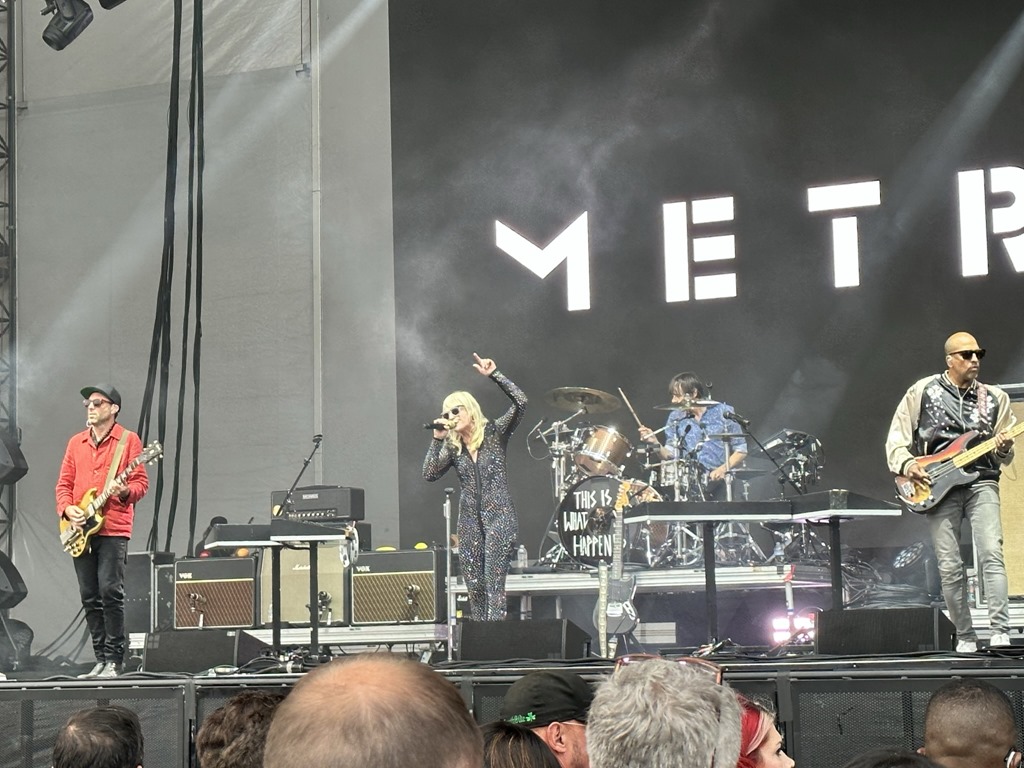

<< Older Posts | Newer Posts >>