Episode 682

Sam Nasr on Cognitive Services

Cognitive Services allow you to take advantage of Machine Learning using pre-built models and REST APIs. Sam Nasr describes the different types of Cognitive Services and some of the apps he has built for his customers using these services.

Links:
https://www.customvision.ai/
https://www.luis.ai/
https://globalai.community/global-ai-back-together/north-america-cleveland-4472/
https://www.youtube.com/channel/UCU4ffaIzhsvMr_cCt9kjQMw


MelissaEtheridgeMelissa Etheridge has been writing, playing, singing, and recording music for over 30 years. Sunday night, she entertained a full house at the Genesee Theatre in Waukegan, IL.

Although she was backed by three other musicians, the focus remained on Etheridge the entire night. She wowed the audience with her guitar playing and her singing. Etheridge's signature coarse vocals remain strong after all these years and her playing is impressive.

Etheridge has become a favourite of the LGBT community since coming out as a lesbian in 1993. Recently, she released an album of songs written before that date, which she held back because she feared they might be too personal. She shared some of them with us on this night.

She saved most of her hit songs ("Bring Me Some Water", "I'm the Only One", "Come To My Window") for later in the show.

During her encore, she climbed behind the drummer and the two shared a duet on the same drum set - an impressive feat for the woman who is proficient at a number of instruments.

Etheridge's music continues to be a powerful force for all people. She gave her all Sunday night and the audience responded.


Photos


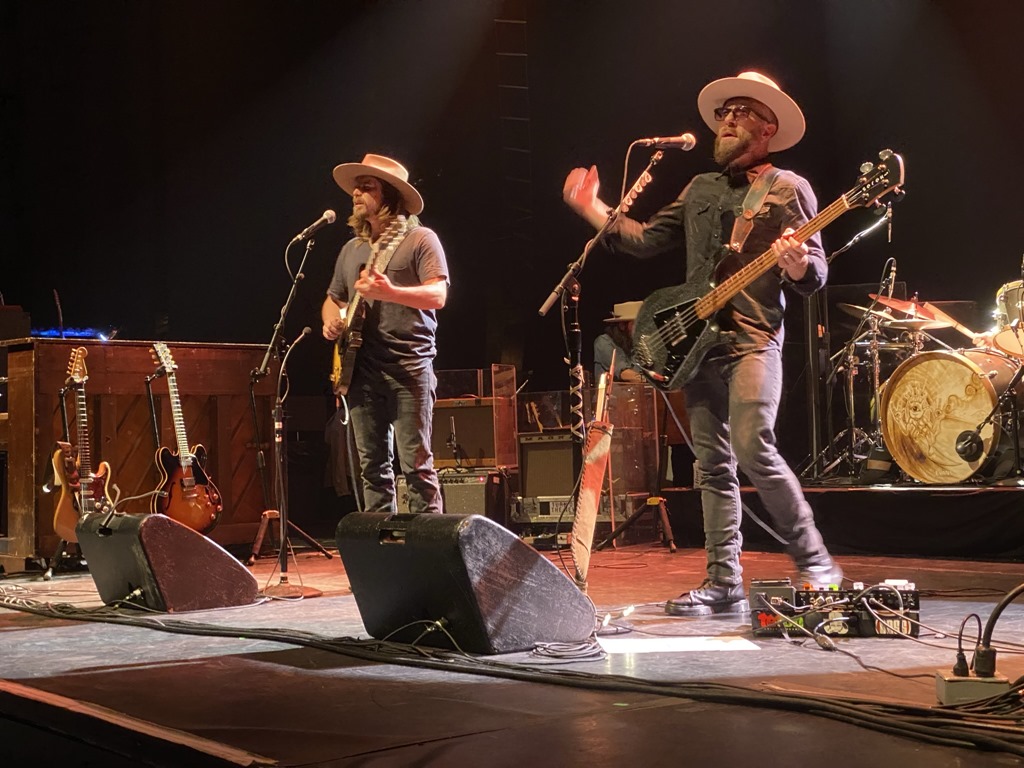
POTR-1Lukas Nelson strode onto the Vic Theatre stage, smiled at the audience, and announced "Hi, I'm Lukas Nelson; and this is Promise of the Real!" He seemed genuinely excited to be there performing in front of a sold-out audience  September 30. The band quickly launched into the kinetic song "Start to Go", quickly followed by "Perennial Bloom" - a song from his new album which was released just a few months ago.

Nelson's enthusiasm did not wane throughout the evening. He raced from song to song, sometimes switching from rock to ballad, sometimes pausing briefly to swap guitars or switch to the piano, but always with an eye toward keeping the music flowing. He managed to engage the audience while doing so, focusing his attention outward to those on the main floor and balcony, rather than inward toward himself, his instrument, and his band.

The energy was not exclusive to the lead singer. Bassist Corey McCormick had a bounce in his step that he maintained as he kept a mean rhythm on the multiple bass guitars he played and as he sometimes danced with Lukas. Logan Metz kept busy moving between steel guitar, piano, electric keyboard, and harmonica; while drummer Anthony LoGerfo could be seen singing along to every song, despite the absence of a microphone.

POTR played a few more songs from their recent release, which contains an impressive collection of music. A classical piano solo led into "More Than We Can Handle" - another impressive new song; and "Leave 'em Behind" was an emotional song about a woman encouraged to escape an abusive relationship (a true story about his friend, according to Nelson.)

They also drew from the rest of their 7-album catalog released over the past 11 years. "Start to Go", "Perennial Bloom", "Fool Me Once", and "Carolina" were all crowd-pleasers.

POTR-2Nelson was sentimental in his delivery of "Just Outside of Austin" and "Forget About Georgia" - two songs of the opposite sides of a young person falling in love, but turned cynical with "Four Letter Word", told from the point of view of a husband growing tired of his wife two years into their marriage. Other highlights included "Start to Go", "Perennial Bloom", "Fool me Once", and "Carolina".

For the encore, bassist McCormick returned to the stage first for an impressive solo before the rest of the band joined him and played for another half hour.

Nelson has a long way to go to match the songwriting legacy of his father - legendary country star Willie Nelson. But he has a solid start with six studio albums and songwriting credit in the recent "A Star is Born" remake. He is a solid composer and brings enthusiasm and charm when he performs live. He and his band have also established a place in the music industry by recording and touring as Neil Young's backing band.

Lukas retains much of his father's charm and adds a charm that makes him a joy to watch perform.


GCast 115:

Registering an Azure Account Subscription

Sometimes, you may receive the following error message, when trying to do something in Azure: "The subscription is not registered to use namespace 'Microsoft.AzureActiveDirectory'. This video walks you resolving fixing this issue.


Episode 681

Tudor Damian on Cybersecurity and Ethical Hacking

Tudor Damian is a Certified Ethical Hacker. He describes how he uses this skill to protect his customers from malicious hackers and to increase their cybersecurity.


September 2021 Gratitudes

Comments [0]

9/6
Today I am grateful to see NRBQ in concert last night in Berwyn.

9/7
Today I am grateful to celebrate Rosh Hashanah with friends last night.

9/8
Today I am grateful for my annual physical yesterday.

9/9
Today I am grateful for a day to recover.

9/10
Today I am grateful for NFL football.

9/11
Today I am grateful to Matt, who answered my questions and helped me resolve a difficult technical issue.

9/12
Today I am grateful for a full day yesterday:
-Seeing Lemony Snicket at the Printer's Row Lit Fest in the morning
-Tacos and margaritas in Old Town in the afternoon
-Seeing Alanis Morissette and Garbage in concert last night in Tinley Park

9/13
Today, I am grateful to:
-Watch a book reading and Q&A with Colson Whitehead yesterday afternoon
-See Ricky Skaggs and Kentucky Thunder in concert last night

9/14
Today I am grateful to complete a difficult task on this project after struggling with it for weeks.

9/15
Today I am grateful for new pillows.

9/16
Today I am grateful:
-to Ted for loaning me his laptop charger
-for my first time at an Ax-Throwing venue.

9/17
Today I am grateful to deliver technical presentations in person for the first time in about 2 years.

9/18
Today I am grateful to Jeffrey, Jonathan, Heather, and all the organizers and volunteers who made KCDC an excellent conference

9/19
Today I am grateful:
- for a visit to the National World War I Museum and Memorial in Kansas City yesterday
- to Tim for a ride home from the airport last night
- for 4 enjoyable days in Kansas City

9/20
Today I am grateful to see Asleep at the Wheel in concert last night.

9/21
Today I am grateful for caramel praline ice cream.

9/22
Today I am grateful to return to the gym after an absence of almost 2 weeks.

9/23
Today I am grateful to the store that gave me a bunch of free groceries to make up for a mistake on my order.

9/24
Today I am grateful for all the natural areas in my city

9/25
Today I am grateful to see Joan Osborne in concert last night.

9/26
today I am grateful to see Ravi Coltrane in concert last night.

9/27
Today I am grateful to finally replace all the dead light bulbs in my home.

9/28
Today I am grateful for an unexpected impromptu visit by my sons last night.

9/29

9/30
Today I am grateful for 2 months without a flat tire on my bike.

10/1
Today I am grateful to see Lukas Nelson and the Promise of the Real in concert last night wit h Pete.

10/2
Today I am grateful to be invited to speak at #CodeMash for the first time in years.

10/3
Today I am grateful breakfast in Elmhurst yesterday with Tim and Nick


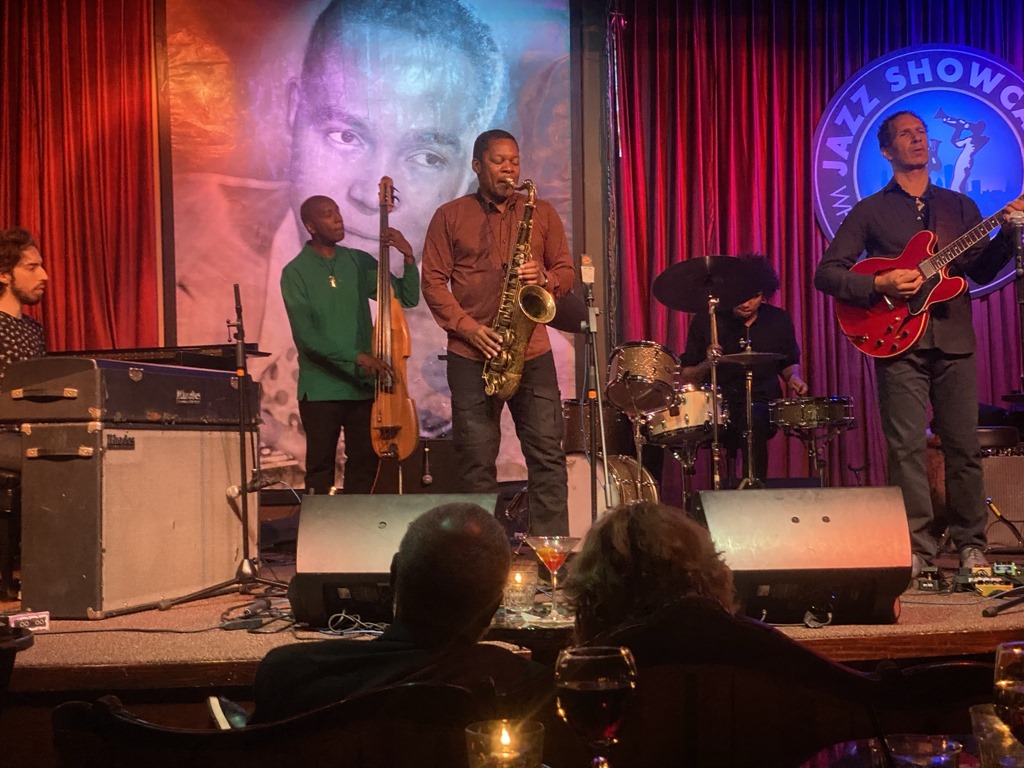
RaviColtraneRavi Coltrane is back in Chicago. He performed two sets a night for four nights at the Jazz Showcase in the South Loop.

I attended the late set Saturday evening, and I was not disappointed.

Coltrane is a man of few words. He did not speak to the audience until he introduced his band near the end of his set. Instead, he spoke to them through his music. He and his quintet (pianist Gadi Lehavi, guitarist David Gilmore, bassist Lonnie Plaxico, and drummer Elé Howell) brought great energy to the sold-out venue. Ravi is a naturally talented musician, as you would expect, given his lineage. Coltrane's father was the legendary saxophonist John Coltrane, and his son has adopted his father's instrument and passion for jazz. While not the innovator that his father was, Ravi has great technical chops, which he showed off on this evening. He was also willing to step aside to showcase the talents of his band. Guitarist Gilmare stood out in particular, but every member of the group was outstanding. At times, they seemed to be racing frantically to keep up with one another.

I had the privelege to see Ravi in 2005 when he celebrated the 40th anniversary of his father's classic album "A Love Supreme" by performing the entire set live on stage. He has matured and developed his own style in the 16 years since that concert.

It was an excellent show and a tribute to the strength of the local community that this small neighborhood jazz club can continue to attract national talent like Coltrane.


GCast 114:

Creating an Azure Active Directory B2C Tenant

Learn how to create an Azure Active Directory B2C Tenant


Episode 680

Eric Potter on Kusto Query Language

Eric Potter describes how he uses the Kusto Query Language to help him query Azure Application Insights data to track down bugs, set alerts, and determine the state of a deployed application.


Joan Osborne in concertSometimes it only takes three people to fill a room.

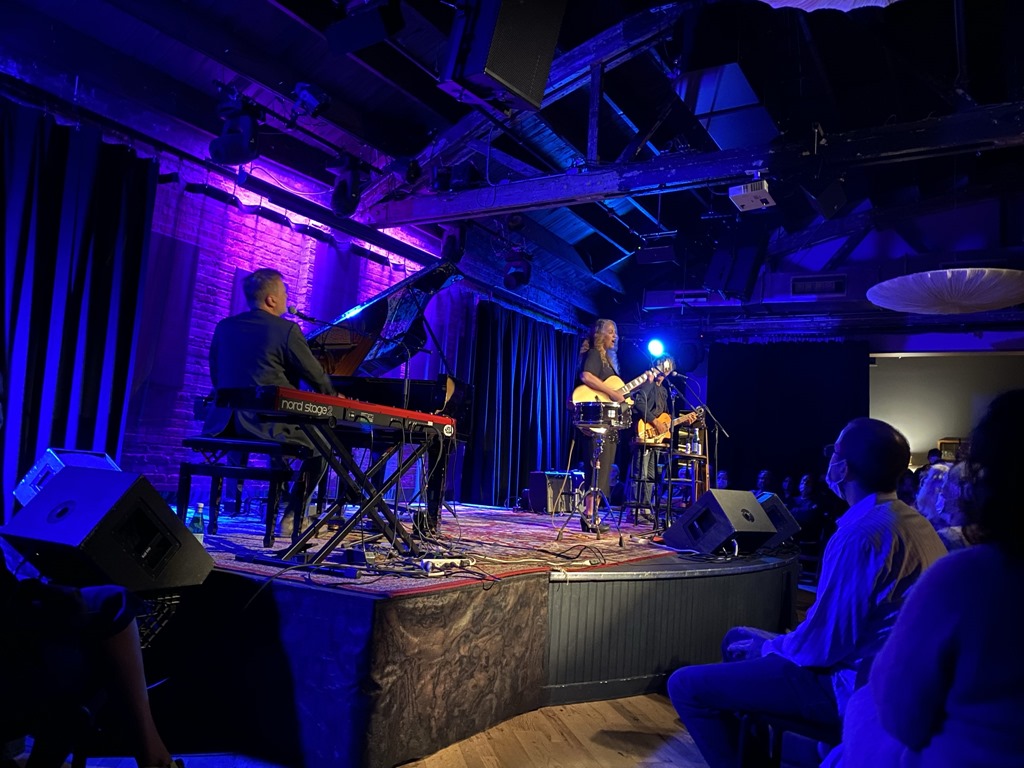
Friday night at Evanston's SPACE club, Joan Osborne was joined by guitarist Jack Petruzelli, who switched between electric and acoustic guitar; and keyboardist Keith Cotton, who alternated between a baby grand piano and an electric keyboard. Combined with their musicianship and Osborne's strong vocals, it was enough.

I know Joan Osborne from her 1995 hit song "One of Us", but she has released ten albums since then and I prepared for this show by listening to them all. Osborne is known less as a songwriter than as an interpreter of the music of others. Her favourite songwriters are Eric Bazilian, with whom she collaborated for many of her early songs, and Bob Dylan. She also has covered many of the great R&B / soul songs of the 1960s and 70s; and many great blues songs over the years.

Friday, she focused on her early works, her newest album ("Trouble and Strife", released during last year's pandemic), Dylan covers, and the blues. It was on her blues numbers that she shined brightest. "She opened with the rousing "My Right Hand"; the opening guitar riff of "St. Theresa" was a dynamic precursor to a dynamic song that energized the sold-out audience; "Spider Web" - funky rocker describing a dream about the results of Ray Charles regaining his vision got us all clapping along.

Osborne changed the arrangements of some of her older songs. "One of Us" was transformed into a haunting ballad; and Cotton's jazzy piano solo in the middle of Dylan's "Tangled Up in Blue" was a delight.

Oddly, there were no R&B or soul numbers, even though these comprise a significant part of her recorded catalog. It may have been because of the stripped-down band (most Motown numbers feature more than a guitar, a piano, and a singer); or she may have simply chosen to focus on other types of music. There was certainly time to add a few more songs, as she played for only about 80 minutes.

She closed with an excellent rendition of Slim Harpo's "Shake Your Hips", bringing extra enthusiasm to her vocals.

It was a short, but sweet show and the audience left with a smile.


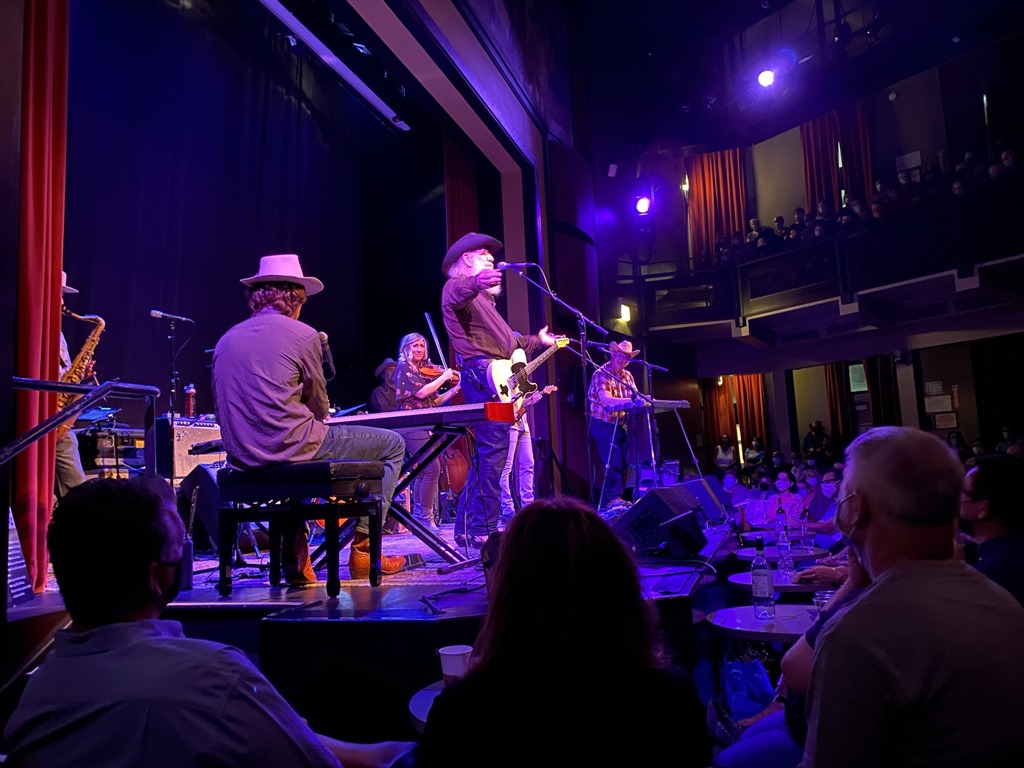
Asleep At The Wheel in concertThe fiddlers were already playing when they walked onto the stage at the Old Town School of Folk Music in Lincoln Square Sunday evening. Behind them, strode guitarist and lead vocalist Ray Benson. At 6'7", the founder of Asleep at the Wheel is larger than life - both figuratively and literally.

The band opened with the Bob Wills tune "Cherokee Maiden" and, for the next two hours, they played what could have been a selection of my favourite AATW songs!

They performed more Bob Wills songs, including "New San Antonio Rose", "Faded Love", "Take Me Back to Tulsa", and "Big Balls in Cow Town". This is not surprising. For five decades, AATW has been carrying on the tradition of Western Swing music popularized by Wills and his Texas Playboys in the 1930s and 40s. They even played "Bob Wills Is Still the King", Waylon Jennings's tribute to Mr. Wills; and "Milk Cow Blues", a song recorded by Wills's younger brother Johnnie Lee Wills.

The band mixed in many classic tunes, such as "Route 66", "The House of Blue Lights", "Hot Rod Lincoln", and "Tiger Rag"- the latter of which featured frantic solos from each member of the band. Speaking of the band, every member was excellent. They brought energy and fun and projected both onto the crowd.

Of course, the group played some original songs ("Half a Hundred Years", "I Guess I'll Call it a Day Tonight") and "Miles and Miles of Texas", which is one of their best covers.

A highlight of the evening was a moving interpretation of Guy Clark's "Dublin Blues", a song I've always loved and did not know AATW had recorded.

They closed the encore set with an a cappella version of "Happy Trails" - a song made famous by the legendary cowboy duo of Roy Rogers and Dale Evans.

Asleep at the Wheel gave us an amazing performance. They reminded us how much fun music can be.


Cameron Presley on Mentoring

Comments [0]

Episode 679

Cameron Presley on Mentoring

Cameron Presley has developed a program to help train and mentor junior engineers in his company. He talks about getting them involved in working on a KATA, working with other developers, and engaging in all areas of software development - but doing so in a safe place.

https://kata-log.rocks/mars-rover-kata
http://blog.thesoftwarementor.com/


Elwood Curtis was an idealistic straight-A high school student preparing to take college classes when he was wrongly convicted of stealing a car. He was sent to Nickel Academy - a Florida reform school, which proved to be a place of arbitrary cruelty - especially for black boys like Elwood. Physical, sexual, and mental abuse were daily occurrences. When the staff caught bullies were beating up a boy in the bathroom, the victim and the one who tried to stop the fight were punished more severely than the bullies. One boy was beaten and murdered by the staff for disobeying their order to throw a boxing match.

At Nickel, Elwood befriended Turner, a cynical orphan from the streets. The two became friends, despite their differing world outlooks and opinions on how best to survive inside Nickel and out in the Free World afterward.

The Nickel Boys by Colson Whitehead is a tragic story of life for African Americans in the Jim Crow south. The Civil Rights movement was reaching its height in the 1960s and the Dr. Martin Luther King, Jr.'s message of loving one's enemies inspired Elwood, as it inspired so many others. But the harsh reality of the system made Turner's approach seem more practical.

Although this story is fiction, it is based on an actual Florida reform school - The Dozier School for Boys - at which similar abuses occurred. Like Dozier, Nickel labeled itself a "reform school", even though it did little in the way of reform or education.

Whitehead brings the reader into the story by forcing us to connect with Elwood and Turner and to feel their pains. I read this shortly after his preceding novel "The Underground Railroad". Both novels dealt with racism in America, and each won a Pulitzer Prize; but I enjoyed "The Nickel Boys" more. I cared more about Elwood and Turner than I did about Cora; and the realism of the later novel made it more relevant to me.


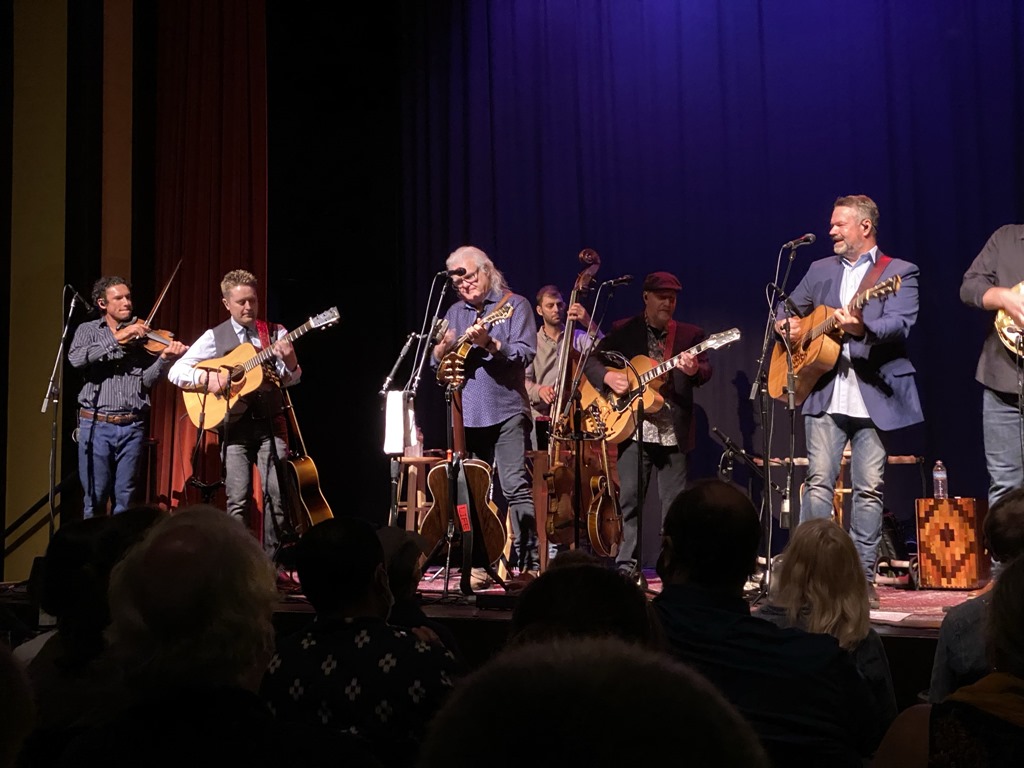
RickySkaggsRicky Skaggs was a successful country musician when he decided to fully embrace bluegrass music in his recordings and performances. He formed Kentucky Thunder in the late 1990s and together they released some of the finest bluegrass recordings of the past 25 years.

Sunday evening, Skaggs and Kentucky Thunder brought their magic to The Old Town School of Folk Music in Lincoln Square.

Every single member of Kentucky Thunder is an outstanding musician. With a heavy influence on strings (3 guitars, fiddle, mandolin, and standup bass for most songs), the evening featured plenty of picking and these guys are master pickers! Some of them have been with the band for years and some joined this year, but their playing and harmonizing were tight throughout the evening.

Skaggs and co. delighted the audience with almost two hours of bluegrass music. He mixed originals, covers, and standards; he mixed instrumentals and vocals; he featured himself as well as members of the band. Three members sang songs they had recorded and released on their own albums. Highlights included "Highway 40 Blues", "Uncle Pen", and "Black Eyed Susan".

Lead Guitarist Jake Workman was especially impressive with his fingers flying across his instrument. Rhythm Guitarist Dennis Parker shared his heartfelt story of his ongoing recovery from alcoholism (He has been sober 5+ years) before leading the band in a wonderful rendition of John Prine's "Paradise".

Skaggs was charming and personal. He sang lead and played mandolin on most songs, occasionally switching to guitar. He did spend a lot of time tuning his mandolin between songs, but that is understandable considering the instrument is in its 99th year. Whatever he did, it was worth it.

For an encore, they performed a moving a Capella version of Doc Watson's classic "Down in the Valley to Pray".

I enjoyed this concert as much as I’ve enjoyed any show this year. Mr. Skaggs strikes me as the kind of person I would love spending time with, sharing a meal together or talking. I definitely enjoyed spending Sunday evening with him and his friends.


Matt Groves on Couchbase 7

Comments [0]

Episode 678

Matt Groves on Couchbase 7

Matt Groves talks about some of the new features in Couchbase 7, including Scopes and Collections, ACID Transaction support, and Query Language enhancements. He also shows off his open source tool designed to help users migrate from SQL Server to Couchbase.

Links:
https://github.com/mgroves/SqlServerToCouchbase
https://bit.ly/cbase2021


It has been 26 years since Alanis Morissette released her classic album "Jagged Little Pill" - a disc that established Morissette as a star and produced multiple hit singles. The celebration of this album was supposed to happen last year, marking a quarter century since its release, but the COVID pandemic forced its postponement by a year.

So, here we all were, twelve months later in Tinley Park to hear Morissette sing music from her iconic album, as well as across her decades-spanning recording career.

While JLP showcased the singer's firestorm of emotions in her early twenties, Saturday night's performance featured a softer Alanis, one who seems very much at peace with herself. She smiled with satisfaction through most of her songs, which was appropriate for lighthearted tunes like "Hand in My Pocket” but lessened the anger of "You Oughta Know" - a song about a bitter ex-lover screaming at her former man and his current lover. The edge that defined her earlier work is gone.

But whatever the Canadian-born singer has lost in the emotions of her youth, she made up for with her voice. Her vocal range sounded even more technically proficient than it did when she first entered our consciousness. She has evolved her voice to a new level of maturity and beauty. I never thought of Alanis Morissette as a diva, but Saturday night, she had the voice of one.

A nearly full crowd felt so as well. And they provided enough emotion to keep the performer smiling. Alanis even introduced her husband ("The love of my life") during the fan favourite "Ironic".

A solid performance by Garbage enhanced the show. Garbage was formed in Wisconsin in the 1990s and is fronted by Scottish singer Shirley Manson, who played up the band's upper-Midwest roots to the delight of the crowd.

Overall, it was a pleasant if unspectacular show.

And I am happy for Alanis Morissette, who seems to be in a much better place emotionally than she was 25 years ago.


Before the American Civil War, a group of abolitionists organized the Underground Railroad - a network of people, places, and routes designed to assist escaped slaves. The name "Underground Railroad" was a metaphor. In reality, it was neither a railroad nor was it underground. But in Colson Whitehead's 2016 novel The Underground Railroad, the title refers to an actual railroad track and a train that literally runs under the ground. Its purpose was the same as the actual Underground Railroad - to facilitate the journey of escaped slaves and to connect them with safe places and with the people who could help.

Whitehead takes other liberties with historical accuracy in his novel, describing laws and cultures that did not exist in the nineteenth-century American South. But he does so with a purpose.

This is the story of Cora, a Georgia slave who escapes first to South Carolina, where a group of progressive white people has set up a colony in which blacks are allowed employment and treated with greater respect than in the rest of the South. She then travels to North Carolina, where the citizens have decided the best way to end slavery is by outlawing negroes - a crime punishable by death. Ultimately, she ends up in Indiana, joining a community of African Americans that have built their own economy and coexist with the whites of the local town.

Despite the differences in Whitehead's alternate history, he maintains the spirit of the struggles of blacks in antebellum America. Cora is pursued relentlessly by professional slave catcher Ridgeway and must frequently flee to new places, often losing the people she loves on the way. Although the world of Whitehead's novel contains significant differences from actual American history, he captures the horrors of slavery and forces the reader to feel the omnipresent fear of being a black fugitive in the nineteenth century. The dehumanizing horrors of slavery are not whitewashed in this story.

Both Cora and Ridgeway are haunted by the memory of Cora's mother Mabel, who escaped when Cora was an infant. Cora feels forever abandoned by her mother, while Ridgeway is obsessed with the memory of the only escaped slave he failed to recapture. In the final chapter, Whitehead reveals Mabel's fate, and this provides a satisfying closure for the reader, if not for Cora and Ridgeway.

Many of the whites she encounters appear to be progressive thinkers, but they maintain their prejudices and their beliefs in ethnic superiority. They congratulate themselves on their acceptance of negroes, but still perceive the black race as inferior - often with deadly consequences. Their rationalizations are often frightening.

The novel is not perfect. I don't understand why Whitehead felt it important to turn the Underground Railroad into a physical subterranean train. Perhaps it was to underscore that this was a work of alternate history, but it felt like an unnecessary gimmick.

Still, this book works on several levels. It is a story of survival against impossible odds; it is a love story; and it forces the reader to consider what it means to embrace racial equality - a question that is still relevant today.


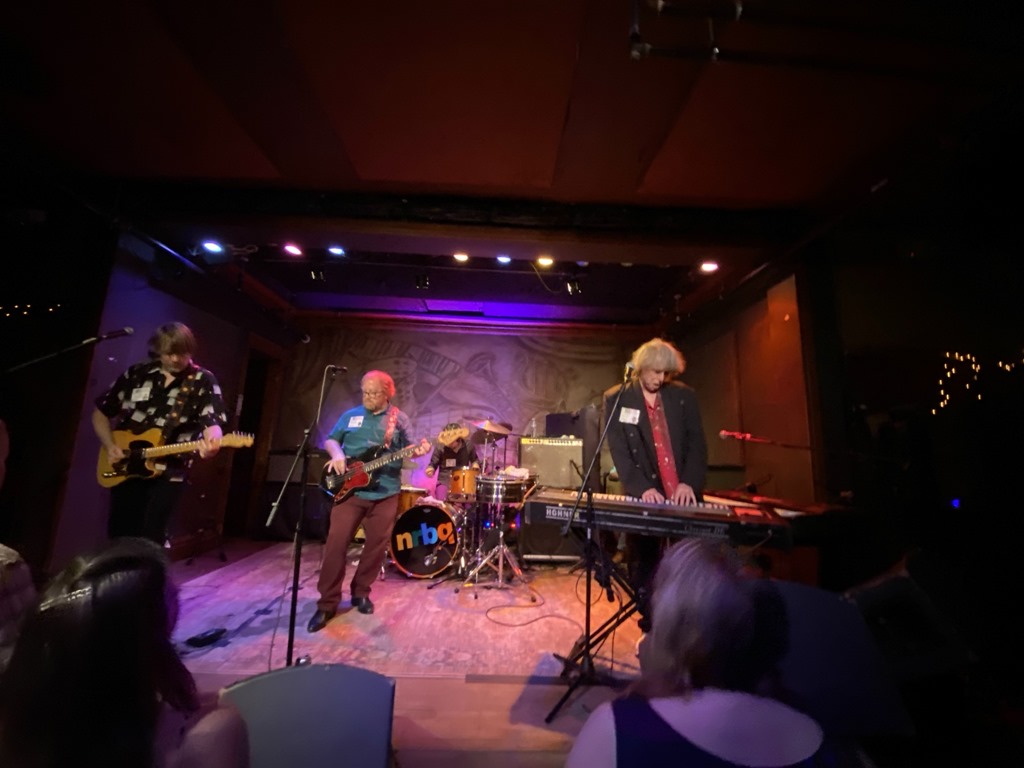
NRBQWhen a band records for over 50 years, it is easy to miss some of their output. I've been a fan of NRBQ for decades and I've listened to many of their songs; but I still did not recognize most of the songs they performed Sunday night at Fitzgerald's in Berwyn, IL.

The band treated the audience to a few cover songs, such as The Beach Boys' "Darlin'" and Clarence "Frogman" Henry's "Ain't Got No Home", as well as a few familiar songs I recognized from their extensive catalog, including "Green Lights", "Ridin' in my Car", "Howard Johnson's Got His Ho-Jo Workin'", and "RC Cola and a Moon Pie". They played two sets, plus an encore that included two classics: "Captain Lou" - a tribute to the late Lou Albano, a retired professional wrestler who once served as the band's manager; and their excellent cover of the Johnny Cash-penned "Get Rhythm".

During the past five decades, NRBQ has suffered through deaths and major illnesses, and the departure of key members; but founding member Terry Adams has kept the group going by recruiting capable musicians to accompany him as he plays keyboards. Together they maintain the energy that made this quartet a favourite live performer for so many years, despite never having a single crack the Top 40. Adams's energetic keyboard playing was a focal point on stage, but bassist Casey McDonough, guitarist Scott Ligon, and drummer John Perrin were each excellent. They don't look like rock & roll stars, but they sound and perform like they are.

The only low point of the evening came when Adams decided to sing a goofy song about a jealous ex-wife. The lyrics were slightly misogynistic, and he had to read them from a paper. This could have and should have been skipped. But that was a brief speed bump in a rapid frenzy that was the evening's music.

Over two hours of rock & roll, blues, and rockabilly was enough to satisfy the crowd and bring some fun to Berwyn.


Sam Basu on NET MAUI

Comments [0]

Episode 677

Sam Basu on NET MAUI

Sam Basu discusses .NET MAUI - the next generation of Xamarin Forms. It allows developers to write code in C# and XAML and target application at iOS, MacOS, Android, and Windows.

https://github.com/dotnet/maui


August 2021 Gratitudes

Comments [0]

8/2
Today I am grateful for a walk around the Northwestern University campus yesterday.

8/3
Today I am grateful for my new dish rack

8/4
Today I am grateful for a celebration lunch playing virtual games with my team yesterday.

8/5
Today I am grateful for the opportunity to lead a Diversity & Inclusion workshop yesterday.

8/6
Today I am grateful to see Emmylou Harris and Los Lobos in concert last night.

8/7
Today I am grateful to break up last night's bike ride with a margarita and live music at a waterside café.

8/8
Today I am grateful for an outdoor movie in back of the Music Box Theatre last night.

8/9
Today I am grateful to hang out in Evanston, eating, drinking, and talking with friends in anticipation of a concert that was ultimately canceled due to severe weather.

8/10
Today I am grateful for a box full of supplies and replacement parts for my CPAP.

8/11
Today I am grateful to escape last night's storm by minutes.

8/12
Today I am grateful for my new electric toothbrush.

8/13
Today I am grateful to make it safely to Michigan late last night.

8/14
Today I am grateful to reconnect with many high school friends in Grosse Pointe last night.

8/15
Today I am grateful to attend my high school reunion last night.

8/16
Today I am grateful for lunch with Betsy yesterday.

8/17
Today I am grateful for a new docking station, mouse, keyboard, monitor, and headset to make it easier to develop on my work laptop.

8/18
Today I am grateful for new lights for my bike.

8/19
Today I am grateful to accidentally stumble upon a concert at the 31st Street Beach last night.

8/20
Today I am grateful for a negative COVID test yesterday.

8/21
Today I am grateful to attend the re-opening night of Buddy Guy's Legends blues club last nigh.

8/22
Today I am grateful to finish setting up the workspace in my home office yesterday.

8/23
Today I am grateful for a bike ride to and from Indiana yesterday.

8/24
Today I am grateful for my new Echo Dot.

8/25
Today I am grateful for dinner with Mike last night.

8/26
Today I am grateful for a conversation with Steve last night.

8/27
Today I am grateful for the taste of cashews.

8/28
Today I am grateful to see Mike Zito perform an excellent blues concert last night in Evanston.

8/29
Today I am grateful for dinner with John and Kim last night.

8/30
Today I am grateful for a productive day yesterday.

8/31
Today I am grateful my sons and I discovered a nearby deli with excellent sandwiches last night.

9/1
Today I am grateful that my son Nick is visiting me this week.

9/2
Today I am grateful to celebrate Tim's birthday last night in Logan Square.

9/3
Today I am grateful to see improv at my first visit to Laugh Factory.

9/4
Today I am grateful to witness a decisive Spartan victory in Evanston last night.

9/5
Today I am grateful to visit the Pullman National Monument yesterday on its opening day.


Sometimes I read a book later than I should. Last year, I worked my way through Anthony Powell's epic 12-volume saga A Dance to the Music of Time. It was a lot to absorb. Powell's series spans six decades and introduces hundreds of characters and subplots. It is not uncommon for a character to disappear for several books, only to reappear much later and much older. Keeping everything straight was a challenge.

Hilary Spurling's Invitation to the Dance: A Handbook to Anthony Powell's A Dance to the Music of Time makes this easier. Spurling's book is a guide to Powell's books. In addition to a summary of each book, she lists details of each character, book, painting, and place mentioned in the series. It is an exhaustive set of lists, as there are many of each. Powell sought to include the influence of art in his story, so he included many artists and works of art - both real and invented.

I enjoyed revisiting some of the stories and characters without the burden of re-reading everything. Some I remembered well, and some had faded from my memory.

There is very little analysis in Spurling's book - it is primarily a database, that can help you navigate the complexities of Powell's story.

I wish I had this book last year, as I was reading Powell's series. If I return to these books, I plan to have Spurling's guide at my side.


Episode 676

Carl Franklin on Music and Programming

Carl Franklin is a software developer, a musician, and an audio producer. We talk about why there is such a strong correlation between proficiency with music and with software development.

Links
https://carlfranklin.com
https://zencastr.com


Addie Brunden fell ill and died 10 days later, leaving behind a husband, 4 sons, and a daughter. Her wish was to be buried in her childhood hometown of Jefferson, Mississippi. So, her family built a coffin, tied horses to their wagon, and began the journey across the rural south.

William Faulkner's As I Lay Dying chronicles their troubling 9-day journey, interrupted by a near-disastrous river crossing, a broken leg, and a fire. The narration switches quickly between over a dozen narrators, who provide details of the trip, as well as their perspectives on life, death, and family.

Faulkner unfolds the story from different perspectives in a way that keeps the reader engaged; and he slowly reveals secrets of infidelity and illegitimacy and teen pregnancy in a way that humanizes the family.

Faulkner does a good job of giving a unique voice to each character - the childlike innocence of Vardaman; the thoughtfulness of Darl, the stoicism of Cash, and the selfishness of Anse.

The reader's challenge is keeping the characters straight and remembering which ones are most significant. The novel's stream-of-consciousness style gives an immediacy to the action, but it can confuse.

As I Lay Dying explores the dynamics of family relationships, especially during a time of great crisis and conflict, as everyone deals with death in their own way. It is well worth your time.


Joe Kunk on SQL+.NET

Comments [0]

Episode 675

Joe Kunk on SQL+.NET

SQL+.NET is an Object Relational Mapper (ORM) that works directly with SQL Server stored procedures, simplifying the process of converting data into business objects for use in a .NET application. Joe Kunk describes its features, how to get started, and how he uses it to build robust business applications.

Links:

http://sqlplus.net/
https://github.com/ahhsoftware/SQLPlusSampleApp


Neil Gaiman's Trigger Warnings is a collection of creepy poems and short stories.

Many of the stories end ambiguously with the hint of something dreadful about to occur. Others could easily be a chapter in a novel and perhaps they were originally planned as such. They tend toward the darker side of storytelling; but, other than that, have very little in common with one another.

My favourites stories were:

  • "The Sleeper and the Spindle" - a reimagining of a classic fairy tale with an unexpected crossover into another fairy tale.
  • "The Thing About Cassandra" - a story about a man who encounters the imaginary girlfriend he made up while in school.
  • "The Truth is a Cave in the Black Mountains" - a dark tale of revenge.

Gaiman also included a Sherlock Holmes story, a Doctor Who story, and a story about Shadow Moon, the protagonist of "American Gods".

I strongly related to "The Man Who Forgot Ray Bradbury" - a first-person narrative from someone losing his memory as he grows older. It reminded me that both my parents struggled through this frustration at the end of their lives; and I sometimes feel it happening to me. Plus, it is a tribute to one of the great writers of the 20th century, who undoubtedly influenced Gaiman.

This is a strong collection of works for anyone who enjoys mystery and horror and any fans of Mr. Gaiman's writing.


At the end of Louisa May Alcott's Little Women, Jo and her husband Friedrich resolve to open a school for boys in the home left to them by Jo's Aunt Marge. Little Men is the story of that school.

The book is a series of vignettes, displaying the personalities of the various children at school and the lessons they learn about integrity and honesty.

But mostly, it is the story of Dan, a tough orphan from the streets, who finds it difficult to obey the rules of the house. Dan's wrestling with moral issues form the heart of this novel.

Alcott drew inspiration from her father, who had radical ideas about education. The book reflects some of these ideas as Jo and Friedrich encourage their students to think for themselves, rather than drilling information and discipline into them. Dan's presence challenges these notions. Initially, he is a disruptive influence with the other children and cannot respect even the few rules imposed by the school. But the teachers persist; they see the good in the boy and believe he is destined for something special.

The rest of the March family gets very little exposure in this story - surprising in that one of them is lost suddenly late in the book. A bit more buildup would have improved that scene dramatically.
 
Although not quite on the literary level of its predecessor, Little Men is a pleasant successor to Little Women.


Episode 674

Shahed Chowdhuri on Azure Arc

Azure Arc is the remote control of hybrid, multi-cloud solutions. Shahed Chowdhuri describes how to use Azure Arc to manage resources on different cloud platforms, allowing you to create a hybrid cloud environment.

Links:

https://docs.microsoft.com/azure/azure-arc/
https://azurearcjumpstart.io/
https://github.com/microsoft/azure_arc
https://aka.ms/pricing


Louisa May Alcott grew up poor in the mid-18th century New England with her three sisters, so it is no coincidence that her most famous novel - Little Women is about a family very similar to her own.

"Little Women" tells the story of the March family - Meg, Jo, Beth, and Amy, who are raised by their mother until their father returns from fighting in the Civil War. The story spans about two decades, as the girls grow into womanhood.

Alcott does an impressive job of painting the personalities of the sisters - beautiful and domestic Meg; tomboy Jo, who loves to write; shy and musical Beth; and artistic Amy. The moral character of the girls and their mother is remarkably high, but they still struggle with ethical dilemmas and often grow as a result. They survive problems at school and the temptation to avoid work and conflict with their aunt. They grow through changes in love and courtship and marriage and childbirth and careers and the death of a loved one. We see the sisters evolve throughout their young lives: quick-tempered Jo learns to soften her temperament when appropriate and Amy overcomes her selfish streak to inspire their spoiled neighbor Laurie to achieve his potential.

I enjoyed the contrast between Jo, who could be a role model for liberated women and Meg, who embraces her traditional role as housewife and mother. They are completely different, but they love each other unconditionally.

This novel has become a classic because of its characters and its moral lessons.


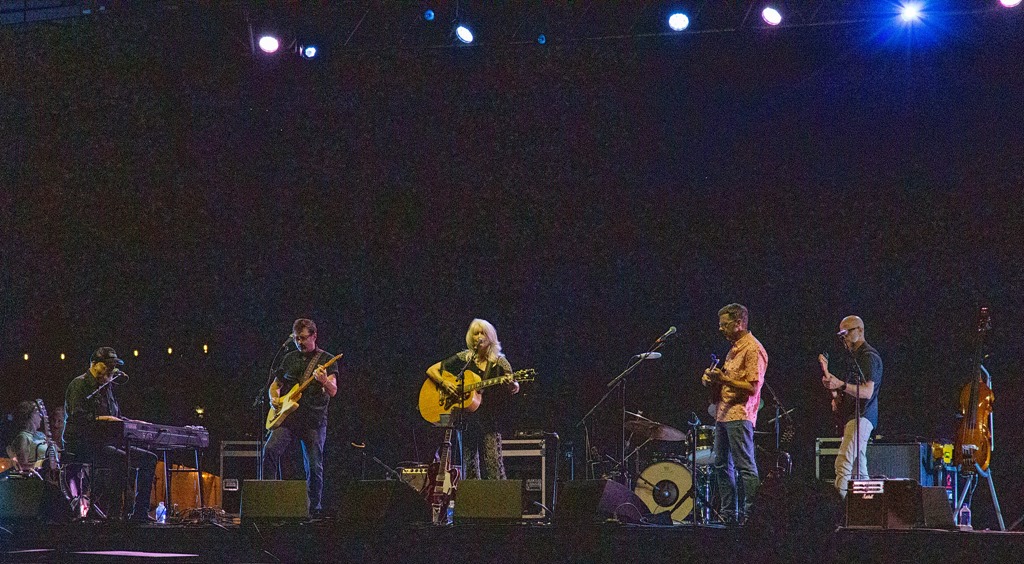
Emmylou-43-X4Emmylou Harris is pure country music, uncorrupted by rock and roll. In addition to guitar, bass, drums, and keyboards, her band includes mandolin, accordion, fiddle, and the twang of Emmylou's voice which still persists at the age of 74.

Thursday night, Emmylou performed an outdoor show between holes 1 and 2 of Evanston's Canal Shores Golf Course as part of the SPACE nightclub's "Out of Space" series. She was charming and talented and beautiful and she captivated her audience beneath a clear sky on a perfect night.

I heard so many of my favourite Emmylou songs: "Pancho and Lefty", "Orphan Girl", "The Wayfaring Stranger", and my personal favourite "Boulder to Birmingham", with which she closed her performance. I also heard some cover songs that I don't usually associate with Ms. Harris. Her version of "Save the Last Dance for Me" was a delight. But the most moving moment was when she sang "My Name is Emmitt Till" - the true story of a 14-year-old black boy from Chicago, who was murdered in Mississippi because he was seen talking with a white woman.

The years have done nothing to diminish Emmylou Harris's spirit and talent. She held the audience of thousands throughout the night.

LosLobos-22-X4The evening was made even more special by the appearance of Los Lobos as the warmup act, who built their show to a climax when they closed with their biggest hit - a cover of Ritchie Valens's "La Bamba", from the movie of the same name.

It has been 30 years since I saw Los Lobos in East Lansing, MI, and 22 years since first experiencing Emmylou Harris at the Grand Ole Opry and tonight's show was just as much a treat as when we were all young.

More Los Lobos photos

More Emmylou Harris photos


Episode 673

Cassandra Faris on Open Source Software

Cassandra Faris talks about the advantages of Open Source Software and Rocket Mortgage's approach to Open Source.


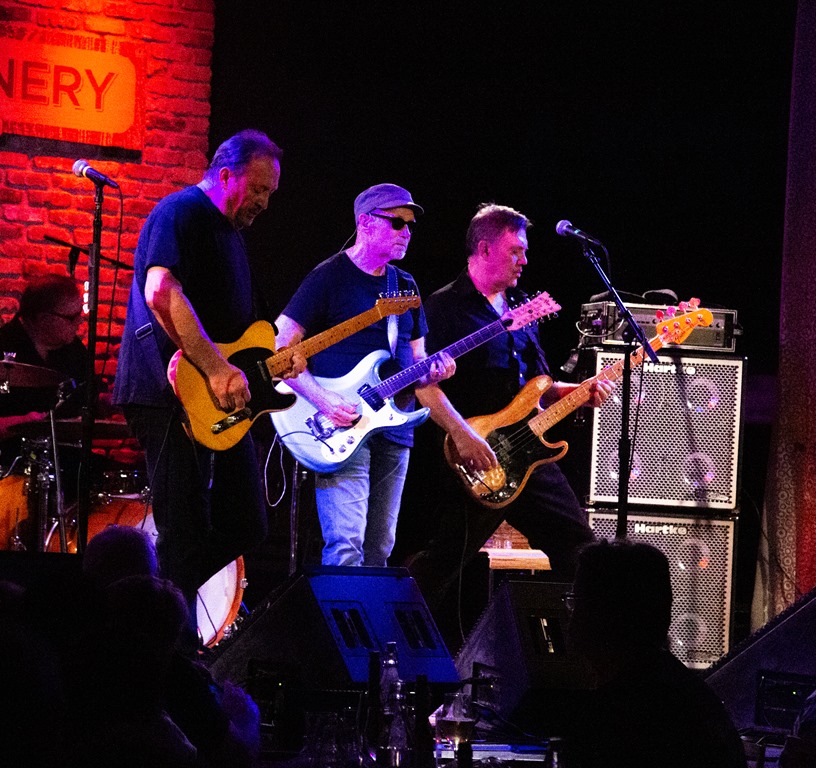
Smithereens-22What does a band do when they lose their lead singer? The Smithereens faced this dilemma when founding member Pat DiNizio passed away in 2017. The remaining members decided to hire guest vocalists for their 2021 tour. Chicago was fortunate to host Marshall Crenshaw as the Smithereens' singer Saturday night at the City Winery. Crenshaw is most well-known for his 1982 Top-40 hit "Someday, Someway", but he has continued to perform all these years and his guitar work appears on some Smithereens records.

This was only the second stop in the band's first tour in a year and a half and they exhibited the pent-up energy of musicians who have missed performing live.

The Smithereens formed 40 years ago and released their first album in 1986. The three surviving founders (lead guitarist Jim Babjak, bassist Mike Mesaros, and drummer Dennis Diken are still with the band and Marshall joined them on rhythm guitar and lead vocals.

They played many of the songs that I've enjoyed for decades - "Behind a Wall of Sleep", "I’m Sorry But I Won’t", "Miles from Nowhere", "The House That We Used to Live in", and "Blood and Roses". They also enthusiastically covered songs written and recorded by others, including "No Matter What", "Bristol Stomp", and The El Dorados' 1955 high-energy R&B hit "At My Front Door". In introducing one cover song, Crenshaw quipped "For me, these are all covers", drawing a laugh from the audience. The 4-song encore set featured 3 cover songs: "Reason to Believe", "Where Have All the Good Times Gone?", and "Ramblin' Man".

The band was not quite as tight as they were when I last saw them in Cincinnati in 2001, but they made up for it by the passion they brought to the stage. What most impressed the crowd is how much fun the band was having, bantering with one another and with the audience. The musicians are aging, but they still possess the energy of a young garage band playing a gig at a local pub.

This fun and energy is what rock & roll is all about!

more photos


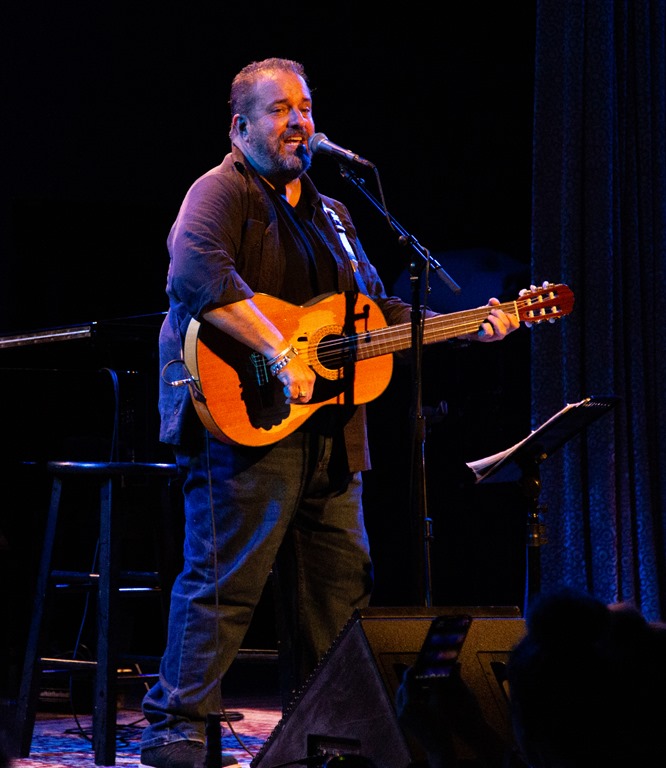
Malo-11It has been 30 years since The Mavericks released their first album. When the band broke up in 2003, founder and lead singer Raul Malo launched a solo career. The Mavericks reunited ten years later, but Malo continues to tour on his own. Friday evening at Chicago's City Winery, Malo stood on stage alone and entertained a full house for over two hours, armed only with a guitar bearing the scratches of countless concerts. The piano behind him puzzled me because he only played two songs on it; but I enjoyed them as did the rest of the audience, so who am I to judge?

The Mavericks are also touring, which could tire some performers, but Malo showed no signs of wear. His beautiful tenor voice seamlessly switched keys and he never missed a note or an emotion.

He played a mixture of Mavericks songs and his own songs and even a few covers of others' songs. To demonstrate that songwriters are great thieves, he sang several bars of standards, such as "Blue Moon" and "You Send Me" without changing the guitar part of his own song. At one point, he began a rendition of Neil Young's "Harvest Moon" before abandoning it in the middle after messing up the lyrics. "At least you know it's live," he quipped.

Many of his songs were sung in Spanish (Raul is a Cuban-American whose parents emigrated from Cuba), and many came from The Mavericks' recent "En Español" album.


It has been a long time since I've seen an entertainer who combines such a heavenly voice with such engaging charm between songs. He radiated excitement about being back on stage after the long isolation of the pandemic. The audience responded with their own joy.

I had tickets to see Raul 10 years ago in Michigan, but a business trip prevented me from attending that show. He was worth the wait.

more photos


Episode 672

Becky Gaudet on the Azure Commercial Marketplace

Becky Gaudet works on the Azure Commercial Marketplace team. She talks about the certification process and what it takes to put an offering on Azure.

https://aka.ms/marketplacesupport
https://partner.microsoft.com


July 2021 Gratitudes

Comments [0]

8/1
Today I am grateful for:
-seeing The Smithereens with Marshall Crenshaw in concert last night
-my longest bike ride of the year
-lunch with the Lincoln Park Ski Club
-a visit from Nick yesterday

7/31
Today I am grateful to celebrate Shabbat with friends last night.

7/30
Today I am grateful to see Raul Malo in concert last night.

7/29
Today I am grateful to deliver a conference presentation for the first time in almost 2 years.

7/28
Today I am grateful to deliver a conference presentation for the first time in almost 2 years.

7/27
Today I am grateful for a visit from Pat this week.

7/26
Today I am grateful to unexpectedly coming upon a street fair in Wicker Park yesterday

7/25
Today I am grateful for my first visit to Annapolis in almost 10 years.

7/24
Today I am grateful:
-to attend my uncle's burial yesterday
-to spend yesterday dining and talking with my siblings and cousins

7/23
Today I am grateful to celebrate the life of Uncle Jerry yesterday with our family.

7/22
Today I am grateful for an upgrade to First Class on my flight last night.

7/21
Today I am grateful that my boys got to see an exciting NBA Finals game in person last night!

7/20
Today I am grateful for a very good Turkish dinner last night with Tim

7/18
Today I am grateful to see the play "Tally's Folly" in Glenview yesterday - my first play in well over a year.

7/17
Today I am grateful for all the beautiful murals in Pilsen.

7/16
Today I am grateful to those who appreciate what I do and say so out loud.

7/15
Today I am grateful for a new wallet.

7/14
Today I am grateful for a Zoom call with high school classmates last night to discuss our upcoming reunion.

7/13
Today I am grateful to co-workers who take the time to answer my questions.

7/12
Today I am grateful for a new pair of eyeglasses

7/11
Today I am grateful for a new rear tire donated and installed yesterday by the local bike shop.

7/10
Today I am grateful for my new Global Entry card.

7/9
Today I am grateful for an unexpected bonus yesterday.

7/8
Today I am grateful for a new bathroom sink.

7/7
Today I am grateful for the company of Zoe the dog this week.

7/6
Today I am grateful for my first visit to Navy Pier in years.

7/5
Today I am grateful to watch fireworks across the city from my balcony last night.


RaulMalo2021It has been 30 years since The Mavericks released their first album. When the band broke up in 2003, founder and lead singer Raul Malo launched a solo career. The Mavericks reunited ten years later, but Malo continues to tour on his own. Friday evening at Chicago's City Winery, Malo stood on stage alone and entertained a full house for over two hours, armed only with a guitar bearing the scratches of countless concerts. The piano behind him puzzled me because he only played two songs on it; but I enjoyed them as did the rest of the audience, so who am I to judge?

The Mavericks are also touring, which could tire some performers, but Malo showed no signs of wear. His beautiful tenor voice seamlessly switched keys and he never missed a note or an emotion.

He played a mixture of Mavericks songs and his own songs and even a few covers of others' songs. To demonstrate that songwriters are great thieves, he sang several bars of standards, such as "Blue Moon" and "You Send Me" without changing the guitar part of his own song. At one point, he began a rendition of Neil Young's "Harvest Moon" before abandoning it in the middle after messing up the lyrics. "At least you know it's live," he quipped.

Many of his songs were sung in Spanish (Raul is a Cuban-American whose parents emigrated from Cuba) and many came from The Mavericks' recent "En Español" album.

It has been a long time since I've seen an entertainer who combines such a heavenly voice with such engaging charm between songs. He radiated excitement about being back on stage after the long isolation of the pandemic. The audience responded with their own joy.

I had tickets to see Raul 10 years ago in Michigan, but a business trip prevented me from attending that show. He was worth the wait.

Photos


Episode 671

Martine Dowden on the D3 JavaScript Visualization Framework

Martine Dowden discusses the D3 JavaScript framework and how she uses it to create powerful interactive data visualizations.

Links:

https://martine.dev/
https://www.d3-graph-gallery.com


The Wings of the Dove by Henry James is the story of a very good person, her friend who manipulates her, and a lover caught in the manipulation.

Milly Theale was a wealthy American heiress who loved traveling the world. She met and befriended the betrothed English couple Kate Croy and Merton Densher shortly before Milly was diagnosed with an incurable disease. Kate convinced her fiancé Merton to court the dying Milly in the hope that he would inherit Milly's fortune and share it with Kat.

The story is good, and the novel has withstood the test of time, but its problems come from the author. The American James wanted desperately to come across as a Victorian Englishmen. He does so by dressing every sentence with flowery prose - prose that often gets in the way of the story. He has a story to tell, and he tells it, but he takes at least twice as long to do so.

I believed in the characters. Kate was raised without a mother - first by her worthless father, then by her domineering Aunt Maud, who forbade her from marrying the penniless Merton. Kate's actions were understandable, if not forgivable.

The conversation in the final chapter, in which the characters seem to come to terms with their sins, is satisfying, even if the final ambiguous sentence is not.

Finishing this book made me feel as if I had accomplished something, which is something.


In her book Mindset: The New Psychology of Success, Carol Dweck describes two mindsets: Fixed and Growth. People with a Fixed Mindset believe that each of us is born with a finite amount of intelligence, talent, and skill. Those with a growth mindset believe that we can work to improve our intelligence, talent, and skill.

As a society, we tend to embrace the idea of Fixed Mindset. We praise those gifted with natural athletic ability; teachers tend to label children as smart or dumb; and people talk about relationships as if they were destined to be together. But the reality is that it takes work to improve one's athletic prowess, education, and relationships. A Fixed Mindset discourages this work as pointless, which inhibits growth in these areas.

The most significant difference between the two mindsets is in their approach to failure. Fixed Mindset people see failure as an indictment of their abilities. They tend to stop trying when they encounter failure, and they avoid those activities that do not have a high chance of success. In contrast, Growth Mindset people are challenged by failure. They view it as an opportunity to learn and are motivated to develop themselves further. They choose challenging activities that will push them to stretch their limits.

Those with a growth mindset tend to be happier and more successful.

While the book favors anecdotes over clinical research, Dweck's theories make intuitive sense to me. I look back on my own life and realize that I was trapped in a Fixed Mindset during my early years. I was labeled early on as a "smart kid" and so I tended to coast through school without pushing my boundaries. In Elementary School, I perceived myself as a poor athlete with low strength, so I did not attempt to excel at sports. Later in life, I shifted my outlook and sought to improve myself in areas where I was weak, and this made a huge difference in my life. Dr. Dweck's ideas are not revolutionary, but she articulates them well.


I attended my first concert in 1977. It was at Olympia Stadium in Detroit, where the Red Wings played before moving to Joe Louis Arena and again to Little Caesar Arena. Four singers/songwriters/guitarists performed: John Denver, James Taylor, Harry Chapin, and Gordon Lightfoot. Lightfoot's hit song "The Wreck of the Edmund Fitzgerald" released the prior year was still getting significant airplay and I loved seeing him live. Chapin and Denver are gone, but Lightfoot is still touring at the ripe old age of 82.

His touring was interrupted 17 months ago, but he kicked off a new tour Sunday evening at the Copernicus Center in Chicago.

I watched contentedly from the fourth row, remembering a night long ago when a high school David experienced this for the first time.

Many of the songs were the same. Lightfoot's peak of popularity occurred in the 1970s when he established himself as arguably the greatest songwriter in Canadian history.

The years have weakened Gordon's once-rich voice, but he can still carry a tune and he can still put emotion into songs that he has been singing for decades. More importantly, he engaged the audience between songs, joking about everything from his age to almost meeting Elvis Presley years ago (the crowd exiting the arena slowed him so much that Elvis had left the building by the time Gordon finally arrived backstage.)

The sold-out theatre was filled with many gray and balding heads, but they responded enthusiastically to the music of their youth. Lightfoot sang all his hits, including "Carefree Highway", "Sundown", "Early Morning Rain", "Rainy Day People", the aforementioned "Edmund Fitzgerald", and my personal favourite - "If You Could Read My Mind". In between, he mixed in many lesser-known songs, each one enjoyable.

He performed for about two hours with a 15-minute intermission and returned to the stage for one encore.

It was an evening well spent.

At this rate, I will be 103 and Gordon will be 126 when we next meet.

More photos


Episode 669

Sarah Withee on an Open Source Pancreas

Sarah Withee describes how the open source community has created software to help diabetics make it easier to manage insulin levels and injections.

Links:
https://github.com/nightscout/cgm-remote-monitor
https://github.com/nightscoutfoundation
https://github.com/openaps
https://loopkit.github.io/loopdocs/
https://github.com/loopkit
https://github.com/loopdocs/


Artificial Intelligence (AI) is not new, but it is challenging for most people. In her book You Look Like a Thing and I Love You, Janelle Shane breaks down this technology in simple terms and illustrates it with examples that are interesting, humorous, and sometimes absurd.

This book does not require any prior knowledge of neural networks, machine learning, artificial intelligence, or even computer science. Dr. Shane writes in a straightforward prose that is easily consumed - even by those unfamiliar with the math and science under the hood.

She begins with an explanation of Artificial Intelligence - what it is and why it is useful. She then covers some uses of AI, focusing on its limitations and misuses. Her samples include many unexpected results. The title of the book comes from an effort by a neural net to generate pickup lines after examining hundreds of actual lines.

Here are a few thoughts from Shane's book:

  • An AI is very literal. It will try to solve the problem you give it - sometimes in unexpected ways. If you tell it to come up with a game-playing strategy that minimizes the number of times a player is killed, it may decide to hide in a corner and not move, which accomplishes the stated goal but is probably not an effective strategy for winning a game.
  • An AI will take shortcuts if it can. In an experiment to identify the presence of sheep in a photograph, the AI noticed that nearly every photo of sheep also included grass. Since it was easier to identify grass than sheep, it concluded that any photograph of grass also included sheep.
  • AI works best when it is given a narrow focus. It struggles if the problem is too broad. It is possible to create a bot that can have a conversation with a human, but that conversation will be far more meaningful if we train it to stick to a narrow topic. Try to train a bot to both take travel reservations and give relationship advice and it will likely fail at both.
  • Because AIs are trained in a simulated environment, they may choose solutions that only work in that environment, but not in the real world. One experiment asked an AI to find the fastest way for a robot to get from one point to another. It concluded the optimal solution was for the robot to grow a long leg and fall toward the destination.
  • Bias in input data can result in bias in predictive results. Train a system on existing resumes and hires and it may conclude that men are better hires than women because they were hired more often in the past.

As a result of these and other limitations, Shane concludes that we are unlikely to develop a general-purpose intelligence system, such as Star Trek's Data, 2001's HAL, or Terminator's Skynet any time soon. But that does not diminish the usefulness of the field, which can solve complex problems in imaginative ways. We just need to be aware of the pitfalls, so we can avoid them.


In 2005, Time Magazine published its list of the 100 best English-language novels.

The magazine had three filters to the list:

  1. The original publication was in English. No translations qualified.
  2. The book was a work of fiction, even if it was based on a true story.
  3. It was a novel. No short stories or plays qualified.
  4. It was published between 1923 and 2005.

Rule 4 may seem puzzling until you consider that Time Magazine began publication in 1923. These are the 100 greatest English language novels of all Time and this list defines "Time" as the era of Time Magazine's publication, rather than the infinite progress of existence that is usually assigned to that word. Authors like Edith Wharton, Charles Dickens, Oscar Wilde, and Mark Twain lived too early to make this list. Sinclair Lewis's "Babbit" and "Main Street" were published just prior to this time span, as was James Joyce's "Ulysses" and Upton Sinclair's "The Jungle". But the list spans 82 years, which is still a lot of novels to consider.

The list was compiled by literary critics Richard Lacayo and Lev Grossman, who made no effort to rank the novels - a book is either on the list or off.

Three of the "books" - "The Lord of the Rings", "A Dance to the Music of Time", and "The Berlin Stories" - were actually series. "The Lion, the Witch, and the Wardrobe" is part of the Narnia Chronicles, but only this volume was included. In each of these cases, I read the entire series. A few of the books, such as "I, Claudius" and "Rabbit, Run", inspired sequels that were not included in the list, and "The Spy Who Came in From the Cold" includes characters that appear in other novels by John Le Carre.

Eight Authors appear twice on the list: George Orwell, Graham Greene, Philip Roth, Saul Bellow, Thomas Pynchon, Virginia Woolf, Vladimir Nabokov, and William Faulkner. No one made the list three times.

Margaret Mitchel, Harper Lee, and J.D. Salinger published only one novel each during their lifetimes ("Gone With the Wind", "To Kill a Mockingbird", and "The Catcher in the Rye " respectively) but those novels all made this list.

Most of the stories are set in the United States or Great Britain and were written by residents of those countries; but there are some Australians on the list and a few stories set in India, the West Indies, the South Pacific, and other locations. African Chinua Achebe's novel "Things Fall Apart" takes place in his native Nigeria. Achebe and Vladimir Nabokov accomplished the impressive feat of writing classic novels in a language that was not their native tongue.

A variety of styles and themes are represented among these 100 items. The list includes a diverse set of topics and genres: detective stories, postmodern stream-of-consciousness ramblings, science fiction, morality plays, satires, character analyses,  political statements, and more. There are books written for young people ("Are You There God? It’s Me, Margaret", "The Lion, The Witch and the Wardrobe", "The Catcher in the Rye") and books that feature rape and extreme violence ("A Clockwork Orange", "Tropic of Cancer", "Deliverance")There are stories of dystopian futures ("1984", "Never Let Me Go") and fictionalized histories of real people ("The Confessions of Nat Turner", "The Sot-Weed Factor", "I, Claudius"). There are stories that mock the absurdity of war ("Slaughterhouse-Five", "Catch-22"), stories that shine a light on American race relations ("Invisible Man", "Native Son", "Go Tell It on the Mountain", "To Kill a Mockingbird"), and stories of the effects of colonialism ("A Passage to India", "Things Fall Apart"). Immigrants - particularly Jewish immigrants - making a life in America ("Call It Sleep", "The Assistant", "The Heart is A Lonely Hunter") is a common theme.  Another common theme is the tensions underlying a seemingly mundane life in American suburbia, as in "The Corrections", "Appointment in Samarra", "American Pastoral", "Revolutionary Road", and "An American Tragedy". Drug culture is explored in "Naked Lunch" and "On The Road", while "Under the Volcano", "The French Lieutenant’s Woman", and "A House for Mr. Biswas" detail the main characters' march toward self-destruction. There is even a graphic novel, as "The Watchmen" compiles a 12-issue comic book series.

The thing that almost all of them have in common, however, is tragedy. There are very few happy endings. Great art tends to inspire great emotion and sadness is a powerful emotion.

As with any list like this, there will be some debate. Your favourite author or novel may have been omitted and you may not be a fan of some of the books that were included. As for me, I did not find any bad novels in the list. I enjoyed all of them and I loved some of them.

It took me almost three years, but I managed to power through this entire list.

As I began this list, I marked off books that I had already read. A few I had read recently because they were on NPR's Top 100 Science-Fiction and Fantasy Books - a list I had recently completed. But, as I approached the end of the English language list, I decided to revisit any book that I had not read in the past 5 years. It had been decades since I read "Beloved" and I had not opened "Gone With the Wind" since high school.

I wanted to re-read the old books to see how my impressions had changed, but also to make it easier for me to accurately review the book. My reviews served multiple purposes. Writing about a book forced me to think more about its themes and what I liked or disliked about it, which increased my appreciation of it. I find it easier to remember a book if I go through this exercise; and, if I forget, I have a reference to which I can return. I also enjoy sharing these thoughts with others and exchanging ideas with them about what we have read.

I discovered that I enjoyed every book on the list - some more than others of course. Here are my top 30, in no particular order:

'Ragtime' by E.L. Doctorow
'Are You There God? It's Me, Margaret' by Judy Blume
'Go Tell It on the Mountain' by James Baldwin
'Animal Farm' by George Orwell
'The Lord of the Rings by J.R.R. Tolkien
'1984' by George Orwell
'A Clockwork Orange' by Anthony Burgess
'Slaughterhouse-Five' by Kurt Vonnegut Jr.
'The Grapes of Wrath' by John Steinbeck
'Lolita' by Vladimir Nabokov
'A Dance to the Music of Time' by Anthony Powell
'Beloved' by Toni Morrison
'All the King's Men' by Robert Penn Warren
'One Flew Over the Cuckoo's Nest' by Ken Kesey
'To Kill a Mockingbird' by Harper Lee
'The Sportswriter' by Richard Ford
'The Spy Who Came In from the Cold' by John le Carre
'The War of the Worlds' by H.G. Wells
'Lord of the Flies' by William Golding
'The Blind Assassin' by Margaret Atwood
'The Great Gatsby' by F. Scott Fitzgerald
'Native Son' by Richard Wright
'The Corrections' by Jonathan Franzen
'The Painted Bird' by Jerzy Kosinski
'The Heart Is a Lonely Hunter' by Carson McCullers
'White Teeth' by Zadie Smith
'Ubik' by Philip K. Dick
'Deliverance' by James Dickey
'The Lion, the Witch and the Wardrobe by C.S. Lewis
'Watchmen' by Alan Moore

The least enjoyable ones for me were Thomas Pynchon's "Gravity’s Rainbow" and David Foster Wallace's "Infinite Jest", but I fully admit that the fault may have been mine, as these two novels contain a plethora of characters and subplots that I struggled to keep straight. A re-reading (if I ever have the time) may improve my opinion.

You can find my reviews on various websites, including this one.

Here is the complete Time Magazine list:

Title Author
Neuromancer William Gibson
Slaughterhouse Five Kurt Vonnegut
Snow Crash Neal Stephenson
1984 George Orwell
A Clockwork Orange Anthony Burgess
Animal Farm George Orwell
Appointment in Samarra John O'Hara
Brideshead Revisited Evelyn Waugh
The Adventures of Augie March Saul Bellow
The Confessions of Nat Turner William Styron
The Lord of the Rings J.R.R. Tolkien
Watchmen Alan Moore
The Crying of Lot 49 Thomas Pynchon
Are You There God? It’s Me, Margaret Judy Blume
Wide Sargasso Sea Jean Rhys
The Day of the Locust Nathanael West
To the Lighthouse Virginia Woolf
Things Fall Apart Chinua Achebe
Red Harvest Dashiell Hammett
Housekeeping Marilynne Robinson
Their Eyes Were Watching God Zora Neale Hurston
Mrs. Dalloway Virginia Woolf
The Power and the Glory Graham Greene
Ubik Philip K. Dick
The Painted Bird Jerzy Kosinsky
The Moviegoer Walker Percy
The Assistant Bernard Malamud
The Heart of the Matter Graham Greene
Lucky Jim Kingsley Amis
A Handful of Dust Evelyn Waugh
Deliverance James Dickey
Never Let Me Go Kazuo Ishiguro
Tropic of Cancer Henry Miller
Death Comes for the Archbishop Willa Cather
White Noise Don DeLillo
The Sheltering Sky Paul Bowles
Ragtime E.L. Doctorow
Revolutionary Road Richard Yates
The Heart is A Lonely Hunter Carson McCullers
Herzog Saul Bellow
Under the Volcano Malcolm Lowry
I, Claudius Robert Graves
White Teeth Zadie Smith
Call It Sleep Henry Roth
The French Lieutenant’s Woman John Fowles
Light in August William Faulkner
The Man Who Loved Children Christina Stead
Possession A.S. Byatt
An American Tragedy Theodore Dreiser
Infinite Jest David Foster Wallace
A Death in the Family James Agee
A Passage to India E.M. Forester
American Pastoral Philip Roth
Atonement Ian McEwan
Go Tell it on the Mountain James Baldwin
Invisible Man Ralph Ellison
Naked Lunch William S. Burroughs
Rabbit, Run John Updike
The Big Sleep Raymond Chandler
The Prime of Miss Jean Brodie Muriel Spark
Loving Henry Green
Falconer John Cheever
Play It As It Lays Joan Didion
At Swim-Two-Birds Flann O'Brien
Under the Net Iris Murdoch
The Catcher in the Rye J.D. Salinger
Beloved Toni Morrison
Dog Soldiers Robert Stone
Money Martin Amis
Native Son Richard Wright
The Berlin Stories Christopher Isherwood
The Death of the Heart Elizabeth Bowen
The Blind Assassin Margaret Atwood
Midnight’s Children Salman Rushdie
A House for Mr. Biswas V.S. Naipaul
The Corrections Jonathan Franzen
The Golden Notebook Doris Lessing
All the King’s Men Robert Penn Warren
Gravity’s Rainbow Thomas Pynchon
The Sot-Weed Factor John Barth
The Recognitions William Gaddis
A Dance to the Music of Time Anthony Powell
Lord of the Flies William Golding
One Flew Over the Cuckoo’s Nest Ken Kesey
The Bridge of San Luis Rey Thornton Wilder
The Great Gatsby F. Scott Fitzgerald
The Spy Who Came in From the Cold John Le Carre
The Sportswriter Richard Ford
To Kill a Mockingbird Harper Lee
Gone With the Wind Margaret Mitchell
Portnoy’s Complaint Philip Roth
The Sun Also Rises Ernest Hemingway
On the Road Jack Kerouac
Pale Fire Vladimir Nabokov
The Sound and the Fury William Faulkner
Lolita Vladimir Nabokov
Blood Meridian Cormac McCarthy
Catch-22 Joseph Heller
The Grapes of Wrath John Steinbeck
The Lion, The Witch and the Wardrobe C.S. Lewis

Episode 670

Jason Bock on Mutation Testing

Mutation Testing involves modifying code that should break tests in order to validate the quality of these tests. Tools like Stryker allow you to do this automatically. Jason Bock discusses how this fits into your testing strategy.

https://stryker-mutator.io/
https://youtu.be/zbOnygEeFLU


"The sky above the port was the color of television, tuned to a dead channel."

Although dead television channels today emit a different pattern, the opening line of William Gibson's 1984 cyberpunk novel Neuromancer still draws the reader into the story.

This is the story of Henry Case - a computer hacker, who committed his crimes in "the matrix" - a virtual reality cyberspace of the near future. Case was caught stealing from his employers, who retaliated by injecting him with a neurotoxin that prevented him from ever again connecting to the Matrix.

Case was devastated and unemployable until he was recruited by Armitage, a mysterious patron who promised to reverse the neurotoxin effects in exchange for performing a job. What Case did not know was that the reversal was only temporary - the surgeons left sacks of toxin within his veins that would dissolve without a transfusion. This set a time limit on the job.

So, Case partnered with Molly Millions - a beautiful mercenary, who has surgically enhanced her body to make her more dangerous; Maelcum, a Rastafarian space pilot; and a host of other bizarre characters to connect with powerful artificial intelligences and complete Armitage's jobs.

Gibson does a very good job of building a dystopian world and a digital cyberworld within that world. Among the features of this world:

-A personality may persist after death by uploading a person's consciousness into the Matrix. Case and his allies are assisted by the Flatline consciousness of a former mentor.

-Extreme surgical enhancements are commonplace - sometimes for aesthetics and sometimes for practical reasons. Molly has replaced her eyes with glass lenses that boost her vision and has retractable razors embedded beneath her fingernails.

-Artificial intelligences are self-aware and have grown powerful, manipulative, and dangerous.

This story is complex enough that I often found myself lost and re-reading chapters. Significant characters are introduced suddenly and it was not always obvious to me whether our antiheroes were in the real world or the Matrix.

But ultimately, I enjoyed this novel. The narration has the feel of both a science fiction story and a noir detective novel. Gibson reflects on humanity's relationship with technology and where it is headed. His description of a worldwide system of connected computer networks was prophetic - predating the proliferation of the Internet by at least a decade.

I respect the novel's place in history. William Gibson is credited with the invention of the cyberpunk science fiction subgenre (he originally coined the term in an earlier short story) and this - his first novel - helped to establish that subgenre in the popular consciousness.


It is not easy to make a pizza delivery exciting. But when the delivery takes place in a dystopian future and the pizza franchise is owned by the Mafia and the punishment for late delivery is severe, it can get your pulse racing. And Neal Stephenson makes this happen in the opening scene of "Snow Crash".

Hiro Protagonist is the hero and protagonist of this novel. He is a deliverer of pizzas, a hacker, a music promoter, and an expert swordfighter, who fights most of his battles inside the Metaverse - a virtual reality world with its own rules and laws.

The United States government has collapsed, and hyperinflation has devalued its currency a trillion-fold. In California, each suburb is now its own autonomous nation. Hiro helped create the Metaverse, where he discovers a new virus that infects both computers and people. After some research, he realizes that the virus is an ancient one - predating computers by thousands of years and that it attacks the human brain in the same way a computer virus attacks the files and memory of a machine. This virus is so ancient that it may have inspired the Biblical story of the Tower of Babel.

Hiro encounters a religious cult, artificial intelligences, crime lords from various factions and nations, a rebellious teenager, and a psychotic Aleut.

I loved the way that Stephenson combined linguistics, history, cybercrime, and characters. He tells the entire story in the present tense, which gives it a sense of immediacy. Stephenson includes satire of commercialism and capitalism. Most of the suburb-states are controlled by corporations. The church exists for the personal financial benefit of its founder and is bankrolled by a telecommunications tycoon. And he includes a hilarious description of the bureaucratic regulations on the use of toilet paper.

The book is not without its faults. After an exciting start, it fails to maintain that same energy throughout the novel and the ending felt a bit rushed. Some of the characters could use a bit more development. Y.T. and Juanita - the most important female characters - were at least as intriguing as Hiro, but we did not get to know them as well as I would have liked.

A potential flaw is that this book contains several extended scenes in which Hiro or an Artificial Intelligence explain world history and background information in great detail. Usually, I prefer to learn things in a novel as the action unfolds, rather than having someone explain it to me; but I found their lectures interesting and illuminating - especially as they compared and contrasted the stories from various religions. And the author offsets these monologues/soliloquies with many scenes of intense action. Hiro and Raven the Aleut are the two badassest people on the planet - Hiro with his sword and Raven with his harpoon, so their battles tend to be epic.

This was not the first cyberpunk novel published, but it established Stephenson as a master of the genre.


The recent pandemic forced the Drive-By Truckers to cancel their tour and take a hiatus from touring that lasted more than a year. They are scheduled to resume their tour in August; but lead singer/co-founder Patterson Hood could not wait. So, he grabbed his guitar and hit the road in June. He opened his tour Wednesday evening at the City Winery in Chicago. I already had tickets to the Truckers' show in Evanston, IL September 3; but I also could not wait. So, I headed for the Winery to hear what Patterson had to offer.

He offered a lot. For 90+ minutes, he delighted a full room with just his voice and his guitar. Drive-By Truckers celebrated the 25th anniversary of their first recording session just a few days prior to this show and Hood drew liberally from the band's catalog of thirteen studio albums.

"I play in a band", he confided to the audience, although we already knew this.

Hood opened the show with the emotional "Sandwiches from the Road" off of DBT's debut album "Gangstabilly". "Nothing can hurt you but yourself", the singer advised from the chorus.

Many of his songs tell stories and Hood interspersed the songs with some stories of his own. "Road Cases" was an ode to the Atlanta Rhythm Section - a band that experienced a meteoric rise in the 1970s leading them to purchase a plethora of equipment and cases. Cases with the band's logo appeared in many secondhand stores after their popularity declined so that many Georgia bands ended up with cases stenciled with the ARS logo.

After playing for about 90 minutes, Patterson did not go through the traditional charade of leaving the stage and allowing the audience to call him back. Instead, he stood up, announced the set was over, and asked if we wanted to hear some encore tunes. Of course, we did and of course, he obliged, delighting us with three more songs.

It was clear listening to Patterson Hood that he enjoyed his time back on the stage and he managed to transfer that enjoyment to the audience.


more photos


Episode 668

Michael Dowden on Firebase

Firebase is an application development platform that includes databases, serverless functions, static hosting, push notifications, analytics, and other features. Michael Dowden discusses these tools and how he uses them to build applications and products.

https://firebase.google.com/docs


June 2021 Gratitudes

Comments [0]

7/4
Today I am grateful for the United States of America.

7/3
Today I am grateful that my son's birthday present finally arrived after a long delay.

7/2
Today I am grateful for a new table for my balcony.

7/1
Today I am grateful for new beginnings.

6/30
Today I am grateful for lunch with Josh yesterday.

6/29
Today I am grateful for a weekend with Nick

6/28
Today I am grateful to share a dinner, some drinks, and a basketball game with my sons last night.

6/27
Today I am grateful to attend my first Chicago Fire FC game last night with Nick

6/26
Today I am grateful for lunch with Daniel yesterday.

6/25
Today I am grateful for no bad news from my dentist.

6/24
Today I am grateful for a new electric toothbrush.

6/23
Today I am grateful for dinner in New Buffalo last night with J.

6/22
Today I am grateful for a box of nuts and candy sent to me by my employer.

6/21
Today I am grateful for an excellent Father's Day dinner with my son Tim yesterday.

6/20
Today I am grateful for the privilege of being a father.

6/19
Today I am grateful to attend the Zafiro Flamenco Festival last night in Skokie, IL.

6/18
Today I am grateful to speak at the Chicago .NET User Group last night for the first time in years.

6/17
Today I am grateful to see Patterson Hood in concert last night.

6/16
Today I am grateful for folk music.

6/15
Today I am grateful for the gift of a new electric razor

6/14
Today I am grateful to explore the Midway Plaisance and the Fountain of Time yesterday.

6/13
Today I am grateful for a ride along the North Branch Trail yesterday.

6/12
Today I am grateful to see "In the Heights" at the Music Box Theatre last night.

6/11
Today I am grateful for a nighttime ride with the Streets Calling Bike Club last night.

6/10
Today I am grateful for many kind words of support from friends the last couple days.

6/9
Today I am grateful for coffee with Pete yesterday.

6/8
Today I am grateful to try a trainer at a new gym this morning.

6/7
Today I am grateful that June is starting out so much better than a very difficult April and May.


C.S. Lewis's 7-volume Chronicles of Narnia is a beloved series, known for its memorable characters, exciting adventures, and Christian themes.

Michael Ward always loved these stories, but he had questions. Why did some of the books contain clear allegories of Biblical stories, while others were less obvious? Why is Christmas mentioned so frequently in The Lion, the Witch, and the Wardrobe, when no person named Christ existed in that universe? (Why wasn't there an Aslanmas holiday, instead?) Does any unifying theme other than Christianity tie together all the novels?

In The Narnia Code, Ward concludes that Lewis's novels each focus on one of the seven planets recognized by astronomers of the Middle Ages. These astronomers believed that the Earth was the center of the universe and defined planets as bodies that moved across the skies (as opposed to stars, which were fixed in their positions). They recognized Mercury, Venus, Mars, Saturn, Jupiter, the Sun, and the Moon as planets. The ancients often referred to the spheres in which these planets rotated as "The Seven Heavens".

According to Ward, each of the seven novels reflects the properties of one of these planets or of the beings for which it is named. More specifically, it represents attributes of Jesus that are similar to those beings.

The Lion, the Witch, and the Wardrobe, for example, focuses on Aslan as Jupiter - a jovial being who led all heavenly creatures; while the battles of Prince Caspian reflect the warlike powers of Mars.

The author shows that Lewis had a fascination with the planets, as shown in many of his other writings. He even wrote a space trilogy that took the reader to Venus, Mars, and the Moon.

Ward argues that Lewis never explicitly stated these themes because he loved a mystery and wanted his readers to discover the connection themselves.

C.S. Lewis is long gone so we cannot ask him if Ward is correct. In fact, Ward never had the chance to ask Lewis himself, as he was born 5 years after Lewis's death; but Ward has spent years studying the life and works of C.S. Lewis and his hypotheses presented here are plausible. This book is interesting and entertaining, and it increased my appreciation for Lewis's Chronicles.


GCast 113:

Passing parameters to xUnit net tests with the ClassData attribute

The [ClassData] attribute of xUnit.net allows you to store a collection of data parameters in a single class and pass that class to a single test method, allowing it to run multiple tests with different values.

You can find the source  code at https://github.com/DavidGiard/XUnitDemo


<< Older Posts | Newer Posts >>